
This article's table of contents introduction:
- Table of Contents
- Introduction: The Industrial Drying Challenge
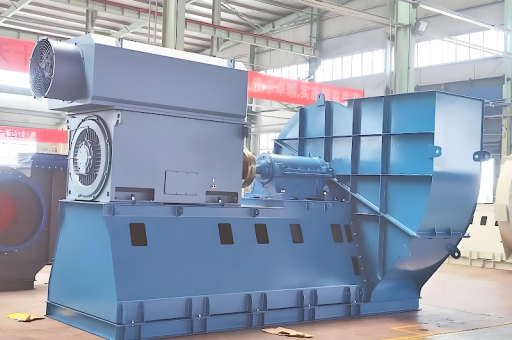
- What is a Coupling Driven Dust Collector Fan?
- Why Explosion Proof Materials Matter in Drying Systems
- Engineering the Coupling Mechanism for Safety
- Key Performance Metrics for These Systems
- Frequently Asked Questions (FAQ)
- Conclusion: Future-Proofing Your Drying Process
*Advanced Explosion Proof Materials Drying: The Role of Coupling Driven Dust Collector Fans in Industrial Safety*
Article URL suggestion: wind turbine/explosion-proof-drying-fan-safety
Table of Contents
- Introduction: The Industrial Drying Challenge
- What is a Coupling Driven Dust Collector Fan?
- Why Explosion Proof Materials Matter in Drying Systems
- Engineering the Coupling Mechanism for Safety
- Key Performance Metrics for These Systems
- Frequently Asked Questions (FAQ)
- Conclusion: Future-Proofing Your Drying Process
Introduction: The Industrial Drying Challenge
In modern manufacturing environments, the process of materials drying often involves handling fine powders, combustible dusts, and volatile solvents. These conditions pose a significant explosion risk. A seemingly minor spark from a fan motor or a belt drive can trigger a catastrophic dust explosion. This is where the coupling driven dust collector fan – built with explosion proof materials – becomes a critical safety component.
Unlike standard ventilation fans, a coupling driven fan separates the motor from the airstream. The coupling acts as a mechanical firewall. When paired with explosion-proof construction and smart drying system design, it ensures that even if the process generates dust clouds (e.g., from drying wood flour, food starch, or chemical powders), the energy source remains isolated.
Question: Why is a coupling driven fan safer than a direct-drive fan for explosive dust drying? Answer: In a direct-drive fan, the motor is directly in the airflow. If dust accumulates or a bearing fails, sparks can ignite the material. A coupling driven fan places the motor outside the duct, connected via a shaft and coupling. This prevents motor heat and sparks from contacting the dust-laden drying air.
What is a Coupling Driven Dust Collector Fan?
A dust collector fan is the heart of any pneumatic drying or conveying system. It creates negative pressure to pull materials through drying chambers. The coupling driven variant uses a flexible or rigid coupling to connect the fan impeller shaft to an electric motor.
The coupling serves two main functions:
- Misalignment compensation: Perfect alignment is impossible in heavy industrial environments.
- Torque transmission without metal-to-metal contact. Certain explosion-proof couplings (e.g., those made from conductive rubber or aluminum bronze) prevent static buildup and frictional sparks.
When used in explosion proof materials drying applications, these fans are typically constructed from non-sparking metals (aluminum, monel, or stainless steel) and feature grounding strips on the shafts.
Question: Can a coupling driven fan be retrofitted into an existing drying line? Answer: Yes. Many industrial facilities upgrade from belt-driven fans to coupling driven models to meet stricter ATEX or NEC explosion-proof standards. The key requirement is a solid base frame and proper shaft alignment tools.
Why Explosion Proof Materials Matter in Drying Systems
The term explosion proof does not mean the equipment can withstand an internal explosion; it means the equipment will not ignite an external explosive atmosphere. For materials drying, where moisture is being removed from combustible substances, the atmosphere inside the duct is often above the Lower Explosive Limit (LEL).
Explosion proof materials include:
- Housing: Cast iron or fabricated steel with flame paths.
- Impeller: Non-sparking aluminum bronze or 316 stainless steel.
- Coupling: Conductive polymer or metallic grid design that prevents static discharge.
- Seals: Labyrinth seals to prevent dust ingress into the coupling housing.
Without these materials, a coupling driven fan in a drying system becomes a liability. A single static spark from belt slippage (common in older fan designs) can ignite a dust cloud. The coupling driven fan, when properly constructed, eliminates belts entirely.
Question: What are the international standards for explosion proof fan construction? Answer: The two primary standards are ATEX (EU) and NEC/CEC (North America). For coupling driven fans, you must look for "Zone 21" or "Class II, Div 1" certifications. These ensure the fan is suitable for combustible dust environments.
Engineering the Coupling Mechanism for Safety
The coupling is the most overlooked yet most critical component in a coupling driven dust collector fan for drying. Consider three common coupling types:
- Jaw Couplings with Spiders: The elastomeric spider dampens vibration and is available in conductive materials (e.g., anti-static urethane).
- Grid Couplings: A spring-steel grid absorbs shock loads common in drying systems where material feed fluctuates.
- Disc Couplings: All-metal, zero-backlash design. Excellent for high-temperature drying (e.g., sand or mineral drying) but must be coated to prevent corrosion.
For explosion proof applications, the coupling must not generate sparks during misalignment. Engineers should install coupling guards made from spark-resistant materials. Additionally, the motor must be mounted on a slide base to allow easy tensioning without disconnecting the coupling.
Question: How often should the coupling be inspected in a drying fan system? Answer: At least quarterly. Look for wear on the spider (elastomeric insert), corrosion on metallic parts, and alignment drift. Any wear can increase vibration, which can cause the fan impeller to contact the housing – a major ignition source.
Key Performance Metrics for These Systems
When selecting a coupling driven dust collector fan for explosion proof materials drying, evaluate these metrics:
| Metric | Target Value | Why It Matters |
|---|---|---|
| Static Pressure | 10–30 in. wg | Ensures sufficient suction for drying material transport. |
| Airflow (CFM) | 500–50,000 | Matches the drying chamber volume and production rate. |
| Material of Impeller | Aluminum Bronze | Non-sparking, corrosion resistant. |
| Coupling Type | Jaw with Anti-Static Spider | Prevents spark generation. |
| Motor Enclosure | TEFC or XP (Explosion Proof) | Prevents motor from igniting external dust. |
| Shaft Seal | Carbon Ring or Labyrinth | Stops dust from reaching the coupling and bearings. |
A well-designed system will also include a monitoring port to check pressure drop across the fan, indicating filter blockage or material buildup.
Question: Can a fan designed for vapor explosion proof (Class I) be used for dust drying (Class II)? Answer: Not without modification. Class I fans handle gas/vapor atmospheres, which require different temperature classifications (T-codes). Class II fans for dust drying require surface temperature limits and dust ingress seals. Always use the correct rating.
Frequently Asked Questions (FAQ)
Q1: What is the difference between a belt-driven and a coupling driven fan for drying? A belt-driven fan has the motor outside the air stream but uses a belt and pulley. Belts can slip, creating static and heat. Coupling driven fans have no belts; the motor is connected directly via a shaft coupling, offering more reliable spark protection.
Q2: Can I use a standard coupling for an explosion proof drying system? No. Standard couplings (e.g., standard jaw couplings) may be made from nylon or steel that can spark under load. You need a coupling specifically rated for Class II atmospheres, often made from conductive materials or with an anti-static insert.
Q3: How do I ground a coupling driven fan in a drying system? Ground the fan housing to the facility grounding grid. Additionally, the coupling shaft should have a grounding brush. For conductive couplings, verify continuity between the motor shaft and fan shaft using a multimeter. Resistance should be less than 1 ohm.
Q4: What drying materials are considered "explosive"? Common examples: starch, sugar, coal dust, wood flour, aluminum powder, sulfur, and many chemical intermediates. Any material with a particle size below 500 microns and a Kst value above 0 is potentially explosive.
Q5: Does the coupling need to be inside the duct work? In a true coupling driven fan, the coupling is located outside the duct, on the shaft between the fan housing and the motor. This is a key safety feature, as it keeps the coupling away from the dust-laden air.
Conclusion: Future-Proofing Your Drying Process
The intersection of materials drying, explosion proof engineering, and fan technology is becoming increasingly sophisticated. A coupling driven dust collector fan is no longer just a moving part; it is a safety barrier. By using non-sparking materials, properly rated couplings, and adhering to international standards (ATEX, NEC), you can reduce the risk of dust explosions while maintaining high drying efficiency.
Remember: the cheapest fan may cost you your facility. Invest in a coupling driven fan with explosion proof materials, schedule regular maintenance (including coupling inspection), and always monitor your drying process for dust accumulation. For more technical specification sheets or consultation, visit a reputable industrial fan supplier or consult the NFPA 68 guide for explosion protection.
Final Question: What is the single most important action an operator can take to prevent a dust explosion at a drying station? Answer: Maintain proper housekeeping. Even the best explosion proof fan cannot prevent explosions caused by dusty surfaces outside the equipment. Keep the area around the coupling driven fan and drying chamber free of dust accumulations. Combine that with proper grounding and regular coupling inspection, and your system will be safe.





