
This article's table of contents introduction:
- Table of Contents
- Introduction: Why Air Pollution Control Demands Specialized Fans
- Understanding the Core Components: Waste Gas, Dust, and Centrifugal Fans
- The Backward Blower Design: A Technical Deep Dive
- Operational Principles in Industrial Dust Collection
- Common Applications and Industries
- Frequently Asked Questions (FAQ)
- Conclusion: Selecting the Right Backward Blower for Your System
Table of Contents
- Introduction: Why Air Pollution Control Demands Specialized Fans
- Understanding the Core Components: Waste Gas, Dust, and Centrifugal Fans
- The Backward Blower Design: A Technical Deep Dive
- Blade Geometry and Performance Curve
- Key Advantages Over Forward-Curved and Radial Fans
- Operational Principles in Industrial Dust Collection
- Handling Particulate-Laden Air
- Pressure and Volume Characteristics
- Common Applications and Industries
Cement, Woodworking, and Chemical Processing
- Frequently Asked Questions (FAQ)
- Conclusion: Selecting the Right Backward Blower for Your System
Introduction: Why Air Pollution Control Demands Specialized Fans
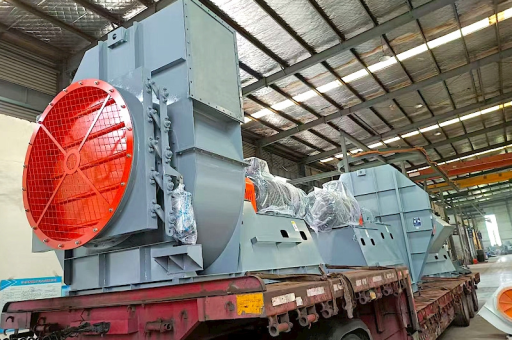
Industrial processes inevitably generate waste gas and dust. Managing these byproducts is not only a regulatory requirement but also a critical factor for worker safety, equipment longevity, and environmental compliance. At the heart of any effective dust collecting system lies the fan—specifically, industrial centrifugal fans equipped with a backward blower design.
Unlike standard axial fans, centrifugal fans generate high static pressure, which is essential for overcoming the resistance of ductwork, filters, and cyclones. Among centrifugal fan types, the backward blower (often referred as backward-inclined or backward-curved) stands out for its efficiency, self-limiting power characteristics, and ability to handle moderately dirty airstreams. This article provides a comprehensive, SEO-optimized exploration of how these fans function, why they are preferred, and how to select them for optimal performance.
Understanding the Core Components: Waste Gas, Dust, and Centrifugal Fans
To appreciate the role of a backward blower, we must first understand the system it serves. Industrial waste gas often contains volatile organic compounds (VOCs), fumes, and particulate matter. Dust can range from fine silica particles to heavy wood chips. A dust collecting system typically includes:
- Hoods and ductwork: Capturing and transporting contaminants.
- Dust collector (baghouse, cyclone, or cartridge filter): Separating solids from gas.
- Industrial centrifugal fan: Providing the energy (pressure and flow) to move the airstream.
The fan must be robust enough to withstand abrasion, corrosion, and potential material buildup. This is where the backward blower design becomes advantageous.
The Backward Blower Design: A Technical Deep Dive
Blade Geometry and Performance Curve
In backward blower industrial centrifugal fans, the blades curve away from the direction of rotation. This simple geometric difference creates a distinct performance profile:
- Pressure Curve: The pressure curve is steep and drooping, meaning that pressure rises sharply as flow decreases.
- Power Curve: This is the most critical feature. The power curve is non-overloading. As flow increases, power consumption rises but peaks at a moderate point and then drops. At free air (zero system resistance), power draw is minimal. This prevents motor overload even if the system becomes clogged.
Key Advantages Over Forward-Curved and Radial Fans
| Feature | Backward Blower | Forward-Curved Fan | Radial (Paddle Wheel) Fan |
|---|---|---|---|
| Efficiency | Highest (75-85%) | Lower (55-65%) | Lowest (40-55%) |
| Power Overload | Non-overloading | Overloading risk | Non-overloading |
| Dust Handling | Good (with proper design) | Poor (blades clog easily) | Excellent (heavy dust) |
| Noise Level | Medium | Lower (at same speed) | High |
| Application | General industrial dust, clean air | HVAC, low-pressure systems | Severe abrasion, pneumatic conveying |
Operational Principles in Industrial Dust Collection
Handling Particulate-Laden Air
When moving waste gas containing dust, the backward blower excels because its blade shape reduces the tendency for material to adhere to the blade surface. The smooth airfoil or backward-inclined plates allow particles to slide off rather than build up. However, for extremely sticky or abrasive dust (e.g., cement clinker), a radial fan with wear plates may still be preferred. For general dust collecting in woodworking or food processing, the backward blower is the industry standard.
Pressure and Volume Characteristics
A dust collecting system typically requires high static pressure (e.g., 10–30 inches of water gauge). The industrial centrifugal fans with backward blower design are available in single-inlet and double-inlet configurations, with wheel diameters ranging from 12 inches to over 100 inches. They are often driven by belt drives to allow speed adjustment, optimizing performance for changing system conditions.
Common Applications and Industries
The versatility of the backward blower makes it prevalent across many sectors:
- Cement Industry: Removal of kiln exhaust and raw material dust.
- Woodworking: Collection of sawdust and shavings from sanders, saws, and routers.
- Chemical Processing: Handling corrosive fumes and fine chemical powders.
- Pharmaceuticals: Maintaining cleanroom conditions and collecting airborne active ingredients.
- Power Generation: Draft fans for biomass and coal-fired boilers (often in conjunction with electrostatic precipitators).
In wind turbine manufacturing facilities, where large composite parts are sanded and cut, industrial centrifugal fans with backward blowers are essential for capturing the fine carbon fiber and fiberglass dust, ensuring a safe work environment.
Frequently Asked Questions (FAQ)
Q1: What is the primary difference between a backward blower and a forward-curved fan? A: The backward blower has blades that tilt away from rotation direction, offering higher efficiency and a non-overloading power curve. Forward-curved fans have blades curving into rotation, which are good for low-pressure, high-volume HVAC applications but can overload motors if system resistance drops.
Q2: Can a backward blower fan handle sticky or moist waste gas? A: It can handle moderate levels of moisture and light stickiness. However, if the dust is hygroscopic (e.g., sugar) or the waste gas contains condensing tars, a backward-inclined flat plate design (without airfoil cavities) is recommended to prevent material accumulation inside the blade pockets.
Q3: How do I determine the correct fan size for my dust collecting system? A: You need to know the required airflow (CFM) and the total static pressure (SP) of the system, including ductwork, filters, and hood losses. Fan curves provided by the manufacturer will show the performance of a given industrial centrifugal fan at various speeds. Always select the backward blower that operates near its peak efficiency point (typically 70-80% of wide-open flow).
Q4: Are backward blower fans suitable for explosion-proof environments? A: Yes. They can be constructed with aluminum or non-sparking materials (e.g., bronze impellers) and housed in a steel casing. In hazardous locations, the fan must be certified to ATEX or UL standards, and the backward blower design is commonly used due to its reliable performance under varying loads.
Conclusion: Selecting the Right Backward Blower for Your System
When designing or upgrading an industrial waste gas and dust collecting system, the choice of fan is not trivial. The backward blower industrial centrifugal fan offers the best balance of efficiency, reliability, and safety for most applications. Its non-overloading power curve protects your motor from burnout, while its blade design minimizes buildup and wear.
To ensure long-term performance, consider the following:
- Match the fan material to the dust and waste gas composition (steel, stainless steel, or stainless with coatings).
- Use a variable frequency drive (VFD) to control speed and save energy.
- Include an access door for inspection and cleaning of the backward blower wheel.
Whether you are retrofit an existing plant or designing a new facility—including a state-of-the-art wind turbine manufacturing line—partnering with a reputable fan manufacturer and specifying a backward blower design will yield a system that is both efficient and durable. In the realm of air pollution control, the backward blower remains a workhorse, quietly ensuring clean air and regulatory compliance.





