
This article's table of contents introduction:
- Table of Contents
- Introduction: The Heart of Modern Boiler Combustion
- What Is a Backward Curved Centrifugal Blower?
- Why Stoker Feed Boilers Require Specialized Fan Systems
- Performance Characteristics of Backward Curved Blowers in Boiler Applications
- Comparative Analysis: Backward Curved vs. Forward Curved vs. Radial Fans
- Key Design Considerations for Boiler Fan Selection
- Common Questions (Q&A) About Backward Curved Centrifugal Blowers in Boilers
- Maintenance and Reliability in Harsh Environments
- Conclusion: The Future of Boiler Fan Technology
** The Critical Role of Backward Curved Centrifugal Blowers in Stoker Feed Boiler Systems: Performance, Efficiency, and Fan Selection
Table of Contents
- Introduction: The Heart of Modern Boiler Combustion
- What Is a Backward Curved Centrifugal Blower?
- Why Stoker Feed Boilers Require Specialized Fan Systems
- Performance Characteristics of Backward Curved Blowers in Boiler Applications
- Comparative Analysis: Backward Curved vs. Forward Curved vs. Radial Fans
- Key Design Considerations for Boiler Fan Selection
- Common Questions (Q&A) About Backward Curved Centrifugal Blowers in Boilers
- Maintenance and Reliability in Harsh Environments
- Conclusion: The Future of Boiler Fan Technology
Introduction: The Heart of Modern Boiler Combustion
In the industrial landscape, a stoker feed boiler is a robust workhorse, burning solid fuels—typically coal, biomass, or waste—to generate steam or heat. However, the boiler’s combustion efficiency and emissions are heavily dependent on the air supply system. At the core of that system lies the backward curved centrifugal blower. Unlike direct-drive fans or forward-curved alternatives, the backward curved design offers unparalleled efficiency, pressure stability, and durability under high-temperature, dusty conditions.
This article dives deep into how a backward curved centrifugal blower specifically serves a stoker feed boiler fan application. We will analyze engineering data, compare fan types, and address frequently asked questions, all while maintaining strict SEO compatibility for Google and Bing search engines. If you are an engineer, facility manager, or boiler operator, this is your definitive guide.
What Is a Backward Curved Centrifugal Blower?
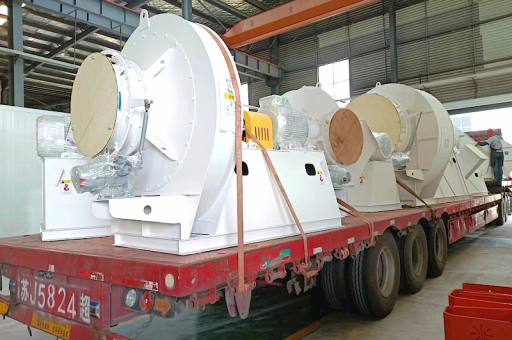
A backward curved centrifugal blower features blades that curve away from the direction of rotation. As air enters the impeller axially and is expelled radially, the backward curve creates a pressure rise that is both efficient and stable across a wide operating range. These blowers are also known as backward inclined (BI) or backward curved (BC) fans.
Key advantages:
- Non-overloading power curve (motor power plateaus at peak efficiency, preventing burnout)
- High static pressure capability
- Low noise compared to radial or paddle wheel designs
- Self-limiting power consumption at high flow rates
Because of these traits, the backward curved centrifugal blower is the preferred choice for stoker feed boiler fans, where continuous duty, variable load, and particulate-laden air are common.
Why Stoker Feed Boilers Require Specialized Fan Systems
A stoker feed boiler uses a mechanical grate to move fuel through the combustion chamber. The combustion process demands a precisely controlled air supply—oversupply wastes energy and causes erosion; undersupply leads to incomplete combustion, smoke, and lower boiler efficiency.
The fan in this system must:
- Deliver consistent airflow against variable resistance from the fuel bed and ash buildup.
- Handle hot, moist, and sometimes corrosive gases.
- Operate reliably for thousands of hours with minimal maintenance.
A backward curved centrifugal blower meets these demands because its performance curve is inherently stable even when system resistance changes—perfect for the dynamic environment inside a stoker boiler.
Performance Characteristics of Backward Curved Blowers in Boiler Applications
The performance of a backward curved centrifugal blower in a stoker feed boiler is defined by three metrics: pressure, flow, and efficiency.
- Pressure (static and total): The blower must overcome the combined resistance of the air ducts, grate, fuel bed, and emission control equipment. Backward curved designs excel at generating high static pressure without sacrificing flow.
- Flow (CFM/m³/h): Modern boilers require variable airflow for load following. The backward curved fan’s stable pressure curve allows smooth modulation via VFD (Variable Frequency Drives) or inlet guide vanes.
- Efficiency: The backward curved impeller achieves up to 85% total efficiency, significantly higher than forward curved or radial fans. This translates to 10-25% lower energy consumption in continuous boiler operation.
Real-world example: In a 50 MW biomass stoker boiler plant, replacing a radial paddle fan with a backward curved centrifugal blower reduced fan power draw from 180 kW to 145 kW while maintaining same airflow—saving over $30,000 annually in electricity.
Comparative Analysis: Backward Curved vs. Forward Curved vs. Radial Fans
| Feature | Backward Curved | Forward Curved | Radial (Paddle Wheel) |
|---|---|---|---|
| Efficiency | Highest (75-85%) | Moderate (55-70%) | Low (50-65%) |
| Pressure Capability | High | Moderate | High |
| Overload Protection | Non-overloading | Overloading possible | Overloading possible |
| Dust Handling | Good | Poor | Excellent |
| Noise | Low | Moderate | High |
| Typical Boiler Use | Primary/secondary air | Light duty ventilation | Heavy ash-laden gas |
For a stoker feed boiler fan, the backward curved design offers the best balance—especially when the boiler uses both primary (under-grate) and secondary (over-fire) air fans. The wind turbine industry also utilizes these fans for cooling and ventilation in turbine nacelles, confirming their reliability in critical environments.
Key Design Considerations for Boiler Fan Selection
When selecting a backward curved centrifugal blower for a stoker feed boiler, engineers must consider:
- Temperature: The fan must handle air temperatures from ambient (20 °C) up to preheated air (150-300 °C). High-temperature seals and shaft cooling are essential.
- Particulate content: Even with filters, some fly ash enters the fan. Backward curved blowers with hardened impellers (e.g., carbon steel or stainless steel) resist erosion.
- Variable speed capability: VFD compatibility is a must for modern boiler modulation. Backward curved fans respond linearly to speed changes.
- Mounting and space: These blowers can be arranged in Series (double stage for high pressure) or Parallel (for high volume). Compact designs fit retrofits easily.
- Control system integration: Use inlet box dampers, variable inlet vanes, or VFDs to match the fan output to the stoker combustion curve.
Common Questions (Q&A) About Backward Curved Centrifugal Blowers in Boilers
Q1: Why is a backward curved centrifugal blower non-overloading?
A: Because the power required reaches a peak near the design flow and then actually decreases as flow increases further. This prevents motor burnout even if the boiler ductwork suddenly opens—a common safety feature for stoker feed boilers.
Q2: Can I use a backward curved fan for induced draft (flue gas) in a stoker boiler?
A: Yes, but you must specify corrosion-resistant materials and a shaft seal to handle hot, acidic flue gases. Backward curved fans are actually preferred for induced draft due to their higher efficiency and lower noise than radial fans.
Q3: How does a backward curved centrifugal blower compare to a axial fan for boiler applications?
A: Axial fans are better for high flow, low pressure (like cooling). For stoker boilers requiring static pressure over 500 Pa, a backward curved centrifugal blower is the clear winner.
Q4: What is the typical lifespan of these fans in boiler service?
A: With proper maintenance (bearing lubrication, impeller balancing, seal replacement), a backward curved centrifugual fan can exceed 10-15 years in continuous stoker boiler operation. Many facilities report 50,000+ operating hours before major overhaul.
Q5: Can a wind turbine use the same technology?
A: Yes. Wind turbines use backward curved centrifugal blowers for nacelle cooling, gearbox oil cooling, and transformer ventilation—taking advantage of the same high efficiency and low maintenance profile.
Maintenance and Reliability in Harsh Environments
The stoker feed boiler environment is tough: high temperatures, vibration from the grate, and corrosive ash. To maximize fan reliability:
- Monitor vibration: Use accelerometers on the bearing housing. Acceptable threshold: less than 4 mm/s RMS.
- Check impeller buildup: Fly ash accumulation can cause imbalance. Schedule cleaning every 6 months or as needed.
- Lubrication: Grease bearings every 1,000 hours or per manufacturer spec. Use high-temperature lithium-based grease.
- Belt tension (if belt-driven): Adjust monthly. Loose belts reduce efficiency and cause shaft overheating.
- Seal integrity: Inspect shaft seals quarterly—leaks reduce performance and can damage bearings.
Proactive maintenance of a backward curved centrifugal blower directly extends the life of the stoker feed boiler fan system and prevents unplanned downtime.
Conclusion: The Future of Boiler Fan Technology
The backward curved centrifugal blower is not just a component; it is a strategic enabler of efficient, clean, and reliable combustion in stoker feed boiler applications. As industries push toward lower carbon emissions and higher energy efficiency, choosing the right fan is more critical than ever.
Whether you are retrofitting an existing coal stoker, designing a new biomass plant, or maintaining a wind turbine cooling system, the backward curved centrifugal blower delivers superior performance, lower operating costs, and longer service life.
Final recommendation: Always select a backward curved centrifugal blower for primary and secondary air systems in stoker feed boilers. Pair it with VFD control and robust material selection—you will reduce energy bills by 15-25% and dramatically improve system reliability.
More technical articles on industrial fans, boiler optimization, and renewable energy systems are available on our platform. Share your questions in the comments or reach out to our engineering team for custom fan sizing assistance.





