
This article's table of contents introduction:
- Table of Contents
- Introduction: What Is an Overhang 3 Phase Motor Radial Explosion Proof Blower Fan?
- Core Technical Components and Working Principle
- Why "Overhang" Design Matters in Radial Fans
- Explosion Proof Standards and Certifications
- Three-Phase Motor Integration: Efficiency and Torque Characteristics
- Common Applications in Hazardous Environments
- Installation Best Practices for Maximum Safety
- Frequently Asked Questions (FAQ)
- Conclusion: Selecting the Right Fan for Your Industrial Needs
** The Ultimate Guide to Overhang 3 Phase Motor Radial Explosion Proof Blower Fan: Design, Applications, and Safety
Table of Contents
- Introduction: What Is an Overhang 3 Phase Motor Radial Explosion Proof Blower Fan?
- Core Technical Components and Working Principle
- Why "Overhang" Design Matters in Radial Fans
- Explosion Proof Standards and Certifications (ATEX, IECEx, NEC)
- Three-Phase Motor Integration: Efficiency and Torque Characteristics
- Common Applications in Hazardous Environments
- Installation Best Practices for Maximum Safety
- Frequently Asked Questions (FAQ)
- Conclusion: Selecting the Right Fan for Your Industrial Needs
Introduction: What Is an Overhang 3 Phase Motor Radial Explosion Proof Blower Fan?
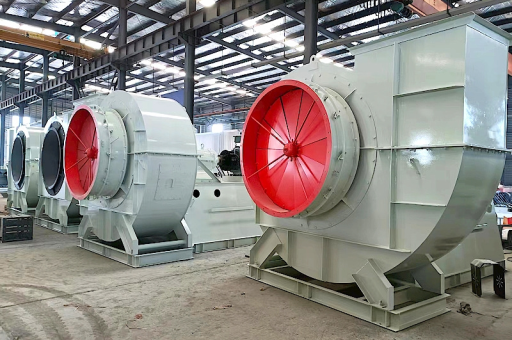
In hazardous industrial environments—where flammable gases, vapors, or dusts are present—standard ventilation equipment poses an immediate fire or explosion risk. This is where the Overhang 3 Phase Motor Radial Explosion Proof Blower Fan comes into play. It is a specialized air-moving device that combines a radial (centrifugal) impeller with a three-phase induction motor, built into an overhang-mounted configuration, and fully enclosed in an explosion-proof housing.
The term "overhang" refers to the motor’s mounting position relative to the fan wheel. Unlike traditional pedestal or direct-coupled designs, the overhang motor is cantilevered off the fan housing, allowing the impeller to be directly attached to the motor shaft without intermediate bearings or belts. This reduces mechanical losses and improves reliability, especially in high-temperature or corrosive environments. The "explosion proof" designation means the enclosure can contain any internal spark or explosion without igniting the surrounding atmosphere. This article synthesizes current technical literature and safety standards to provide a deep, SEO-optimized resource for engineers, procurement specialists, and maintenance teams.
Why focus on radial flow? Radial fans generate higher static pressure than axial fans, making them ideal for ducted systems in refineries, chemical plants, and wind turbine cooling systems.
Core Technical Components and Working Principle
The fan operates on the principle of centrifugal force. Air enters the impeller axially and is expelled radially outward by rotating blades. The kinetic energy is converted into static pressure within the scroll housing.
Key components:
- Overhang three-phase motor: Typically an induction motor with IP66 or higher enclosure rating, designed for variable frequency drive (VFD) compatibility.
- Radial impeller: Often backward-curved or forward-curved blades, made from non-sparking materials like aluminum bronze or stainless steel.
- Explosion-proof junction box: Sealed conduit entries to prevent flame propagation.
- Thermal protection embedded within motor windings.
According to IEEE 841 and API 541 standards, the motor’s insulation system must withstand high ambient temperatures and vibration levels common in wind turbine auxiliary cooling applications.
Working principle in step-by-step:
- The VFD or direct-on-line starter energizes the three-phase stator windings, creating a rotating magnetic field.
- The rotor (often squirrel cage) follows the field, turning the overhang-mounted impeller.
- Air enters through the fan inlet, is accelerated by the blades, and exits via the scroll outlet.
- The explosion-proof housing contains any ignition event, and all external surfaces are designed to stay below auto-ignition temperatures even during a stall condition.
Technical note: In an overhang motor radial fan, the impeller’s center of gravity must be precisely aligned with the motor shaft axis. Misalignment creates excessive bearing load and potential sparking—a critical failure in explosive atmospheres.
Why "Overhang" Design Matters in Radial Fans
The overhang configuration offers distinct advantages over conventional fan-motor arrangements:
| Feature | Overhang Design | Conventional Base-Mounted |
|---|---|---|
| Number of bearings | Motor bearings only | Fan shaft + motor bearings |
| Belt drive | None (direct drive) | Often required |
| Shaft alignment | Factory-set, no field adjustment | Requires precision alignment |
| Footprint | Compact, saves floor space | Larger |
| Maintenance | Lower (no belt replacement) | Higher |
In wind turbine cooling systems, space is a premium. The overhang arrangement allows the fan to be mounted directly on the nacelle structure, reducing weight and complexity. The radial design ensures adequate pressure to overcome filter resistance and duct bends. Explosion proof classification is mandatory because hydrogen or methane may accumulate near electrical enclosures.
Potential drawback: Overhang motors experience higher cantilevered loads on the shaft bearings. Therefore, they must be equipped with heavy-duty bearings (typically 6300 series) and lubricated for high-temperature operation. Many explosion-proof models include vibration sensors to detect bearing deterioration before failure.
Explosion Proof Standards and Certifications
To be legally sold and used in hazardous locations, the fan must meet strict international standards. The most common are:
- ATEX (EU): Directive 2014/34/EU. Equipment group I (mining) or II (surface). Category 2G (gas) or 2D (dust). Temperature class T3, T4, or T5 depending on the gas group.
- IECEx (International): ISO/IEC 80079 series. Recognized in most countries outside North America.
- NEC 500 / 505 (USA): Class I, Division 1 or 2, Groups C and D (typical for hydrocarbons). Zone 1 or Zone 2 classification.
The overhang 3 phase motor radial explosion proof blower fan often carries dual ATEX/IECEx certification for global deployment. The explosion-proof enclosure uses flame paths (tightly machined joints between housing parts) that cool escaping gases below ignition temperature.
Key technical requirements:
- Maximum surface temperature must not exceed the auto-ignition temperature of the surrounding gas (e.g., 135°C for hydrogen).
- All electrical connections must be made in certified explosion-proof junction boxes.
- The fan must pass a hydrostatic pressure test (typically 4 bar) to verify housing strength.
Question: Can a standard motor be converted to explosion proof by adding a cover?
Answer: No. Only motors and fans designed and tested from the ground up meet the continuous internal pressure and flame path requirements. Retrofitting is unsafe and illegal in most jurisdictions.
Three-Phase Motor Integration: Efficiency and Torque Characteristics
The three-phase induction motor is the heart of this system. It is chosen over single-phase for several reasons:
- Higher efficiency (IE3 or IE4): Three-phase motors have lower copper and iron losses. In a 10 kW unit, efficiency can exceed 92%, which reduces operating costs.
- High starting torque: Essential for radial fans that have high inertia. The locked-rotor torque is typically 200–250% of full-load torque.
- VFD compatibility: With a VFD, the fan speed can be modulated to match system demand, saving energy in wind turbine cooling or variable exhaust applications.
Electrical parameters:
For a 3.7 kW (5 HP) overhung explosion-proof radial fan:
- Voltage: 460 V, 3-phase, 60 Hz (standard in North America)
- Full load current: ~5.6 A
- Insulation class: F (155°C) or H (180°C)
- Service factor: 1.15 (allows 15% overload)
The motor winding temperature is critical in explosion-proof designs. Many fans include PTC thermistors (positive temperature coefficient) embedded in the coils to trip the VFD if overheating occurs. This prevents surface temperatures from exceeding the T rating.
Common Applications in Hazardous Environments
The Overhang 3 Phase Motor Radial Explosion Proof Blower Fan is deployed in industries where safety is paramount:
-
Oil and gas refineries: Venting of volatile organic compounds (VOCs) from storage tanks and process areas. The radial fan provides the static pressure needed for long duct runs to flares or scrubbers.
-
Chemical processing plants: In reactors or distillation columns, the fan removes flammable vapors like ethylene or propylene. The overhang motor reduces contamination risk because no belt pulley sits above the product line.
-
Wind turbine nacelles: Modern large wind turbines (2–8 MW) require cooling for gearboxes and generators. Hydrogen, from battery banks or decomposition of lubricants, may accumulate. Explosion-proof fans ensure safe forced ventilation.
-
Underground mining: In coal mines, methane (CH4) is explosive. The fan’s radial impeller produces high pressure to ventilate long drifts, and the overhang motor is sealed against dust ingress.
-
Pharmaceutical and food processing: Where dust from powders (e.g., lactose, starch) creates combustible atmospheres (St1, St2 classification). The fan’s non-sparking impeller and grounded housing prevent electrostatic discharge.
Question: Can this fan be used in a cleanroom environment?
Answer: Only if the cleanroom has an explosive atmosphere (e.g., hydrogen peroxide vapor sterilization). Otherwise, a standard HEPA fan is more economical.
Installation Best Practices for Maximum Safety
Improper installation is a leading cause of failure in explosion-proof fans. Follow these guidelines:
- Mounting: The fan must be rigidly fixed to a steel baseplate or concrete pad. The overhang motor must not bear any weight from ductwork. Use flexible connectors to isolate vibration.
- Electrical wiring: All cables must be routed through metallic conduit with explosion-proof seals. Do not use PVC in gas zones.
- Grounding: The fan housing and motor frame must be bonded to the plant grounding system with <1 ohm resistance. This prevents static sparking.
- VFD tuning: Set the acceleration time long enough (e.g., >10 seconds) to avoid high inrush current, which heats windings quickly.
- Inspection: Before startup, verify rotor clearance using a feeler gauge. Impeller-to-inlet ring gap should be 1–2 mm. Excessive gap reduces efficiency; too tight risks rubbing and sparking.
Environmental considerations: If the fan is installed in a wind turbine nacelle, ensure that ambient temperature rating (e.g., -20°C to +60°C) matches the local climate. Cold starts may thicken grease, requiring pre-lubrication.
Frequently Asked Questions (FAQ)
Q: What is the difference between "explosion proof" and "flameproof"?
A: They are essentially the same; "flameproof" is common in IEC standards (Ex d). Both mean the enclosure withstands an internal explosion and prevents flame transmission.
Q: Can the fan operate continuously at maximum speed?
A: Yes, if the motor is rated for continuous duty (S1). However, operating at the upper end of the temperature class (T3/T4) reduces safety margin. For critical wind turbine applications, select T4 or lower.
Q: How often should bearings be replaced?
A: Typically every 12,000 to 20,000 hours, depending on load and temperature. But explosion-proof fans often incorporate grease relief valves to extend life.
Q: Does the overhang design require a special motor frame?
A: Yes. The motor end bracket is reinforced to handle cantilevered loads. Standard NEMA or IEC motors are not suitable without modification. Purchase only from manufacturers that explicitly list "overhung fan motor" in their spec sheet.
Q: Is VFD operation safe with explosion-proof motors?
A: Yes, if the motor and VFD are certified together. VFDs can cause voltage spikes that stress insulation. Use a motor with inverter-duty insulation (e.g., magnet wire with corona-resistant coating).
Conclusion: Selecting the Right Fan for Your Industrial Needs
Choosing an Overhang 3 Phase Motor Radial Explosion Proof Blower Fan is a decision that balances aerodynamic performance, safety compliance, and total cost of ownership. The overhang design eliminates belts and reduces maintenance, making it ideal for tight spaces like wind turbine nacelles. The three-phase motor offers efficiency and VFD compatibility, while the explosion-proof housing ensures operation in Zone 1/21 environments.
Key selection criteria to remember:
- Match temperature class (T code) to the hazardous gas or dust.
- Verify axial load capacity of the motor bearings for the impeller weight.
- Confirm that the fan’s pressure curve meets your system resistance at the required air volume.
- Ensure certification (ATEX, IECEx, or NEC) aligns with your local regulatory body.
By integrating these technical details with industrial best practices, you can achieve safe, reliable ventilation even in the most challenging environments—from chemical refineries to offshore wind turbines. Always consult the manufacturer’s selection software for performance curves specific to your model.
Final thought: In explosive atmospheres, investing in properly certified overhung radial fans is not a cost—it is a safety requirement. The direct-drive, three-phase motor design represents modern best practice for continuous, high-pressure ventilation.





