
This article's table of contents introduction:
- Summary of the Specification
- What this Fan Is Used For
- Key Features You Should Expect (If buying/specifying)
- Common Specifications Sheet (Example)
- Potential Applications (Where you might find this exact fan)
- Important Questions to Ask (Before Purchase)
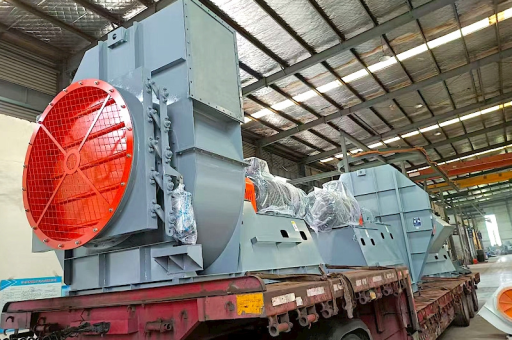
Based on the keywords you provided, here is the breakdown of what that specification describes and its typical application.
Summary of the Specification
- Dynamic Balanced: This indicates the fan's impeller (wheel) has been dynamically balanced to a high standard (typically ISO 1940 G6.3 or G2.5). This ensures minimal vibration during operation, longer bearing life, and quieter performance.
- Industrial Pa: This refers to Pressure (Pascal) . An "Industrial Pa" rating usually implies a medium to high static pressure fan (e.g., 1000–4000 Pa), designed to overcome the resistance of a boiler system, ductwork, and air pollution control devices.
- 2500 Cfm: This is the Airflow (Cubic Feet per Minute) . 2500 CFM is a substantial airflow, suitable for large commercial boilers, industrial heat exchangers, or smaller industrial burners.
- Boiler Centrifugal Fan: This confirms the fan type. It is a centrifugal (radial) fan designed specifically for boiler applications, typically involving high temperature and/or particulate-laden air.
What this Fan Is Used For
This specific specification is most common for:
- Forced Draft (FD) Fans: Pushing combustion air into the boiler burner. The 2500 CFM supplies oxygen for the fuel to burn efficiently.
- Induced Draft (ID) Fans: Pulling flue gas (exhaust) out of the boiler, through the heat exchanger, and out the chimney. This fan would need to handle higher temperatures (often up to 400°F / 200°C or more).
- Industrial Hot Air Recirculation: Moving hot air from the boiler or furnace to a drying oven or industrial process.
Key Features You Should Expect (If buying/specifying)
When you see "Dynamic Balanced Industrial Pa 2500 Cfm Boiler Centrifugal Fan," the manufacturer is highlighting these technical attributes:
- High Static Pressure (Pa): The "Industrial Pa" implies a powerful motor and a strong fan housing to overcome resistance (draft loss) in the boiler system.
- Robust Construction:
- Housing: Heavy-gauge steel, often with a drain or purge port.
- Impeller: Typically Backward-Inclined (B-I) or Radial Tip design for high efficiency and medium pressure, or Paddlewheel for handling dirty/ashy gas.
- Shaft & Bearings: Oversized shaft with pillow block bearings designed for high radial loads and heat.
- Heat Protection: For boiler use, look for features like:
- Heat slinger (a disc on the shaft near the housing to deflect heat).
- Water-cooled or high-temp grease bearings.
- Expansion joint between the housing and the shaft (for high-temp ID fans).
- Drive Type:
- Direct Drive: Motor is mounted on the fan housing. Simpler, but motor is exposed to heat.
- Belt Drive (Pulley): More common. Allows for speed adjustments (CFM change) and places the motor outside the hot airstream.
Common Specifications Sheet (Example)
| Parameter | Expected Value (Approx) |
|---|---|
| Model Type | Centrifugal, Belt Drive (or Direct Drive) |
| Airflow | 2500 CFM |
| Static Pressure | 1500 – 4000 Pa (depending on design) |
| Temperature | Up to 150°C (for FD) / 400°C (for ID) |
| Impeller Type | Backward-Inclined (BIC) or Radial |
| Balance Grade | ISO 1940 G6.3 |
| Motor Power | 5 HP – 15 HP (Typically 7.5 HP) |
| Inlet/Outlet | Circular (for duct) or Rectangular |
| Material | Carbon Steel (Standard), 304 SS (for corrosive fumes) |
Potential Applications (Where you might find this exact fan)
- Hot Water Boilers (Commercial/Industrial)
- Hurst, Cleaver-Brooks, or Fulton Boilers (Retrofit or replacement fan)
- Biomass or Pellet Boilers (Requires a heavy-duty, abrasion-resistant fan)
- Industrial Heat Exchangers & Thermal Oxidizers
- Dust Collection on Boiler Systems
Important Questions to Ask (Before Purchase)
If you are looking to buy or specify this fan, you need to clarify:
- Is it an FD (Forced Draft) or ID (Induced Draft) fan? (ID fans require high-temperature construction).
- What is the specific static pressure requirement? (e.g., 2" WC (~500 Pa) vs. 10" WC (~2500 Pa). "Industrial Pa" is vague).
- What is the gas temperature at the fan inlet? (Crucial for material and bearing selection).
- Is the air clean or dirty/ashy? (Determines impeller type).
- What is the voltage and phase? (e.g., 230V/3ph or 460V/3ph).
Bottom Line: This is a medium-volume, medium-to-high-pressure fan built for the harsh environment of a boiler system. It is more robust than a standard HVAC centrifugal fan and is balanced to prevent vibration at high speeds.





