
This article's table of contents introduction:
- What This Description Tells Us
- Typical Applications for This Specification
- Key Strengths of This Configuration
- Important Considerations & Questions to Ask
- Summary
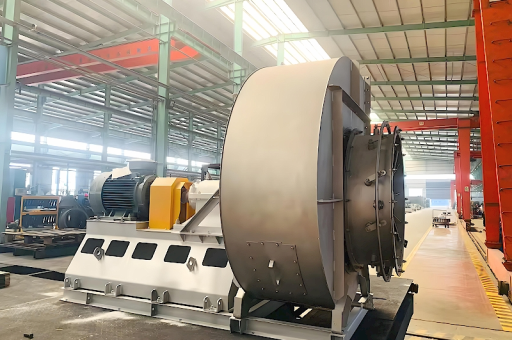
Based on the description you provided – "AC Motor, Aluminium Alloyed, 745 rpm, Industrial Centrifugal Extractor Fan" – this is a specific piece of heavy-duty ventilation equipment. Here is a detailed breakdown of what this specification means, its typical applications, and key considerations.
What This Description Tells Us
-
Industrial Centrifugal Extractor Fan: This is the core type. Unlike an axial fan (like a desk fan), a centrifugal fan uses a rotating impeller to draw air in axially and discharge it radially (at 90 degrees). This generates higher pressure.
- "Extractor" means it is designed to pull air out of a space (negative pressure), typically through ductwork.
-
AC Motor:
- Power Source: Runs on standard Alternating Current (e.g., 220V/380V/415V, 50/60Hz). This is the standard for heavy industrial machinery.
- Type: Likely an Induction Motor (squirrel cage). These are robust, reliable, and require very little maintenance. They are also often used in potentially explosive or dirty environments.
- Note on 745 rpm: This is a relatively low speed for a direct-drive AC motor. A standard 4-pole AC motor runs at ~1450 rpm (on 50Hz), and a 2-pole at ~2900 rpm. 745 rpm strongly suggests a 6-pole motor (which runs at ~970 rpm on 50Hz, or ~1160 on 60Hz, with slip accounting for the difference). It could also be an 8-pole motor with a specific design. A low speed is chosen for high torque, low noise, or to handle heavy/dusty air.
-
Aluminium Alloyed:
- Impeller (Fan Wheel): The most common interpretation. The fan wheel (the rotating blades) is cast or fabricated from an aluminum alloy.
- Why Aluminum?
- Lightweight: Reduces the load on the motor and bearings, improving efficiency and lifespan.
- Non-Sparking: Critical for safety. Aluminum is less likely to create sparks upon impact with other metals. This makes the fan suitable for extracting potentially flammable gases, vapors, or dusts (e.g., in paint shops, chemical plants, or woodworking).
- Corrosion Resistant: Good for general industrial air, but less resistant than stainless steel for highly corrosive acids.
- Housing: The housing might also be aluminum or cast iron.
-
745 r/min (Revolutions per Minute):
- Airflow and Pressure: At this low speed, the fan will produce a high volume of air at a moderate pressure. It will be relatively quiet compared to a high-speed fan.
- Applications: This speed is ideal for moving large volumes of clean or slightly dusty air through long duct runs without excessive noise or vibration.
Typical Applications for This Specification
This fan is a workhorse for:
- General Factory Ventilation: Removing heat, fumes, and stale air from large manufacturing halls.
- Paint Booths & Spray Rooms: The non-sparking aluminum impeller is a safety requirement.
- Woodworking: Extracting wood chips and dust. (Note: For fine, explosive dust like flour or aluminum powder, even aluminum impellers need specific spark-resistant construction).
- Warehouses & Storage: For air circulation and temperature control.
- Agricultural Buildings: Ventilating barns, greenhouses, or grain storage.
- Laboratory Fume Hoods: (If the impeller is completely spark-proof and the motor is explosion-proof).
- Clean Rooms: (If HEPA filters are used in the system).
Key Strengths of This Configuration
- Robust & Reliable: The AC induction motor is nearly indestructible with proper maintenance.
- Safe: The aluminum impeller reduces spark risk.
- Energy Efficient: For its power rating, a low-speed fan moves air very efficiently.
- Long Life: Lower speeds mean less wear on bearings and belts (if belt-driven).
- Quiet Operation: A 745 rpm fan is significantly quieter than a 3000 rpm fan of the same size.
Important Considerations & Questions to Ask
Before purchasing or installing, you must know:
- Horsepower (kW) & Voltage (V/Hz): Is it single-phase or three-phase? Industrial fans are almost always 3-phase (e.g., 380V/415V). Single-phase is rare at this size.
- Airflow (CFM or m³/h) & Pressure (SP or Pa): This is the most critical performance data. A 745 rpm fan could move 5,000 CFM or 50,000 CFM depending on the impeller's diameter and width.
- Impeller Diameter: A 12" wheel vs. a 36" wheel will have vastly different performance.
- Inlet/Outlet Size: What ductwork does it connect to (e.g., 12", 20", 36" diameter)?
- Drive Type:
- Direct Drive: Motor shaft is directly coupled to the impeller. (If it's 745 rpm, this is almost certainly the case).
- Belt Drive: A belt connects the motor (which may run at 1450 rpm) to a pulley system to achieve the 745 rpm impeller speed. This is more adjustable.
- Bearing Type: Sealed ball bearings are standard for durability. Sleeve bearings are cheaper but much lower quality.
- Exhaust Location: Is it a roof-mounted unit (upblast/downblast) or a wall-mounted unit?
- Temperature Rating: Can it handle the heat of the extracted air?
- Safety Certifications: Is it ATEX or UL/CSA rated for explosive environments?
Summary
| Feature | Interpretation | Benefit |
|---|---|---|
| Centrifugal | High pressure, good for ductwork | Moves air through long or complex ducts |
| AC Motor | Simple, reliable, industrial standard | Low maintenance, robust |
| Aluminum Alloy | Light, non-sparking | Safe for flammable environments, durable |
| 745 rpm | Low speed, high torque, quiet | Efficient, long life, low noise |
Bottom line: This is a high-quality, heavy-duty fan designed for safety and efficiency in industrial extraction. The low speed and non-sparking impeller make it an excellent choice for workshops, factories, and other settings where reliability and safety are paramount. You need the specific CFM (airflow) and static pressure ratings to know if it's correctly sized for your application.





