
This article's table of contents introduction:
- Core Function & Purpose
- Types of Furnaces Using Circulating Fans
- Critical Fan Design Features
- Key Performance Parameters
- Common Failure Modes & Maintenance
- Selection Considerations
- Key Manufacturers (Examples)
- Summary
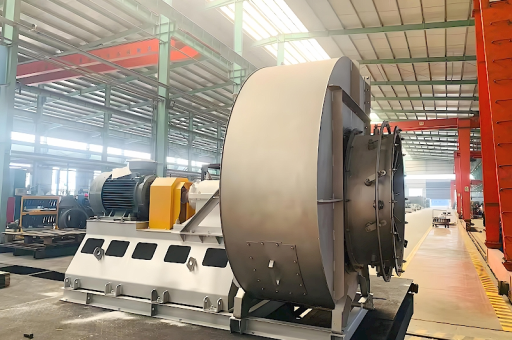
This is a detailed overview of circulating fans for furnaces in the metallurgical industry. These are not standard HVAC fans; they are critical process equipment designed for extreme environments.
Core Function & Purpose
Unlike simple ventilation fans, circulating fans in metallurgical furnaces serve several critical roles:
- Heat Uniformity: They stir the furnace atmosphere to eliminate "hot spots" and "cold spots," ensuring every part of the metal charge reaches the target temperature evenly.
- Temperature Stratification Prevention: Without circulation, hot gases rise, creating a significant temperature difference between the top and bottom of the furnace. This can cause uneven heating and microstructure.
- Increased Heat Transfer Rate: Forced convection dramatically speeds up heat transfer compared to natural convection and radiation alone. This reduces cycle times and improves productivity.
- Atmosphere Control: In heat treatment furnaces (e.g., carburizing, nitriding), a consistent atmosphere is critical. Fans mix protective or reactive gases (e.g., nitrogen, hydrogen, endothermic gas) to ensure uniform chemical reactions on the metal surface.
- Scale and Soot Management: Moving air/gas helps remove loose scale or soot from the heating elements and the workload, preventing localized overheating or contamination.
Types of Furnaces Using Circulating Fans
| Furnace Type | Typical Temperature Range | Fan Characteristics |
|---|---|---|
| Batch Furnaces (Box, Car-bottom, Bell) | 400°C - 1250°C | Centrifugal or axial fans mounted on roof or side wall. High temperature, heavy-duty. |
| Continuous Furnaces (Roller hearth, Pusher, Walking beam) | 700°C - 1300°C | Large, often dual-zone fans for recirculation. High mass flow, moderate pressure. |
| Heat Treatment Furnaces (Annealing, Normalizing, Tempering) | 150°C - 1100°C | Moderate temperature fans (for tempering); high-speed fans for quenching (gas cooling). |
| Vacuum Furnaces | 600°C - 1300°C (low pressure) | Specialized fans with gas cooling systems (quench fans). |
| Induction Stirring (for melting) | Liquid metal (e.g., 1600°C) | Not a mechanical fan. Uses electromagnetic fields to circulate molten metal. |
Critical Fan Design Features
Standard fans cannot survive these conditions. Special design is mandatory:
a. Materials of Construction
- Impeller & Shroud: Cast heat-resistant alloys (e.g., Inconel 600, XH40 (Incoloy 800HT), HK-40, 310S stainless steel). These materials resist oxidation, creep, and thermal fatigue.
- Shaft: Typically made of the same alloy as the impeller or a high-strength stainless steel (e.g., 316Ti). Must handle torsional stress and thermal expansion.
- Bearings: External to the furnace. Mounted outside the hot zone, cooled by a water jacket or air cooling fan on the base of the motor. Critical: Bearings must never contact hot gases.
b. Impeller Types
- Radial / Centrifugal: Best for high pressure, high temperature, and particulate-laden gases. The "paddle wheel" or "radial blade" design is robust.
- Axial: Used in lower pressure, high-volume applications (e.g., some bell furnaces). Susceptible to thermal warpage under rapid cycling.
- High-Temperature Backward Curved: More efficient but more expensive. Used where precise atmosphere control is needed.
c. Cooling System (Bearing & Motor Protection)
- Water-Cooled Base: A steel plate with internal water channels sits between the furnace shell and the bearing housing. This is the most common and reliable method for furnaces above 800°C.
- Air-Cooled Fan: A separate small axial fan blows ambient air over the bearing housing and motor. Sufficient for lower temperatures (e.g., tempering furnaces).
- Motor Insulation: Motors often have special Class H insulation (180°C+ rating) and thermal protection (RTDs) to prevent overheating from radiated heat.
d. Sealing & Atmosphere Integrity
- Shaft Seals: The point where the fan shaft enters the furnace is a major leak path.
- Carbon Ring Seals (most common for controlled atmospheres).
- Labyrinth Seals (for low-cost, high-volume applications).
- Packing Glands (old technology; high maintenance).
- Ventilation: A small amount of nitrogen or inert gas is often injected between the seal and the bearing housing to prevent hot gas from reaching the bearing and to prevent air from entering the furnace.
Key Performance Parameters
- Flow Rate (m³/h or CFM): Determines the level of turbulence and heat transfer. Too low = stratification; too high = excessive fan power and potential workpiece vibration.
- Static Pressure (Pa or in. w.g.): Must overcome the resistance of the furnace interior, the workload, and ductwork (if any). High thermal expansion of gas reduces density, requiring careful calculation.
- Temperature Grade: Fans are rated for continuous operation at a maximum gas temperature (e.g., "950°C continuous"). Exceeding this can cause creep failure.
- Drive System:
- Direct Drive (Variable Frequency Drive - VFD): Most modern installations. VFD allows precise speed control to balance flow vs. temperature uniformity without mechanical dampers.
- Belt Drive: Older, but still used for very large fans or where motor speed adjustment is manual (via pulley change).
Common Failure Modes & Maintenance
| Failure Mode | Cause | Preventative Action |
|---|---|---|
| Creep Failure | Continuous operation at or above design temperature. | Proper material selection; accurate temperature control. |
| Thermal Fatigue | Rapid temperature changes (e.g., furnace opening, cycling). | Slow, controlled heating/cooling cycles (ramp rate). |
| Erosion / Abrasion | Dust, scale, or particles in the gas stream. | Hardfacing (e.g., Stellite) on leading edges of impeller blades; use of wear plates. |
| Unbalance / Vibration | Uneven deposition of scale; blade cracking. | Regular vibration analysis; periodic cleaning / rebalancing. |
| Bearing Failure | Cooling water blockages; seal failure; grease drying out. | Routine bearing temperature monitoring; water flow checks; regreasing schedule. |
| Seal Leakage | Carbon seal wear; misalignment. | Visual inspection; replacement during planned shutdowns. |
Selection Considerations
When choosing a circulating fan for a metallurgical furnace:
- Maximum continuous operating temperature (not just peak).
- Gas composition (e.g., air, endothermic gas, hydrogen – affects material corrosion).
- Desired flow rate (usually high to ensure turnover of furnace volume every 30-60 seconds).
- Space constraints (roof-mounted vs. side-wall; ductwork length).
- Drive type (VFD preferred for energy savings and process control).
- Access for maintenance (can you remove the fan motor without cooling the entire furnace?).
- Cooling system reliability (is there a backup water supply?).
Key Manufacturers (Examples)
- Ebara / Chicago Blower (High-temp industrial fans)
- FläktGroup / Howden (Process fans for steel)
- Robinson Industries (Custom-engineered fans)
- Twin City Fan & Blower (Heavy-duty metallurgical fans)
- Schmotzer / Venti Oelde (European, specialized in high-temperature recirculation)
- New York Blower Company (Many models for 1000°C+)
Summary
Circulating fans are the heart of a metallurgical furnace. They are not off-the-shelf items but are engineered components whose correct specification, material selection, cooling, and sealing are essential for achieving precise metallurgical outcomes, energy efficiency, and furnace longevity. Failure of a critical fan can shut down production for days and result in scrapped workpieces.





