
This article's table of contents introduction:
- Primary Applications
- Key Technical Challenges
- Common Fan Types Used
- Critical Design Features
- Selection Criteria (Quick Checklist)
- Major Manufacturers (Examples)
- Common Issues & Maintenance
- Example Specification Snippet
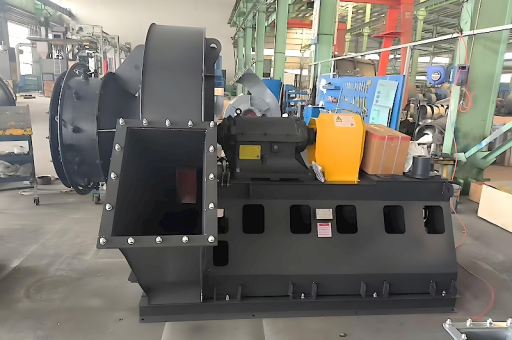
The term Gas Booster Fan (or Booster Blower) in the metallurgical industry refers to a specialized fan used to increase the pressure of a process gas (often combustible, toxic, or at high temperature) to overcome system resistance or to feed the gas into a higher-pressure downstream process.
Unlike standard ventilation fans, these are typically heavy-duty, high-pressure, and designed for gas-tight operation to prevent leakage.
Here is a detailed breakdown of gas booster fans in the metallurgical industry.
Primary Applications
In metallurgy (Iron & Steel, Non-ferrous like Copper, Zinc, Lead), these fans are critical for:
- Blast Furnace Gas Systems: Boosting the pressure of low-BTU blast furnace gas (BFG) for use in hot stoves, power plants (boilers), or other furnaces. BFG contains CO and is highly toxic.
- Coke Oven Gas (COG) Boosters: Increasing pressure of COG (rich in H2 and CH4) for heating soaking pits, reheating furnaces, or desulfurization units.
- Converter Gas (BOF/LD) Recovery: Boosting pressure of the recovered CO-rich off-gas from Basic Oxygen Furnaces for storage and reuse as fuel.
- Fume Exhaust Systems (Submerged Arc Furnaces / SAF): Maintaining negative pressure in furnace hoods and boosting gas pressure through baghouse filters and gas cleaning systems.
- Non-Ferrous Smelting: Boosting pressure of SO2-bearing gases for sulfuric acid plants or boosting process gas in fluidized bed roasters (e.g., for Zinc).
Key Technical Challenges
Metallurgical gases are harsh. The fan must handle:
- Corrosive Gases: SO2, H2S, chlorides.
- Abrasive Dust: Iron ore fines, coke dust, zinc oxide fume.
- Sticky Particulates: Tar (from coke ovens), zinc vapor condensates.
- High Temperatures: Up to 250°C-450°C (or higher if cooling is insufficient).
- Explosive & Toxic Gases: CO, H2, CH4 (requires gas-tight sealing & explosion-proof design).
- Variable Flow: Process conditions fluctuate significantly.
Common Fan Types Used
| Fan Type | Typical Use Case | Why? |
|---|---|---|
| Centrifugal (Radial / Backward Curved) | Standard booster for clean-ish gas (BFG, cleaned converter gas). | High pressure rise, stable performance curve. |
| Centrifugal (Radial Blade / Paddle Wheel) | Dust-laden or high-temperature gas (Raw gas before cleaning). | Simple, robust blades resist erosion and clogging. |
| High-Pressure Centrifugal (Multi-stage) | Very high pressure ratio needed (e.g., feeding gas into a long pipeline or a burner). | Achieves higher head than single stage. |
| Roots Blower (Positive Displacement) | Low flow, very high pressure, or for precise gas metering. | Constant volume, but more expensive and larger footprint. |
| Turbo Blower (Integral Gear) | Large volume, moderate pressure, high efficiency (e.g., large BFG boosters). | High speed, compact, energy efficient. |
Critical Design Features
Because of the hazards, these fans are not "off-the-shelf" items. Key specifications include:
a. Gas-Tight Construction (Zero Leakage)
- Shaft Seals: Mechanical seals (with flushing/purging) or labyrinth seals with inert gas (N2, Ar) purge to prevent gas escaping.
- Casing Design: Fully welded, hydrostatically tested. Often with gas-tight doors (O-ring sealed) for inspection.
- Vent / Drain: Provisions for purging the casing before startup and draining condensate.
b. Material Selection
- Impeller: High-strength steel (e.g., Corten, Hardox) for abrasive duty; Stainless Steel (304, 316L) for corrosion (SO2, H2S); Inconel or Hastelloy for high temperature + corrosion.
- Casing: Carbon steel with wear liners (ceramic tiles, hard-faced steel) in wear zones.
- Shaft: High alloy steel, often with a sleeve for seal area protection.
c. Safety & Monitoring
- Explosion-proof motor & electricals (ATEX/IECEx Zone 1 or 2).
- Vibration monitoring (accelerometers) – critical for early bearing/impeller failure detection.
- Bearing temperature sensors (RTD/thermocouples).
- Auxiliary cooling system (fan-mounted or separate oil cooling for bearings).
- Housing burst disc (for overpressure relief in case of explosion).
d. Variable Speed Drive (VSD)
- Almost mandatory for modern plants to handle variable gas flow efficiently and to allow soft start to avoid surge.
Selection Criteria (Quick Checklist)
When specifying a gas booster fan for metallurgy, you must provide:
- Gas Composition: List all components (CO, H2, N2, CO2, SO2, H2O, dust type & concentration).
- Operating Conditions: Flow rate (Nm³/hr or m³/hr @ actual conditions), Inlet pressure (kPa), Required discharge pressure (kPa). Crucially: Inlet temperature and maximum temperature rise.
- Ambient Conditions: Plant altitude, ambient temperature (for motor rating).
- Duty: Is it continuous (24/7) or intermittent? Is there a standby fan?
- Compliance Standards: ATEX (Europe), IECEx, NFPA (US), local safety codes.
Major Manufacturers (Examples)
- Howden (Extensive experience with BFG, COG, and converter gas fans)
- TLT-Turbo / Babcock & Wilcox (Large custom fans)
- Zander (Auburndale) / Robinson Fans (Industrial heavy duty)
- Spencer Turbine (Positive displacement roots boosters)
- Körting Hannover (Ejectors and fans for dangerous gases)
- Zhejiang Shangfeng / Shenyang Blower Works (Chinese manufacturers common in Asian steel plants)
Common Issues & Maintenance
- Impeller Wear: Leading edge erosion. Solution: Hard-facing, wear liners, reducing inlet velocity.
- Dust Build-up (Imbalance): Tar or zinc fume sticking to blades. Solution: Online washing systems, smooth blade coatings, scheduled cleaning.
- Seal Failure: Leakage of toxic gas. Solution: Correct seal type, clean purge gas, seal condition monitoring.
- Surge: Instability at low flow. Solution: Anti-surge control loop, recycle line with cooler.
Example Specification Snippet
"Gas Booster Fan for Blast Furnace Gas (BFG). Flow: 200,000 Nm³/h. Density: 1.25 kg/Nm³. Suction: 15 kPa(g). Discharge: 45 kPa(g). Temperature: 60°C. Gas: CO (~25%), CO2 (~20%), H2 (~3%), N2 (~52%). Max dust: 10 mg/Nm³. Construction: Fully gas-tight casing (welded). Shaft seal: Double mechanical seal with N2 buffer. Impeller: Backward curved hollow airfoil blades. Motor: 2.5kV, VSD ready, Exd IIC T3."
In summary: A gas booster fan in the metallurgical industry is a specialized, heavy-duty, safety-critical machine designed to increase the pressure of hazardous process gases (BFG, COG, converter gas) reliably and without leakage. Selection depends heavily on gas cleanliness, temperature, and pressure requirements. Always prioritize zero-leakage sealing, wear resistance, and explosion protection.





