
This article's table of contents introduction:
- The Core Concept
- Breakdown of the Key Terms
- Anatomy of the Fan (Cross-Section View)
- How it Works in a Dust Collection System
- Why Choose This Specific Fan?
- Potential Drawbacks / Considerations
- Summary Table
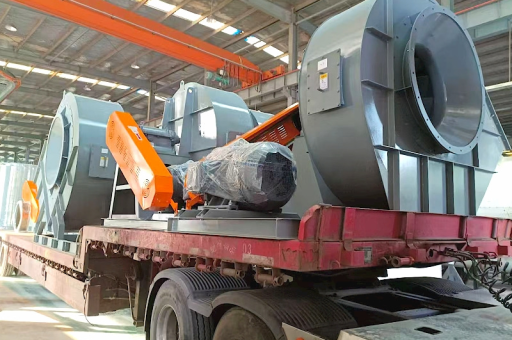
This is a very specific and highly engineered piece of industrial equipment. Let's break down exactly what an Industrial Belt Drive Abrasion Proof Centrifugal Fan for Dust Collection is, why each component is critical, and how it works.
The Core Concept
At its heart, this is a fan designed to move large volumes of air containing heavy, sharp, and abrasive particles (like wood chips, metal dust, cement powder, or sand) without being destroyed by the very material it's carrying. The "Belt Drive" and "Abrasion Proof" features are the keys to its longevity and performance.
Breakdown of the Key Terms
-
Industrial: Built for heavy-duty, continuous operation (24/7/365), often with high static pressure (resistance to airflow) demands. Not a light-duty HVAC fan.
-
Belt Drive: The motor is not directly connected to the fan impeller.
- How it works: An electric motor has a small pulley. The fan impeller has a larger pulley. They are connected by a set of V-belts.
- Why it's used (Critical Advantages):
- Speed Control (Key Fit): You can change the fan's speed (RPM) by changing the pulley sizes. This allows you to "trim" the fan to your exact system's airflow (CFM) and static pressure (SP) needs.
- Motor Protection: The belts act as a mechanical fuse. If a foreign object jams the impeller, the belts will slip or break before the motor burns out or the impeller shatters.
- Easier Maintenance: The motor is mounted on a sliding base. You can adjust belt tension easily without disassembling the fan. Replacing belts is far cheaper than replacing a motor or direct-drive fan bearings.
-
Abrasion Proof: This is the fan's "armor." It's not literally unbreakable, but it's designed to withstand severe erosive wear. This is achieved through:
- Thick Plate Construction: The housing and impeller are made from thicker gauge steel (e.g., 10 gauge, 7 gauge) than standard fans.
- Liner Plates (The Most Critical Feature): The entire interior of the fan housing (especially the "cut-off" or "scroll" area where wear is greatest) is lined with replaceable abrasion-resistant steel plates (often AR400 or AR500). This is the "sacrificial" layer that gets worn down, protecting the main housing.
- Reinforced Impeller: The blades are often made of thicker material or have wear strips welded to their leading edges. They are designed to be balanced and strong.
- Shaft Sleeves: The fan shaft is protected by a removable hardened steel sleeve. This prevents the dust-laden air from wearing down the shaft itself, which could lead to bearing failure.
-
Centrifugal Fan: This is the type of fan.
- How it works: Air enters the center (eye) of the impeller. The rotating impeller flings the air outward by centrifugal force. The air then travels through the fan housing (the "scroll" or "volute") and exits at a right angle.
- Why it's used: Centrifugal fans are best for high static pressure applications. They can push air through long duct runs, filters, cyclones, and baghouses. The design also inherently separates some heavier particles from the airstream.
-
Dust Collection: The specific application. The fan is the "engine" of a dust collection system. It creates the negative pressure (suction) needed to capture dust at the source (e.g., a saw, grinder, or conveyor transfer point), transport it through ducts, and eventually deposit it in a filter or collector.
Anatomy of the Fan (Cross-Section View)
- Inlet Cone: Accurately directs air into the eye of the impeller. Often also lined or made of abrasion-resistant material.
- Impeller (Wheel): The rotating part with blades. For abrasion, a radial blade or backward inclined (BI) design is common. Radial blades are less efficient but the best for handling heavy, sticky, or abrasive materials. Backward inclined blades are more efficient but slightly less tolerant.
- Housing (Scroll): The large, snail-shaped enclosure. Contains the liner plates.
- Shaft: Steel shaft connecting the impeller to the pulleys. Protected by shaft sleeves.
- Bearings: Heavy-duty, pillow block bearings mounted outside the airstream. They need to be robust to handle the belt tension and impeller weight.
- Pulleys & Belts: The transmission system.
- Motor Mount & Base: Heavy steel frame that holds the motor and fan together.
How it Works in a Dust Collection System
- Capture: Hoods or pickups at the dust-generating point (e.g., a saw blade) capture dust-laden air.
- Transport: Ductwork (at a specific velocity, usually 3500-4500 ft/min) carries the material.
- Separation: The air enters a primary separator (like a cyclone or a baghouse filter). The heavy dust falls out.
- The Fan's Role: This specific fan is usually placed after the filter (clean air side) or before the filter (dirty air side). Placing it after the filter (a "pull-through" system) protects the fan from the worst wear, but it requires a higher vacuum rating. Placing it before (a "push-through" system) means the fan handles all the dust, making the abrasion-proof features absolutely critical.
- Exhaust: Clean air is discharged to the atmosphere or recirculated.
Why Choose This Specific Fan?
- Extreme Durability: It's the only option for handling heavy concentrations of silica, cement, metal shot, fiberglass, or wood waste with high sand content.
- Flexibility: Belt drive allows for field-adjustable performance (CFM/SP) to match the system.
- Serviceability: The wear parts (liner plates, impeller, shaft sleeves) are designed to be replaced, extending the life of the fan's main housing.
- Reliability: The belt drive protects the motor and bearings.
Potential Drawbacks / Considerations
- Cost: Significantly more expensive than a standard fan due to heavy materials and specialized design.
- Efficiency: Radial blade designs are less efficient than airfoil or backward-curved blades. This means higher energy (electricity) costs.
- Noise: These fans are often louder than other types.
- Space & Weight: They are physically large, heavy, and require a substantial foundation.
Summary Table
| Feature | Purpose for Dust Collection |
|---|---|
| Industrial | Continuous, high-load operation. |
| Belt Drive | Variable speed, motor protection, easy maintenance. |
| Abrasion Proof | Survives erosive wear from dust particles (thick liners, reinforced impeller). |
| Centrifugal | Creates high static pressure to overcome duct/filter resistance. |
| Application | The essential "heart" moving the air in a heavy-duty dust collection system. |
In short: If you have a sawmill, a foundry, a cement plant, or a large woodworking shop, this is the fan you need to survive the brutal conditions of moving razor-sharp metal or rock-like dust. It’s a specialized tool for the toughest jobs.





