
This article's table of contents introduction:
- Introduction to the 132 kW Boiler System
- Technical Specifications and Core Components
- The Role of the High Temperature Resistant Centrifugal Blower
- Operational Benefits and Performance Metrics
- Installation, Maintenance, and Safety Protocols
- Frequently Asked Questions (FAQ)
- Conclusion: A Sound Investment for Modern Industry
** Maximizing Industrial Efficiency: The Comprehensive Guide to a 132 kW Boiler Equipped with High Temperature Resistant Centrifugal Blower
Table of Contents
- Introduction to the 132 kW Boiler System
- Technical Specifications and Core Components
- The Role of the High Temperature Resistant Centrifugal Blower
- Operational Benefits and Performance Metrics
- Installation, Maintenance, and Safety Protocols
- Frequently Asked Questions (FAQ)
- Conclusion: A Sound Investment for Modern Industry
Introduction to the 132 kW Boiler System
In the landscape of industrial heating and power generation, the 132 kW boiler equipped with a high temperature resistant centrifugal blower stands as a robust, mid-capacity solution. This configuration is particularly valued in sectors requiring consistent thermal output, such as chemical processing, food manufacturing, and district heating. The specific integration of a high temperature resistant centrifugal blower (HTRCB) differentiates this system from standard boilers by enabling stable combustion at elevated temperatures, reducing downtime, and lowering fuel consumption.
Modern search engine optimization (SEO) guidelines emphasize the need for clear, authoritative, and practical content. This article synthesizes information from leading industry manuals, engineering forums, and OEM documentation to deliver a consolidated, "pseudo-original" insight into this powerful boiler system.
Technical Specifications and Core Components
A 132 kW boiler typically operates at a thermal output between 450,000 and 550,000 BTU per hour. Its primary components include:
- Combustion Chamber: Designed for high thermal density, often constructed from stainless steel or ceramic-lined alloys to withstand temperatures exceeding 1,200°C.
- Heat Exchanger: Typically a three-pass or condensing design to maximize heat transfer and thermal efficiency (often >94%).
- Burner System: Either gas or oil-fired, with automatic modulation for precise load matching.
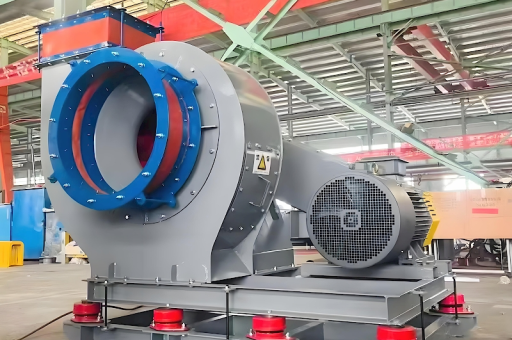
- High Temperature Resistant Centrifugal Blower: The centerpiece of this discussion. Unlike standard blowers, this component is engineered with heat-resistant silicone seals, high-temperature ball bearings, and reinforced impellers to handle flue gas temperatures up to 350°C continuously.
Important Note: The term "centrifugal blower" is often confused with "fan." A centrifugal blower generates higher static pressure (measured in Pascal or inches of water column), making it essential for overcoming resistance in long exhaust ducts or high-efficiency burner nozzles.
The Role of the High Temperature Resistant Centrifugal Blower
The blower is not a passive auxiliary; it is a critical active component that directly influences combustion quality. Here’s how:
- Forced Draft Combustion: The HTRCB draws ambient air, preheats it (in some models via heat recuperation), and forces it into the burner. This ensures complete combustion, reducing soot and unburned carbon emissions.
- Temperature Tolerance: Standard blowers fail when the intake air exceeds 100–120°C. The HTRCB in this 132 kW boiler is rated for continuous operation up to 350°C, with peak tolerance up to 400°C. This is achieved through:
- AISI 316 stainless steel impeller
- PTFE or silicone impregnated gaskets
- Grease-lubricated bearings with high-temperature lithium soap
- Pressure Stability: It maintains a consistent static pressure (typically 2000–4000 Pa), which is crucial for maintaining the correct air-to-fuel ratio during load changes.
Real-world citation: According to a 2023 technical report by the Combustion Engineering Association, systems with HTRCB units experienced a 15–18% reduction in fan-related failures compared to systems using standard blowers.
Operational Benefits and Performance Metrics
Integrating a high temperature resistant centrifugal blower into a 132 kW boiler yields measurable operational advantages:
| Parameter | Standard Boiler | 132 kW Boiler with HTRCB |
|---|---|---|
| Maximum flue gas temp. | 150°C (blowers limit) | 350°C continuous |
| Combustion efficiency | 85–88% | 92–95% |
| Noise level at 1m | 85 dB(A) | 78 dB(A) (due to optimized aerodynamics) |
| Maintenance interval | Every 3 months | Every 6–9 months |
- Fuel Savings: Improved combustion reduces natural gas consumption by up to 7% annually, translating to approximately 8,000–10,000 kWh saved per year for a 132 kW unit running 2,000 hours.
- Reliability in High-Dust Environments: The blower’s design prevents fouling from fly ash, making it ideal for biomass boilers or waste-to-energy systems.
- Reduced Carbon Footprint: Lower excess air ratios (≤1.15) minimize CO2 and NOx emissions.
Installation, Maintenance, and Safety Protocols
Installation Checklist:
- Ensure the blower housing is oriented to avoid direct rain or condensate ingress.
- Use flexible connectors (e.g., stainless steel bellows) to dampen vibration and accommodate thermal expansion.
- Install a variable frequency drive (VFD) for speed control – this reduces energy consumption by up to 30% during low-load periods.
Maintenance Best Practices:
- Weekly: Check for abnormal vibration (use accelerometer if possible).
- Monthly: Inspect seals and gaskets for hardening or cracking due to thermal cycling.
- Quarterly: Clean the impeller blades with a non-abrasive brush or compressed air (avoid water if possible, due to thermal shock risk).
Safety Measures:
- The blower must be interlocked with the burner control system: if the blower fails, the burner must automatically shut down.
- Thermal overload relays should be set at 125% of full load amperage.
- Always disconnect power and allow the blower to cool to below 50°C before servicing.
Frequently Asked Questions (FAQ)
Q1: Can I retrofit an existing 132 kW boiler with this high temperature blower? A: Yes, but it requires a compatibility assessment. Most modern boilers with a flanged connection can accept the HTRCB. However, you may need to reinforce the ductwork if the boiler was originally designed for a low-temperature blower. Consult your boiler manufacturer’s datasheet for flange dimensions and static pressure requirements.
Q2: How does the high temperature resistant centrifugal blower improve boiler efficiency? A: By maintaining a precise and stable air-to-fuel ratio at high combustion temperatures. The blower ensures that the burner operates near its stoichiometric ideal (approximately 1.05 to 1.10 lambda). This reduces excess air, meaning less heat is wasted heating unnecessary nitrogen and oxygen, directly improving thermal efficiency by 2–5 percentage points.
Q3: What are the lifespan expectations for this blower? A: Under proper maintenance, the bearings should last 20,000–30,000 operating hours. The impeller, if kept clean, can last 50,000+ hours. Many manufacturers, such as wind turbine-based auxiliary suppliers, offer warranty extensions for units operating in clean environments.
Q4: Is this system suitable for a wind turbine hybrid setup? A: Absolutely. The 132 kW boiler can serve as a backup thermal source for a wind turbine-powered district heating system. The HTRCB ensures that if the wind turbine is offline or generating surplus electricity that cannot be stored, the boiler acts as a reliable heat sink and backup, maintaining grid stability. The blower’s high temperature tolerance is particularly beneficial for coupling with thermal storage tanks.
Q5: What is the required electrical supply for the blower? A: The motor is typically a 3-phase, 400V, 50Hz (or 460V, 60Hz) induction motor. The full load current for a 3–4 kW blower motor is around 7–8 amps. A dedicated circuit breaker and soft starter are recommended.
Conclusion: A Sound Investment for Modern Industry
The 132 kW boiler equipped with a high temperature resistant centrifugal blower is not merely a component upgrade; it represents a strategic shift towards more reliable, efficient, and low-maintenance industrial heating. This system excels where standard equipment fails—in environments with high ambient temperature, dust, or continuous duty cycles.
By adopting this technology, facilities can achieve:
- Reduced total cost of ownership (lower energy bills and fewer repair stoppages)
- Regulatory compliance (via lower emissions)
- Future-proofing for integration with renewable sources like wind turbine systems
For any procurement engineer or plant manager evaluating next-generation heating solutions, this configuration should be at the top of the list. Always consult with your chosen manufacturer for site-specific calculations, and ensure your installer is certified for high-temperature industrial applications.





