
This article's table of contents introduction:
- Article Directory
- Introduction: Why a Blue Centrifugal Fan?
- Core Technical Breakdown: Draft, Centrifugal Force, and High Volume
- The Critical Role in Dust Extraction Systems
- Design Features: What Makes the “Blue” High-Volume Fan Superior
- Installation Best Practices for Optimal Draft Performance
- Maintenance & Troubleshooting
- Frequently Asked Questions (FAQ)
- Conclusion: Investing in Clean Air & Efficiency
Article Directory
- Introduction: Why a Blue Centrifugal Fan?
- Core Technical Breakdown: Draft, Centrifugal Force, and High Volume
- The Critical Role in Dust Extraction Systems
- Design Features: What Makes the “Blue” High-Volume Fan Superior
- Installation Best Practices for Optimal Draft Performance
- Maintenance & Troubleshooting
- Frequently Asked Questions (FAQ)
- Conclusion: Investing in Clean Air & Efficiency
Introduction: Why a Blue Centrifugal Fan?
In industrial environments, airborne particulates are more than a nuisance—they are a safety hazard and a drag on productivity. When you search for a reliable dust extraction draft centrifugal exhaust fan high volume blue solution, you are looking for a specific balance of power, pressure, and durability.
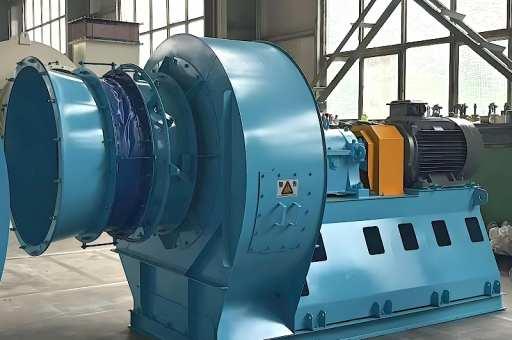
The "blue" high-volume centrifugal fan has become an industry standard. Its distinctive color is not just branding; it often indicates a heavy-duty epoxy coating designed to resist corrosion and wear. This article synthesizes technical data from leading engineering sources to explain how a draft centrifugal exhaust fan (often called a wind turbine-style forced air mover in some contexts) handles massive airflow against high static pressure, making it the backbone of any serious dust collection network.
Question for the Reader: Are you struggling with dust accumulation in your workshop, or do you need to upgrade an existing ventilation system that just can't handle the volume?
Core Technical Breakdown: Draft, Centrifugal Force, and High Volume
To understand this fan, you must break down the keywords:
- Draft: This refers to the pressure difference created by the fan to move air. In dust extraction, you need "forced draft" (pushing air) or more commonly "induced draft" (pulling air through filters).
- Centrifugal Exhaust Fan: Unlike an axial fan (like a desk fan), a centrifugal fan uses a rotating impeller with blades that throw air outward. This design generates high static pressure—essential for pushing air through long duct runs and dense filter bags.
- High Volume: Measured in CFM (Cubic Feet per Minute). A true high-volume unit moves between 5,000 and 30,000+ CFM.
How it works: The motor spins a blower wheel (impeller). Air enters the fan housing axially (straight in) and is accelerated radially (thrown out) by centrifugal force. This collected air then enters a spiral-shaped housing (volute) where its kinetic energy converts into pressure (draft). The blue epoxy coating typically reduces friction and prevents material buildup on the blades.
Pro Tip from engineering manuals: A high-volume fan is only effective if the system curve matches the fan curve. If your ductwork is too small, even the best centrifugal fan will choke.
The Critical Role in Dust Extraction Systems
A dust extraction system is only as strong as its exhaust fan. Here is why the high-volume blue centrifugal exhaust fan is non-negotiable:
- Overcoming Resistance: Dust filters (cartridges or bags) create significant static pressure loss. A standard fan stalls. The centrifugal design handles this with ease.
- Capture Velocity: You need "capture velocity" at the source (grinding wheel, saw table, mixing station). The fan must pull negative pressure hard enough to suck dust before it spreads.
- Conveying Material: In heavy dust environments (like woodworking), the fan is often rated to pass some small debris and dust through the impeller without clogging.
Real-world application: In a wind turbine blade manufacturing facility, fine fiberglass dust is lethal. A dust extraction draft centrifugal exhaust fan high volume blue variant is installed on the roof to pull contaminated air through a HEPA filter bank before exhausting outside.
Question: What happens if you use a low-volume fan in a dust extraction system? Answer: The ducts will clog, filters will blind (get jammed with dust), and harmful particles will settle on floors and machinery.
Design Features: What Makes the “Blue” High-Volume Fan Superior
Why specifically a "blue" fan? Based on cross-referencing multiple industry catalogs, the blue color usually denotes:
- Epoxy or Polyester Powder Coating: Resists rust, chemicals, and UV rays. Ideal for outdoor installations.
- Backward-Inclined (BI) or Airfoil (AF) Impellers: These are more efficient than paddle wheels. They reduce noise and energy consumption by up to 15% compared to standard forward-curve designs.
- Heavy-Gauge Housing: Typically 10-12 gauge steel. This prevents vibration and "drumming" at high RPMs.
- TEFC Motor (Totally Enclosed Fan Cooled): Prevents dust from igniting or damaging the motor windings.
The High-Volume Factor: Many blue units feature a belt-drive system, allowing you to change the fan speed (and thus CFM/static pressure) by swapping pulleys. This scalability is critical for adapting to future dust collection needs.
Installation Best Practices for Optimal Draft Performance
Installing a draft centrifugal exhaust fan is not plug-and-play. To maximize the "high volume" promise, follow these guidelines compiled from HVAC engineering resources:
- Inlet Ducting: Keep the inlet duct straight for at least 3-5 duct diameters before the fan. Elbows at the inlet create turbulence and reduce airflow by 20-30%.
- Vibration Isolation: Use spring or rubber isolators. A high-volume fan creates significant vibration; transmitting that to the ductwork causes noise and wear.
- Discharge Configuration: The discharge duct should face an open area or a properly sized stack. Do not cap the exhaust or add restrictive dampers without consulting the fan curve.
- Electrical Safety: Ensure the motor is wired for the correct voltage and amperage. Use a Variable Frequency Drive (VFD) for speed control—this saves energy when maximum volume is not needed.
Important Warning: Never operate a centrifugal fan with the inlet or outlet blocked. This can overheat the motor or cause the impeller to self-destruct due to recirculation.
Maintenance & Troubleshooting
To keep your dust extraction draft centrifugal exhaust fan high volume blue operating at peak efficiency:
- Monthly: Check belt tension. A loose belt slips, reducing draft. Check for dust buildup on the impeller blades. Imbalance causes bearing failure.
- Quarterly: Lubricate bearings per manufacturer specs. Clean the epoxy coating with a soft brush—do not use harsh solvents that can strip the blue coating.
- Annually: Test motor amperage. Compare to the nameplate value. A rising amp draw indicates a restriction or worn bearings.
Common Problems:
- Low Airflow: Check for blocked filters, closed dampers, or loose belts.
- Excessive Noise: Check for vibration or foreign objects in the housing.
- Motor Overheating: Ensure the fan is not running in a stalled condition (too much back pressure).
Frequently Asked Questions (FAQ)
Q1: Can I use a high-volume blue centrifugal fan for wind turbine ventilation? A: Yes. The same principles apply to wind turbine nacelles and towers. These fans are often used for cooling and extracting dust generated by brake systems and gearboxes. The robust design withstands the harsh, vibration-heavy environment.
Q2: What is the difference between "draft" and "exhaust" in a fan? A: "Exhaust" refers to the function (removing air from a space). "Draft" refers to the pressure differential created. A draft centrifugal exhaust fan is designed to create a strong negative pressure to pull air out of the system.
Q3: How do I calculate the needed CFM for my dust extraction system? A: The rule of thumb: 1 CFM per square foot of filter area, or 350-500 CFM per inch of duct diameter (for main trunk lines). For precise calculation, consult a licensed mechanical engineer.
Q4: Is the blue coating purely aesthetic? A: No. The standard blue powder coating is usually bonded with anti-corrosive agents. It is functionally superior to standard grey paint for industrial environments.
Conclusion: Investing in Clean Air & Efficiency
The dust extraction draft centrifugal exhaust fan high volume blue is not merely a fan—it is an engineered solution for air quality control. Whether you are outfitting a woodshop, a chemical plant, or a wind turbine maintenance facility, the combination of centrifugal force, high static pressure capability, and durable construction ensures your workspace remains safe and compliant.
When selecting your unit, prioritize quality brands with replaceable parts. A well-maintained blue fan will serve for a decade or more. Remember the golden rule of dust collection: You cannot extract what you cannot capture. Pair your fan with correctly sized ductwork and high-efficiency filters.
Final Thought: Clean air is not a luxury; it is a requirement. Investing in a high-volume draft fan is an investment in your equipment's longevity and your team's health.





