
This article's table of contents introduction:
- Table of Contents
- Introduction: The Critical Role of Backward 16Mn Forced Draft Fans in Industrial Kilns
- Understanding the Backward 16Mn Design: Blade Geometry and Material Selection
- Forced Draft vs. Induced Draft: Why Backward 16Mn Fans Are Preferred for Flue Gas
- Centrifugal Blower Fan Mechanics: How the Backward 16Mn Operates Under High Temperature
- Real-World Applications: Industrial Kilns, Flue Gas Systems, and Emission Control
- Key Advantages of 16Mn Steel in Forced Draft Fan Construction
- Common Challenges and Troubleshooting for Backward 16Mn Fans
- Q&A Section: Expert Answers to Typical Industry Questions
- Conclusion: Future Trends and Efficiency Improvements for Backward 16Mn Forced Draft Fans
Article Title:
The Backward 16Mn Forced Draft of Industrial Kilns Flue Gas Centrifugal Blower Fan: Design, Application, and Optimization
Table of Contents
- Introduction: The Critical Role of Backward 16Mn Forced Draft Fans in Industrial Kilns
- Understanding the Backward 16Mn Design: Blade Geometry and Material Selection
- Forced Draft vs. Induced Draft: Why Backward 16Mn Fans Are Preferred for Flue Gas
- Centrifugal Blower Fan Mechanics: How the Backward 16Mn Operates Under High Temperature
- Real-World Applications: Industrial Kilns, Flue Gas Systems, and Emission Control
- Key Advantages of 16Mn Steel in Forced Draft Fan Construction
- Common Challenges and Troubleshooting for Backward 16Mn Fans
- Q&A Section: Expert Answers to Typical Industry Questions
- Conclusion: Future Trends and Efficiency Improvements for Backward 16Mn Forced Draft Fans
Introduction: The Critical Role of Backward 16Mn Forced Draft Fans in Industrial Kilns
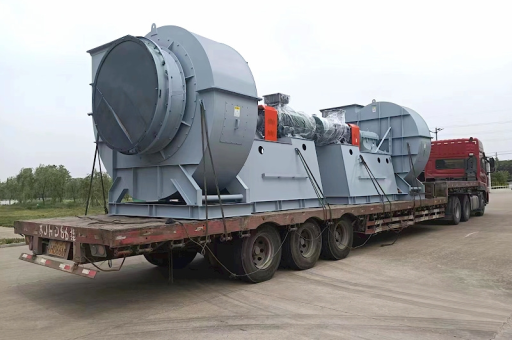
In heavy industrial environments such as cement kilns, steel reheat furnaces, and chemical processing plants, the backward 16Mn forced draft of industrial kilns flue gas centrifugal blower fan serves as a core component for combustion air supply and flue gas handling. These fans must withstand high temperatures, abrasive particulates, and corrosive gases while maintaining stable airflow. The backward-curved blade design, combined with 16Mn low-alloy high-strength steel, offers superior efficiency, reduced noise, and extended service life compared to radial or forward-curved alternatives.
The term "backward" refers to the blade orientation relative to the rotation direction. This design reduces energy losses by minimizing turbulence and allows the fan to deliver constant pressure over a wide flow range. When paired with 16Mn steel—a material known for its strength at elevated temperatures—the fan becomes an ideal solution for forced draft applications in industrial kilns.
Understanding the Backward 16Mn Design: Blade Geometry and Material Selection
The backward 16Mn forced draft of industrial kilns flue gas centrifugal blower fan typically features blades curved away from the direction of rotation. This geometry produces a lower noise profile and higher efficiency than forward-curved designs, especially when handling flue gases that contain particulates. The backward shape allows the fan to self-limit power demand, reducing the risk of motor overload.
16Mn steel (equivalent to Q345B in Chinese standards) offers excellent mechanical properties at temperatures up to 350°C. It resists thermal fatigue and provides good weldability. For flue gas applications where temperatures can spike above 400°C, 16Mn maintains structural integrity better than standard carbon steel, while remaining more cost-effective than stainless steel. The fan impeller and housing are precision-welded and dynamically balanced to reduce vibration and extend bearing life.
Forced Draft vs. Induced Draft: Why Backward 16Mn Fans Are Preferred for Flue Gas
In industrial kiln operations, forced draft fans push combustion air into the furnace, while induced draft fans extract flue gases. The backward 16Mn forced draft of industrial kilns flue gas centrifugal blower fan is specifically designed for the forced draft side, where it must overcome the resistance of burners, ductwork, and heat exchangers.
Compared to induced draft fans, forced draft models handle cleaner air—often preheated but with lower particulate loading. This reduces erosion on the backward-curved blades. Engineers prefer the backward 16Mn configuration because it delivers higher static pressure efficiency (often exceeding 85%) and maintains stable operation even when the system resistance changes due to fuel variations or damper adjustments.
Centrifugal Blower Fan Mechanics: How the Backward 16Mn Operates Under High Temperature
A backward 16Mn forced draft of industrial kilns flue gas centrifugal blower fan operates by accelerating air radially outward from the impeller center. The backward-curved blades guide the airflow with minimal shock losses. At high temperatures, the air expands, reducing density. The fan’s performance curve shifts: for a given speed, the volume flow remains relatively constant but the pressure generated drops.
To compensate, engineers often select fans with higher tip speeds and stiffer blade profiles. 16Mn steel's yield strength (approximately 345 MPa) ensures that the blades do not deform under centrifugal stress at operating speeds, even when handling preheated air up to 300°C. The housing is typically lined with erosion-resistant coatings if flue gas bypass or particulate carryover is expected.
Real-World Applications: Industrial Kilns, Flue Gas Systems, and Emission Control
The backward 16Mn forced draft of industrial kilns flue gas centrifugal blower fan is widely deployed in:
- Cement rotary kilns: Supplying preheated combustion air to the main burner.
- Steel reheating furnaces: Delivering forced draft to maintain uniform temperature profiles.
- Chemical industry kilns: Handling corrosive gases with appropriate seal and material upgrades.
- Waste-to-energy plants: Supplying air for secondary combustion chambers.
In flue gas treatment systems, these fans often work upstream of baghouses or scrubbers. Their backward curved design allows them to operate efficiently across variable load conditions, which is essential for meeting emission regulations such as low NOx compliance.
Key Advantages of 16Mn Steel in Forced Draft Fan Construction
16Mn steel provides several benefits specific to the backward 16Mn forced draft of industrial kilns flue gas centrifugal blower fan:
- High temperature strength: Retains structural integrity up to 350°C continuous.
- Weldability: Standard welding procedures without preheating requirements.
- Cost optimization: Lower alloy content than 310S or Hastelloy, yet outperforms A36.
- Erosion resistance: Superior to mild steel when surface hardened or coated.
- Fatigue life: Extended cycle life under repeated thermal and mechanical stress.
These properties make 16Mn the preferred material for kiln forced draft fans that must balance performance, cost, and longevity.
Common Challenges and Troubleshooting for Backward 16Mn Fans
Even with robust design, the backward 16Mn forced draft of industrial kilns flue gas centrifugal blower fan can encounter issues:
- Vibration: Often due to uneven buildup of dust on backward blades. Solution: install cleaning ports or use coatings.
- Bearing overheating: Caused by heat conduction from the housing. Solution: use heat slingers and synthetic grease with high dropping point.
- Blade fatigue: Rare with 16Mn but possible under resonance conditions. Solution: verify operating speed avoids critical frequencies.
- Corrosion: If flue gas contains sulfur or chlorine. Solution: apply stainless steel overlay or epoxy coating.
Regular dynamic balancing and thermographic inspections extend fan life significantly.
Q&A Section: Expert Answers to Typical Industry Questions
Q1: Why choose a backward curved fan over forward curved for forced draft?
A: Backward curved fans provide higher efficiency (85%+ vs. 70%), lower noise, and self-limiting power characteristics. For forced draft in kilns, where static pressure requirements vary, backward designs maintain stable airflow without motor overload.
Q2: Can the backward 16Mn fan handle flue gas with particulate matter?
A: Yes, but only if particulate loading is moderate (below 50 mg/Nm³). For higher dust loads, an induced draft fan or pre-separator is recommended. The backward design resists particle buildup better than forward blades.
Q3: What is the maximum continuous operating temperature for a 16Mn impeller?
A: Typically 300°C to 350°C continuous. For brief excursions up to 400°C, 16Mn can survive, but lifespan is reduced. For temperatures above 400°C, consider 15CrMo or stainless steel.
Q4: How often should a backward 16Mn forced draft fan be balanced?
A: At initial installation and then every 6 months or after 4000 operating hours. Additional balancing is needed if vibration exceeds 4.5 mm/s RMS.
Q5: What drives the trend toward variable speed drives (VFD) for these fans?
A: VFDs allow precise control of forced draft volume, reducing energy consumption by 30-50% compared to damper control. They also reduce inrush current and mechanical stress.
Conclusion: Future Trends and Efficiency Improvements for Backward 16Mn Forced Draft Fans
The backward 16Mn forced draft of industrial kilns flue gas centrifugal blower fan remains a cornerstone of industrial combustion systems. Future innovations include:
- Advanced coatings: Ceramic or Teflon-based coatings to reduce dust adhesion on backward blades.
- Smart monitoring: Integrated vibration sensors and temperature probes linked to predictive maintenance software.
- Aerodynamic optimization: CFD-designed blade profiles to push efficiency beyond 90%.
- Hybrid materials: Combining 16Mn with wear-resistant weld overlay for extended service intervals.
As industrial kilns face stricter emission standards and energy efficiency mandates, the backward 16M forced draft fan will continue evolving, supported by material science and digital control technologies. When properly selected and maintained, these fans deliver reliable performance for decades.





