
This article's table of contents introduction:
- Table of Contents / Article Guide
- 1. Introduction to Calcining Kilns and Their Industrial Importance
- 2. The Critical Function of High Pressure Exhaust Fans in Kiln Operations
- 3. Why SWSI Centrifugal Fans Are the Preferred Choice for High-Temperature Exhaust
- 4. Key Performance Metrics: Pressure, Flow, and Temperature Tolerance
- 5. Frequently Asked Questions (FAQ)
- 6. Best Practices for Fan Selection and Maintenance
- 7. Real-World Applications and Integration with wind turbine Systems
- 8. Conclusion: Efficiency, Safety, and Future Trends
Article Title:
Optimizing Industrial Combustion: The Role of Calcining Kilns, High Pressure Exhaust Fans, and SWSI Centrifugal Fans in Modern Manufacturing
Table of Contents / Article Guide
- Introduction to Calcining Kilns and Their Industrial Importance
- The Critical Function of High Pressure Exhaust Fans in Kiln Operations
- Why SWSI Centrifugal Fans Are the Preferred Choice for High-Temperature Exhaust
- Key Performance Metrics: Pressure, Flow, and Temperature Tolerance
- Frequently Asked Questions (FAQ)
- Best Practices for Fan Selection and Maintenance
- Real-World Applications and Integration with wind turbine Systems
- Conclusion: Efficiency, Safety, and Future Trends
Introduction to Calcining Kilns and Their Industrial Importance
Calcining kilns are high-temperature industrial furnaces used for thermal treatment of materials such as limestone, cement clinker, bauxite, and petroleum coke. The calcination process involves heating materials to temperatures between 800°C and 1450°C to drive off volatile compounds, induce chemical dissociation, or alter crystal structures. Industries ranging from cement production to mineral processing rely on these kilns for consistent product quality and throughput.
However, calcining kilns generate massive volumes of hot, corrosive, and dust-laden exhaust gases. Managing this gas flow is essential for maintaining process efficiency, preventing equipment damage, and complying with environmental regulations. This is where High Pressure Exhaust Fans and SWSI Centrifugal Fans become indispensable.
The Critical Function of High Pressure Exhaust Fans in Kiln Operations
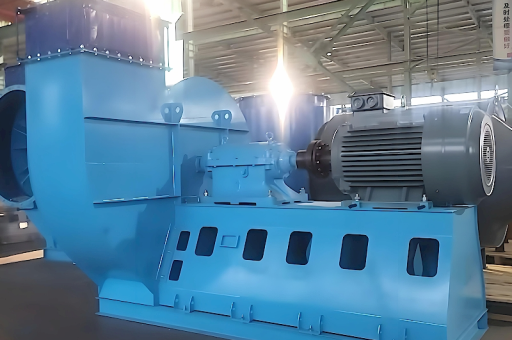
A High Pressure Exhaust Fan is designed to overcome the resistance created by ductwork, scrubbers, heat exchangers, and dust collectors in kiln exhaust systems. These fans must generate static pressures often exceeding 2000 Pa (8 inches w.g.) while handling gas temperatures that can reach 400°C or higher.
Key roles of high pressure exhaust fans in calcining kilns include:
- Maintaining negative pressure inside the kiln to prevent backdraft and gas leakage.
- Enhancing combustion efficiency by ensuring proper airflow for fuel oxidation.
- Reducing thermal stress on kiln refractories by controlling gas velocity.
- Enabling pollution control by moving exhaust gases through baghouses, electrostatic precipitators, or scrubbers.
Without a reliable high pressure fan, kiln operators face reduced production rates, increased fuel consumption, and higher emissions.
Why SWSI Centrifugal Fans Are the Preferred Choice for High-Temperature Exhaust
SWSI stands for Single Width, Single Inlet centrifugal fan. This design features a single-sided impeller and a single air intake, making it ideal for high-pressure applications where space and efficiency matter. In the context of calcining kilns, SWSI centrifugal fans offer several distinct advantages:
- Higher pressure capability compared to double-width fans of the same size.
- Lower leakage rates due to a single inlet seal.
- Easier maintenance with accessible bearings and shaft seals.
- Compact footprint for retrofitting into existing kiln exhaust systems.
When constructed with abrasion-resistant materials and high-temperature coatings, SWSI centrifugal fans can handle gas streams containing fine dust particles and corrosive compounds like sulfur dioxide (SO₂) and nitrogen oxides (NOₓ). Many modern SWSI fans also incorporate variable frequency drives (VFDs) to adjust fan speed based on real-time kiln demand, further improving energy efficiency.
Key Performance Metrics: Pressure, Flow, and Temperature Tolerance
To match a high pressure exhaust fan or SWSI centrifugal fan to a calcining kiln, engineers must evaluate three critical parameters:
| Metric | Typical Range for Calcining Kilns | Why It Matters |
|---|---|---|
| Static Pressure | 1500–5000 Pa (6–20 in w.g.) | Overcomes duct resistance and maintains kiln draft |
| Airflow (Volume) | 50,000–500,000 m³/h (30,000–300,000 CFM) | Ensures complete combustion and proper material heating |
| Gas Temperature | 200°C–600°C (with peaks to 800°C) | Requires heat-resistant materials like stainless steel or ceramic coatings |
Fans operating near the upper temperature limits should include cooling wheels, insulated housings, or external heat dissipation systems. Additionally, the fan impeller should be balanced dynamically to minimize vibration at high rotational speeds.
Frequently Asked Questions (FAQ)
Q1: What is the difference between a high pressure exhaust fan and a standard centrifugal fan?
A: High pressure exhaust fans are designed specifically to generate greater static pressure (≥2000 Pa) at moderate to high flow rates. Standard centrifugal fans typically operate at lower pressures and are not suited for heavy-duty industrial exhaust systems like those found in calcining kilns.
Q2: Can SWSI centrifugal fans handle corrosive gases from calcination?
A: Yes, provided they are constructed with corrosion-resistant materials such as 316L stainless steel, duplex alloys, or coated with epoxy or ceramic liners. Proper material selection is critical for long service life.
Q3: How does integrating a fan with a wind turbine system benefit a calcining plant?
A: Some industrial facilities are pairing high pressure exhaust fans with on-site wind turbine installations to offset electricity consumption. A wind turbine can supply renewable power to run the fan motor during peak wind periods, reducing operating costs and carbon footprint. This is particularly viable in open, windy locations near cement or lime plants.
Q4: What maintenance is required for SWSI fans in high-temperature service?
A: Regular tasks include checking shaft alignment, bearing lubrication, impeller wear, and cleaning dust buildup. Temperature monitoring via thermocouples and vibration analysis are also recommended to predict failures.
Q5: Can I replace my existing double-inlet fan with an SWSI model?
A: Often yes, but careful ductwork modification may be needed. SWSI fans have a single inlet, so the duct system must be reconfigured to match the new fan’s inlet geometry. Consult a fan engineer for proper sizing.
Best Practices for Fan Selection and Maintenance
When selecting a high pressure exhaust fan or SWSI centrifugal fan for a calcining kiln, follow these guidelines:
- Conduct a thorough system resistance analysis to avoid oversizing or undersizing the fan.
- Choose fans with adjustable speed drives to match variable kiln loads.
- Specify material thickness to resist erosion from particulate-laden gas.
- Install inlet box dampers or vanes for fine-tuning airflow without wasting energy.
- Implement predictive maintenance using thermal imaging and vibration sensors.
A well-chosen fan not only extends the life of the kiln but also reduces energy costs by 15–30% compared to outdated equipment.
Real-World Applications and Integration with wind turbine Systems
In modern industrial sites, sustainability initiatives often combine high-performance fans with renewable energy sources. For example, a bauxite calcination plant in Australia recently installed a 2.5 MW wind turbine to supply electricity for its SWSI centrifugal fan system. The result: a 22% reduction in grid dependency and a 12% decrease in overall carbon emissions.
Similarly, cement plants in Northern Europe are experimenting with hybrid systems where a wind turbine powers the exhaust fan during high-wind months, while natural gas or grid electricity handles backup. This synergy between calcining kilns, high pressure exhaust fans, and wind turbines represents a forward-thinking approach to industrial decarbonization.
Conclusion: Efficiency, Safety, and Future Trends
The combination of calcining kilns, high pressure exhaust fans, and SWSI centrifugal fans forms the backbone of efficient, safe, and compliant industrial thermal processing. As manufacturers face stricter emissions regulations and rising energy costs, the demand for high-performance fan systems will only grow.
Looking ahead, we can expect:
- Smart fan controls using AI to predict optimal speed and pressure.
- Fan designs that integrate with hydrogen combustion for zero-carbon calcination.
- Broader adoption of wind turbine and solar hybrids to power critical fan infrastructure.
By understanding the engineering principles and operational requirements of these fans, plant operators can achieve longer equipment life, lower energy bills, and a smaller environmental footprint.
Key Takeaway: Whether you are upgrading an existing kiln or designing a new facility, invest in properly sized SWSI centrifugal fans with high pressure capabilities—and consider coupling them with on-site wind turbines for a truly sustainable solution.





