
This article's table of contents introduction:
- Table of Contents
- Introduction: The Heart of Combustion Air Supply
- Defining the Heavy Duty Centrifugal Fan in Boiler Context
- The Primary Air Fan (PA Fan) Function: More Than Just Draft
- Key Design Specifications for Heavy Duty PA Fans
- Operational Principles: How a Variable Speed PA Fan Works
- Why Choose a Centrifugal Design Over Axial for Primary Air?
- Critical Maintenance and Troubleshooting
- Energy Efficiency and Performance Optimization
- Frequently Asked Questions (FAQ)
- Conclusion: The Unsung Hero of Boiler Efficiency
** The Critical Role of Heavy Duty Centrifugal Fans as Primary Air Fans in Boiler Systems: Design, Operation, and Optimization
Table of Contents
- Introduction: The Heart of Combustion Air Supply
- Defining the Heavy Duty Centrifugal Fan in Boiler Context
- The Primary Air Fan (PA Fan) Function: More Than Just Draft
- Key Design Specifications for Heavy Duty PA Fans
- 1 Pressure and Flow Characteristics
- 2 Material Selection for Abrasion and Corrosion
- 3 Impeller and Casing Geometry
- Operational Principles: How a Variable Speed PA Fan Works
- Why Choose a Centrifugal Design Over Axial for Primary Air?
- Critical Maintenance and Troubleshooting
- Energy Efficiency and Performance Optimization
- Frequently Asked Questions (FAQ)
- Conclusion: The Unsung Hero of Boiler Efficiency
Introduction: The Heart of Combustion Air Supply
In any large-scale industrial boiler—whether in a coal-fired power plant, a biomass facility, or a cement kiln—the combustion process is entirely dependent on a steady, reliable supply of air. Among the array of fans serving a boiler (including Forced Draft, Induced Draft, and Secondary Air Fans), the Heavy Duty Centrifugal Fan acting as the Primary Air Fan (PA Fan) stands out as the most critical component for fuel preparation and delivery. Without a properly designed and maintained PA fan, a boiler cannot achieve stable ignition, efficient combustion, or safe operation.
This article provides a comprehensive, SEO-optimized guide to understanding the heavy duty centrifugal fan as a primary air fan in boiler systems. Drawing on verified engineering principles and modern operational data, we will explore its design, function, maintenance, and optimization strategies to help engineers, plant managers, and procurement specialists make informed decisions. For related high-performance industrial equipment, suppliers like wind turbine manufacturers often parallel these fans' reliability standards in energy generation contexts.
Defining the Heavy Duty Centrifugal Fan in Boiler Context
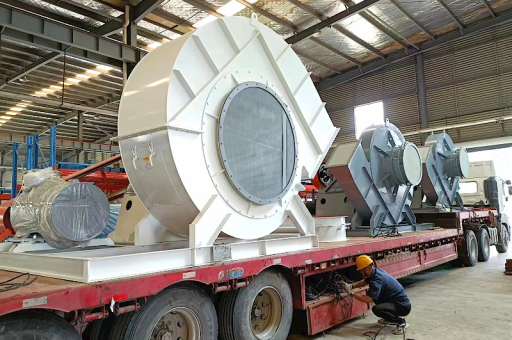
A heavy duty centrifugal fan is a mechanical device designed to move air or gases by converting rotational kinetic energy into hydrodynamic energy. In boiler terminology, "heavy duty" specifically refers to fans constructed with robust materials (e.g., high-grade steel, abrasion-resistant liners) to withstand continuous operation under high static pressure, elevated temperatures, and particulate-laden environments.
Unlike standard industrial fans, a heavy duty centrifugal fan used in a boiler must:
- Operate 24/7 for extended periods (often 8000+ hours per year).
- Handle air temperatures ranging from ambient to over 300°C (572°F) in pre-heated applications.
- Resist erosion from fly ash, coal dust, or biomass particles.
- Deliver consistent static pressure typically above 600 mmWG (millimeters water gauge) and often reaching 1200+ mmWG for primary air systems.
When specifically configured as a Primary Air Fan (PA Fan) , the fan’s role expands beyond simple air movement to include pneumatic conveying of pulverized fuel. This dual function places extreme demands on the fan’s aerodynamic design and mechanical integrity.
The Primary Air Fan (PA Fan) Function: More Than Just Draft
The primary air fan serves two distinct but interrelated purposes in a coal or biomass boiler:
- Drying and Conveying: The PA fan supplies high-velocity, often pre-heated air to the pulverizer (mill). This hot air dries the moisture in the raw fuel while simultaneously creating a pneumatic transport stream that carries the ground fuel particles from the mill to the boiler burners.
- Sustaining Combustion: A portion of this primary air (typically 15-30% of total combustion air) enters the furnace through the burner’s primary air zone. This air is essential for the initial ignition and flame stability. The precise regulation of PA flow is therefore critical to maintaining the correct air-to-fuel ratio.
To achieve this, a typical heavy duty centrifugal primary air fan operates at a relatively high pressure (often 800-1400 mmWG) and delivers a large volume of air (measured in m³/s or CFM). The fan must also tolerate the back-pressure variations caused by coal fines in the mill and burner lines. A common configuration is the radial-blade centrifugal fan or the backward-curved centrifugal fan, both of which offer high efficiency and stable pressure curves under variable load conditions.
Key Design Specifications for Heavy Duty PA Fans
A successful primary air fan is not an off-the-shelf product. Its design must be meticulously tailored to the boiler's fuel type, operating regime, and site conditions.
1 Pressure and Flow Characteristics
The fan curve for a PA fan must be relatively steep, indicating rapid pressure recovery with small changes in flow rate. This stability prevents the fan from surging when the burner load changes or when mill feeder rates fluctuate. Key parameters include:
- Design Pressure: Typically 700–1500 mmWG (stagnation pressure).
- Flow Rate: Matched to mill capacity (e.g., 100-300 m³/s for a 500 MW unit).
- Air Temperature: Most PA fans operate on air pre-heated by a rotary air heater, so inlet temperatures can reach 250-350°C. This requires thermal expansion allowances in the shaft, bearings, and casing.
2 Material Selection for Abrasion and Corrosion
Heavy duty centrifugal fans in PA service are exposed to significant erosion. Even fine pulverized coal particles can cause wear on the impeller blades and casing sides. Standard construction includes:
- Impeller: Usually fabricated from abrasion-resistant steel (e.g., Hardox or equivalent) with thicknesses of 10-20 mm. Hard-facing or tungsten carbide coatings are applied to leading edges.
- Casing: Lined with replaceable wear plates on the volute tongue and side walls.
- Shaft and Bearings: Sizing is critical to avoid critical speed resonance within the operating range. Double-row spherical roller bearings are common, with forced oil lubrication and dedicated cooling systems.
3 Impeller and Casing Geometry
The two most common impeller types for heavy duty PA fans are:
| Impeller Type | Characteristic | Best Use Case |
|---|---|---|
| Radial (Straight) Blade | High pressure, moderate efficiency, simple construction, easy to repair/rebalance. | High-head, dirty gas or coal dust applications. |
| Backward Curved (Airfoil) | Highest efficiency, quieter, lower maintenance power consumption, but more sensitive to erosion. | Cleaner air applications (e.g., after bag filters). |
For most PA fans, the radial blade design is preferred due to its durability and tolerance for particulate impact.
Operational Principles: How a Variable Speed PA Fan Works
Most modern heavy duty primary air fans are driven by variable speed motors (via VFDs – Variable Frequency Drives) or use hydraulic couplings. This allows for precise modulation of air flow without high energy losses from dampers.
- Startup: The fan is started with the inlet or outlet damper fully closed to reduce starting torque. The VFD gradually ramps up the speed (e.g., from 0 to 750 RPM).
- Normal Operation: The control system receives a signal from the boiler master controller indicating required mill air flow. The VFD adjusts motor frequency to match the load.
- Mill Trip Response: Upon a sudden mill trip, the PA fan must instantly reduce pressure to avoid over-pressurizing the fuel pipework. Fast-acting damper and speed control logic are essential.
Thermal expansion is a crucial operational concern. During cold starts, the fan casing expands at a different rate than the shaft, requiring careful monitoring of bearing clearances and shaft alignment.
Why Choose a Centrifugal Design Over Axial for Primary Air?
For primary air applications in large boilers, centrifugal fans overwhelmingly dominate over axial fans. The reasons are both practical and aerodynamic:
- Pressure Capability: Centrifugal fans generate much higher static pressure than axial fans of comparable diameter. A typical primary air fan needs 700-1200 mmWG, which is beyond the practical limit of most axial designs (usually under 400 mmWG).
- Stability and Surge Margin: Centrifugal fans have a wider and more predictable operating range. Axial fans are more prone to stall and surge when system resistance changes rapidly (e.g., during mill trips).
- Particle Tolerance: As mentioned, axial fan blades are more vulnerable to erosion from coal dust. Centrifugal fans, especially radial designs, can be built with thicker, replaceable wear surfaces.
However, axial fans are sometimes used for lower-pressure applications like Cooling Tower Fans or Secondary Air Fans. For heavy duty primary air, centrifugal is the industry standard.
Critical Maintenance and Troubleshooting
Regular maintenance of a boiler’s primary air fan is non-negotiable for reliability. Key areas of focus include:
- Vibration Monitoring: Unbalanced impellers are the leading cause of bearing failure. Vibration probes on both drive-end and non-drive-end bearings should trigger alerts at high amplitude (e.g., >4.5 mm/s RMS).
- Wear Inspection: The fan casing should be inspected every 3-6 months using borescopes or visual inspection ports. Localized wear at the volute tongue can dramatically reduce efficiency.
- Bearing Lubrication: High-temperature greases or oil mist systems must be maintained. Over-greasing can cause overheating.
- Shaft Alignment: Thermal growth misalignment is a common issue that speeds up seal and coupling wear.
Common Issues and Solutions:
| Problem | Potential Cause | Solution |
|---|---|---|
| High Vibration | Impeller erosion causing imbalance | Rebalance impeller in situ; clean blades; replace worn blade tips |
| Low Air Flow | Inlet damper stuck partially open; dirty air filter | Check actuators; clean air intake paths |
| Overheating Bearings | Over-greasing; misalignment | Check alignment; use correct grease intervals (e.g., every 500 hrs) |
| Surge or Stall | Duct blockage; damper mispositioned | Check duct isolation; verify control logic |
In extreme cases, fan refurbishment may require removing the entire rotor for overhaul. Facilities specializing in industrial wind turbine rotor balancing often provide cost-effective solutions for large centrifugal fans.
Energy Efficiency and Performance Optimization
Heavy duty centrifugal primary air fans are among the largest power consumers in a boiler house, often drawing 2–5 MW per unit. Optimization strategies include:
- VFD Retrofitting: Converting from fixed-speed with damper control to VFD can save 20–35% of fan energy consumption.
- Efficient Impeller Design: Even a 2-3% improvement in fan efficiency (e.g., from 80% to 83%) results in significant annual cost savings.
- Inlet Air Density Optimization: Pre-heating primary air increases volume flow but reduces density. Careful control of air heater bypass can reduce fan power consumption while maintaining drying capacity.
- Clean Air Intakes: Clogged filters or dirty inlet screens increase system resistance, forcing the fan to work harder. Regular cleaning improves system efficiency.
Frequently Asked Questions (FAQ)
Q1: What is the difference between a Primary Air Fan and a Forced Draft Fan?
A Forced Draft Fan (FD Fan) supplies ambient air to the air heater or directly to the windbox for secondary air. A Primary Air Fan (PA Fan) supplies high-pressure, often pre-heated air to the pulverizer for fuel drying and transport. The PA fan operates at significantly higher pressure and lower volume compared to the FD fan in most large boilers.
Q2: Why does a primary air fan require a "hard start" precaution?
Primary air fans have very high inertia (due to large rotors) and can generate dangerously high back-drive forces if started with an open damper. If the damper is open, the back-pressure from the air heater or mill can cause the fan to overspeed or cause a reverse flow surge. Proper interlocks ensure the fan starts with dampers closed.
Q3: Can a radial-blade heavy duty centrifugal fan operate without inlet guide vanes?
Yes, but efficiency drops significantly. Modern PA fans use variable inlet guide vanes (VIGV) in addition to a VFD for precise flow control and turndown capability. VIGVs also help reduce pre-swirl to optimize impeller inlet flow angles.
Q4: How is PA fan performance affected by changes in ambient temperature?
Denser cold air increases fan power draw and mass flow. Conversely, very hot inlet air reduces density and mass flow but increases volume flow. This can cause the fan to operate closer to its surge line. Temperature compensation in the control logic is essential.
Q5: How does the PA fan handle coal mill shutdowns?
During a mill shutdown, the PA fan's discharge damper closes, effectively dead-heading the fan. The VFD then reduces speed to a minimum "purge" level (e.g., 10% speed) to vent moisture and volatile gases before stopping. Bypass valves may also open to prevent overheating.
Conclusion: The Unsung Hero of Boiler Efficiency
The heavy duty centrifugal fan acting as a Primary Air Fan in a boiler is far more than an air mover. It is a precision tool for fuel handling, combustion stability, and thermal efficiency. Its design demands a balance between high pressure capability, abrasion resistance, and mechanical reliability. From the selection of radial blade impellers to the integration of advanced VFD control systems, every aspect must be engineered to meet the extreme demands of continuous industrial operation.
As power plants and industrial facilities push for higher efficiency and lower emissions, the role of the PA fan will only grow in importance. Whether you are specifying a new fan for a wind turbine-dedicated biomass plant or upgrading an existing coal-fired boiler, investing in a well-designed heavy duty centrifugal fan will pay dividends in reliability, energy savings, and operational flexibility.
By understanding the design, operation, and maintenance principles outlined in this guide, engineers and plant managers can ensure that their primary air system—and by extension, the entire boiler—operates at peak performance for decades to come.





