
This article's table of contents introduction:
- Introduction: What Is a White Centrifugal Blower Fan?
- Why Stainless Steel? Material Advantages for Gas Delivery
- Key Applications: From Industrial Gas Transport to HVAC Systems
- Design & Working Principle: How It Moves Gases Efficiently
- Selecting the Right Fan: Pressure, Flow Rate & Environment
- Maintenance & Longevity: Keeping Your Blower Fan Operational
- Frequently Asked Questions (FAQ)
- Conclusion: Future Trends in Centrifugal Gas Delivery Systems
** The Ultimate Guide to White Centrifugal Blower Fan Stainless Steel Gas Materials Delivery: Performance, Selection & Maintenance
Table of Contents
- Introduction: What Is a White Centrifugal Blower Fan?
- Why Stainless Steel? Material Advantages for Gas Delivery
- Key Applications: From Industrial Gas Transport to HVAC Systems
- Design & Working Principle: How It Moves Gases Efficiently
- Selecting the Right Fan: Pressure, Flow Rate & Environment
- Maintenance & Longevity: Keeping Your Blower Fan Operational
- Frequently Asked Questions (FAQ)
- Conclusion: Future Trends in Centrifugal Gas Delivery Systems
Introduction: What Is a White Centrifugal Blower Fan?
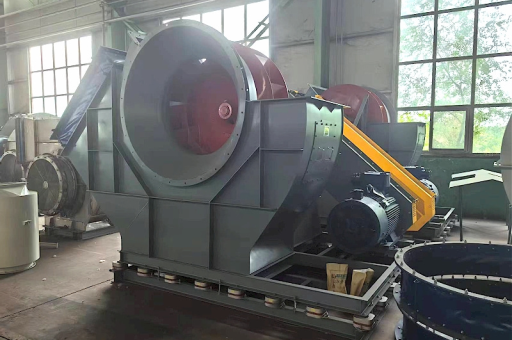
A white centrifugal blower fan is a specialized air-moving device designed to transport gases, fumes, or particulate-laden air in industrial, commercial, and even renewable energy contexts. Unlike axial fans, which push air straight through, centrifugal blowers—often finished in a durable white epoxy or powder coating—use a rotating impeller to accelerate gas radially outward, generating high static pressure. When constructed from stainless steel and optimized for gas materials delivery, these fans become indispensable in applications requiring corrosion resistance, sanitary conditions, or high-temperature tolerance.
Why “White”?
The white coating is not merely aesthetic. In cleanrooms, food processing plants, or pharmaceutical facilities, a white, non-porous finish helps reflect heat, resist chemical staining, and reveal dirt or contamination easily. For wind turbine cooling systems or biogas plants, the color also reduces heat absorption from direct sunlight.
Why Stainless Steel? Material Advantages for Gas Delivery
When a centrifugal fan must handle aggressive gases—such as hydrogen sulfide (H₂S) in biogas, chlorine in water treatment, or acidic fumes in chemical plants—standard carbon steel corrodes rapidly. Stainless steel (typically 304 or 316L) offers:
- Corrosion resistance: Chromium oxide layer prevents pitting and rust.
- High-temperature capability: Some grades withstand continuous operation at 400°C (752°F).
- Hygienic surface: Easy to sterilize; no flaking or toxic leaching.
- Mechanical strength: Resists stress from high rotational speeds and pressure differentials.
Example: A 316L stainless steel centrifugal blower in a biogas upgrading facility can safely deliver methane-rich gas over years without material degradation, unlike a painted steel fan that would fail within months.
Key Applications: From Industrial Gas Transport to HVAC Systems
- Gas Materials Delivery in Chemical Processing: Moving chlorine, ammonia, or solvent vapors. Stainless steel prevents catastrophic leaks.
- Wastewater Treatment Plants: Aerating bioreactors or removing odorous gases. White-coated fans resist humidity and UV.
- Food & Beverage Industry: Conveying inert gases (nitrogen, CO₂) for packaging. The white finish complies with HACCP standards.
- Wind Turbine Systems: Cooling generator cabinets or delivering filtered air to nacelles. White centrifugal fans reduce thermal load from solar radiation.
- Pharmaceutical Cleanrooms: Maintaining ISO Class 7–8 air by moving HEPA-filtered exhaust. No particle shedding.
Fact: Modern 3D‑printed impellers from stainless steel powder (via additive manufacturing) now allow custom gas delivery fans with efficiencies above 85%.
Design & Working Principle: How It Moves Gases Efficiently
A white centrifugal blower fan operates via a rotating impeller housed in a volute casing. The impeller, often backward-curved (for high efficiency) or radial (for high dust tolerance), accelerates gas to its rim. The volute converts kinetic energy into pressure energy.
Key Components in Stainless Steel Gas Delivery Fans:
- Housing: Welded or spun stainless steel, with or without white coating.
- Impeller: Precision‑balanced to avoid vibration.
- Shaft & Bearings: Shaft seals prevent gas leakage.
- Inlet/Outlet: Flanged connections for ductwork.
Comparison Table (Indicative Specifications):
| Feature | Standard Steel Fan | Stainless Steel Fan (White Coated) |
|---|---|---|
| Max Temperature | 80°C | 300°C (with special seals) |
| Corrosion Resistance | Poor | Excellent (H₂S, Cl₂ resistant) |
| Typical Application | Fresh air | Acidic gas delivery |
| Maintenance Interval | 6 months | 18–24 months |
Efficiency Tip: For variable gas loads (e.g., wind turbine cooling), pair the fan with a VFD (variable frequency drive) to save up to 40% energy.
Selecting the Right Fan: Pressure, Flow Rate & Environment
Define Gas Properties
- Density, temperature, corrosiveness, humidity.
- Example: For biogas (60% CH₄, 40% CO₂, saturated with H₂O), choose 316L stainless steel.
Calculate Required Pressure
- Static pressure (Pa): Overcome duct friction, filters, and heat exchangers.
- For wind turbine nacelle cooling: typically 500–1500 Pa.
Match Flow Rate (m³/h or CFM)
- Industrial gas delivery: 1,000–100,000 m³/h.
- Use fan performance curves from the manufacturer.
Check Environmental Conditions
- Outdoor installation? White coating reduces solar gain.
- Explosive gases (e.g., hydrogen)? Need ATEX/IECEx certified spark‑proof fans.
Noise & Vibration Limits
- For hospitals or labs, choose fans with sound attenuation housings.
Pro Tip: Always request a drawing of the fan’s performance curve at your exact operating point. Over‑specifying can waste energy; under‑specifying leads to premature failure.
Maintenance & Longevity: Keeping Your Blower Fan Operational
- Monthly Inspections: Listen for bearing noise; check belt tension (if belt‑driven).
- Quarterly Cleaning: Wipe white coated surfaces with non‑abrasive cleaners. For gas delivery, inspect impeller for buildup (e.g., salt, resin).
- Annual Overhaul: Replace bearings, seals, and balance impeller. Stainless steel fans rarely need housing replacement unless mechanical damage occurs.
- Storage: If idle, cover the fan to avoid dust and moisture. Stainless steel can still stain in marine environments.
Common Failure Modes in Gas Delivery:
- Impeller imbalance from uneven deposit.
- Bearing failure due to gas leakage (fix with better seals).
- Coating blistering if gas temperature exceeds coating’s rating (use bare stainless steel instead).
Frequently Asked Questions (FAQ)
Q1: Can a white centrifugal blower fan be used in a wind turbine environment?
Yes. Many wind turbine nacelles use white powder‑coated stainless steel centrifugal fans to cool generators and power electronics. The white coating reduces heat absorption from solar radiation, and stainless steel resists salty sea spray if installed offshore.
Q2: Does the white color affect the fan’s performance?
No. The coating is typically thin (< 100 microns) and does not alter aerodynamics. It only adds corrosion protection and reflectivity.
Q3: How do I know if my gas delivery fan needs stainless steel?
Always choose stainless steel if the gas contains more than 0.1% moisture, has a pH below 6, or operates above 80°C. For H₂S (common in biogas), 316L is mandatory.
Q4: What’s the typical lifespan of a white stainless steel centrifugal fan?
With proper maintenance, 15–25 years. In corrosive gas environments, 10–15 years, compared to 2–5 years for painted carbon steel.
Q5: Are white centrifugal fans more expensive?
Yes, upfront cost is 40–60% higher. But total cost of ownership (TCO) is lower due to fewer replacements and less downtime.
Conclusion: Future Trends in Centrifugal Gas Delivery Systems
The white centrifugal blower fan made of stainless steel is not a commodity; it is a strategic component for safe, durable, and efficient gas materials delivery. As industries push toward higher efficiency and lower emissions, we see:
- Additive manufacturing: Complex impeller geometries for 5–10% efficiency gains.
- Smart IoT integration: Real‑time vibration and temperature monitoring.
- Hybrid materials: Stainless steel impellers with ceramic coatings for extreme environments.
- Integration with renewable energy: Centrifugal fans in wind turbines that also serve as emergency cooling units.
Whether you are moving biogas, cooling a wind turbine, or sterilizing a pharmaceutical cleanroom, the white stainless steel centrifugal fan remains the gold standard for reliability. Always consult a certified fan engineer when selecting flow rate, pressure, and material grade—your gas delivery system depends on it.
For more information on custom stainless steel centrifugal blowers for wind turbine or industrial applications, search “stainless steel gas delivery fan performance curves” or contact a manufacturer specializing in ATEX certified units.





