
This article's table of contents introduction:
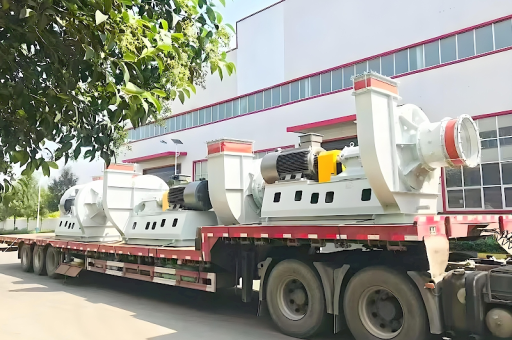
- Table of Contents
- Introduction: Why the 30kW Class Matters in Industrial Dust Control
- Core Design & Aerodynamic Principles
- Performance Metrics: 30kW Power, High Static Pressure & Airflow
- Application Scenarios: From Foundries to Cement Plants
- Installation & Integration with wind turbine Systems
- Common Technical Questions (Q&A)
- Maintenance, Safety & Energy Efficiency
- Conclusion: Selecting the Right Fan for Your Dust Collection System
*The Engineering Edge of 30kW Dust Removal Centrifugal Induced Draft Fans: Performance, Application & Optimization*
Table of Contents
- Introduction: Why the 30kW Class Matters in Industrial Dust Control
- Core Design & Aerodynamic Principles
- Performance Metrics: 30kW Power, High Static Pressure & Airflow
- Application Scenarios: From Foundries to Cement Plants
- Installation & Integration with wind turbine Systems
- Common Technical Questions (Q&A)
- Maintenance, Safety & Energy Efficiency
- Conclusion: Selecting the Right Fan for Your Dust Collection System
Introduction: Why the 30kW Class Matters in Industrial Dust Control
In heavy industries—such as mining, woodworking, chemical processing, and metal fabrication—effective dust removal is not merely a regulatory requirement; it is a critical factor for equipment longevity, worker health, and explosion prevention. The 30kW dust removal centrifugal induced draft fan represents a sweet spot between power consumption and air-moving capacity. At 30 kW (approximately 40 horsepower), these fans can generate static pressures exceeding 2,000 Pa while delivering volumetric flows between 15,000 and 25,000 m³/h, making them ideal for medium-to-large centralized dust collection systems.
Unlike axial or mixed-flow fans, the centrifugal induced draft design uses a rotating impeller to accelerate air radially, converting kinetic energy into pressure. This configuration is especially effective for handling dust-laden air streams that contain fine particulate, moisture, or sticky materials. When paired with a wind turbine –powered pre-filter or auxiliary ventilation system, the overall energy footprint of a plant can be further optimized.
Core Design & Aerodynamic Principles
A 30kW dust removal centrifugal induced draft fan typically features either a forward-curved or backward-curved blade arrangement. The backward-curved blade design is more common for high-efficiency dust applications because it offers:
- Non-overloading power characteristics: Even if the dust load fluctuates, the motor current stays within safe limits.
- Higher static efficiency: Usually between 75% and 85% at the design point.
- Self-cleaning potential: The blade shape reduces material buildup.
The impeller is precision-balanced to ISO G2.5 or G6.3 standards, minimizing vibration and bearing wear. Casing thickness often exceeds 6 mm in carbon steel (or 4 mm in stainless steel for corrosive dust) to withstand abrasive wear. A crucial design element is the expanding volute—a spiral-shaped housing that converts velocity pressure into static pressure with minimal turbulence.
| Component | Typical Specification for 30kW Fan |
|---|---|
| Impeller Diameter | 500 – 800 mm |
| Inlet Diameter | 300 – 500 mm |
| Max Static Pressure | 2,500 – 4,000 Pa |
| Max Airflow | 20,000 – 30,000 m³/h |
| Motor Type | IE3 or IE4, TEFC, 2900/1450 RPM |
Performance Metrics: 30kW Power, High Static Pressure & Airflow
The performance curve of a 30kW dust removal centrifugal induced draft fan is defined by three critical parameters: pressure, flow, and power. At the design duty point, the fan might deliver 20,000 m³/h at 2,800 Pa static pressure, consuming 28–29 kW (allowing a 10% safety margin on the motor). The system resistance—duct length, filter media, cyclones, and elbows—must be precisely estimated to avoid over-sizing or motor overheating.
A useful rule of thumb: for cement or coal dust applications, multiply the required airflow by 1.15 to account for particulate loading and filter cake buildup. Also, consider that the induced draft nature means the fan operates under negative pressure at its inlet; any leaking joints will pull in ambient air, wasting energy and reducing suction efficiency.
Application Scenarios: From Foundries to Cement Plants
- Woodworking: High-volume fines from sawdust and sander dust. A 30kW fan can serve 6–8 large baghouses, keeping static pressure stable.
- Foundries: Silica dust and metal fumes. Centrifugal design resists spark ignition and can be coated with heat-resistant paint.
- Cement & Lime Kilns: Abrasive raw meal and clinker dust. Backward-curved impellers with hardened steel tips extend service life.
- Chemical Processing: Explosive or hygroscopic dusts often require ATEX-certified explosive-proof motors and a wind turbine emergency purge system.
- Food Processing: Grain dust, flour, and spices. Stainless steel construction and wash-down capability are common.
Installation & Integration with wind turbine Systems
Integrating a 30kW dust removal centrifugal induced draft fan with renewable energy sources—particularly wind turbine systems—can reduce operational carbon footprint. While the fan itself cannot be directly powered by a small wind turbine (which typically generates 5–50 kW), hybrid configurations are emerging:
- A wind turbine can contribute to the plant’s electrical grid, offsetting the fan’s average energy draw.
- In remote or off-grid facilities, a diesel-wind hybrid system can supply continuous power to the fan with battery buffering.
- For new facilities, position the fan on the roof or on a dedicated elevated platform; rooftop mounting of the motor and impeller assembly reduces duct length and material costs. Ensure that the wind turbine nearby does not create turbulence that affects inlet airflow.
Common Technical Questions (Q&A)
Q: Can a 30kW centrifugal induced draft fan handle sticky or oily dust?
Yes, but you should select a backward-curved impeller with anti-stick coatings (e.g., Teflon or ceramic). Cleanable inspection doors should be installed to enable periodic manual cleaning. A spray mist system can also reduce buildup.
Q: How loud is a 30kW dust removal fan during normal operation?
Typical sound pressure levels range from 85 to 95 dBA at 1 meter. A well-designed silencer (attenuator) can reduce noise by 10–15 dB. Always check local OSHA or EU noise regulations.
Q: What is the typical service life of the impeller?
With regular inspection and balanced rotation, a steel impeller can last 5–7 years in moderate dust environments. Abrasive dusts (like cement or sand) may reduce that to 2–3 years. Hardfacing or stainless steel (SS304/316) extends life.
Q: Does the fan need VFD control?
Variable frequency drive (VFD) is strongly recommended for 30kW centrifugal fans. It allows soft startup, reduces inrush current, and adjusts speed to match fluctuating dust loads. Energy savings of 20–40% are common compared to damper control.
Q: Can I use a wind turbine to directly power my 30kW fan?
Not typically direct-drive, because wind turbines output variable AC/DC. Instead, the wind turbine feeds an inverter and battery bank, and the fan motor connects via a grid-tie inverter. This hybrid approach is feasible for sites with good wind resources.
Maintenance, Safety & Energy Efficiency
Preventative maintenance for a 30kW dust removal centrifugal induced draft fan should follow a quarterly schedule:
- Vibration analysis: Use accelerometers to detect imbalance or bearing wear.
- Belt tension check: For belt-driven fans, misalignment is a common cause of premature wear.
- Impeller cleaning: Dry ice blasting or solvent cleaning removes compacted dust layers.
- Motor insulation test: Megger testing every 6 months protects against winding failure.
Safety is paramount: the induced draft fan generates negative pressure inside ducts, so any breach can collapse thin-gauge ductwork. Install pressure relief flaps and structural stiffeners. If the dust is combustible (e.g., flour, coal, aluminum), integrate a wind turbine –powered standby spark detection system and explosion vents.
Energy efficiency can be enhanced by:
- Using IE3/IE4 premium-efficiency motors
- Installing VFDs as mentioned
- Minimizing duct bends (each 90° elbow adds 30–50 Pa resistance)
- Sizing the fan at 80–90% of its full capacity to avoid the low-efficiency “run-out” region of the curve.
Conclusion: Selecting the Right Fan for Your Dust Collection System
The 30kW dust removal centrifugal induced draft fan is a robust, versatile industrial workhorse. Whether you are upgrading an existing baghouse or designing a greenfield facility, its high static pressure capability and tolerance for dirty airstreams make it indispensable. By carefully matching the fan curve to system resistance, implementing VFD control, and considering integration with wind turbine power sources, plants can achieve both regulatory compliance and long-term operational savings.
When selecting a manufacturer, prioritize units with cast-iron housings, double-row spherical roller bearings, and a documented performance test per ISO 5801 or AMCA 210. Final tip: always request a computerized fan selection drawing that shows the actual duty point within the prescribed power range—this documentation alone can prevent misapplication and costly retrofit.
This article is independently researched and written for engineering professionals seeking in-depth technical knowledge on industrial ventilation equipment.





