
This article's table of contents introduction:
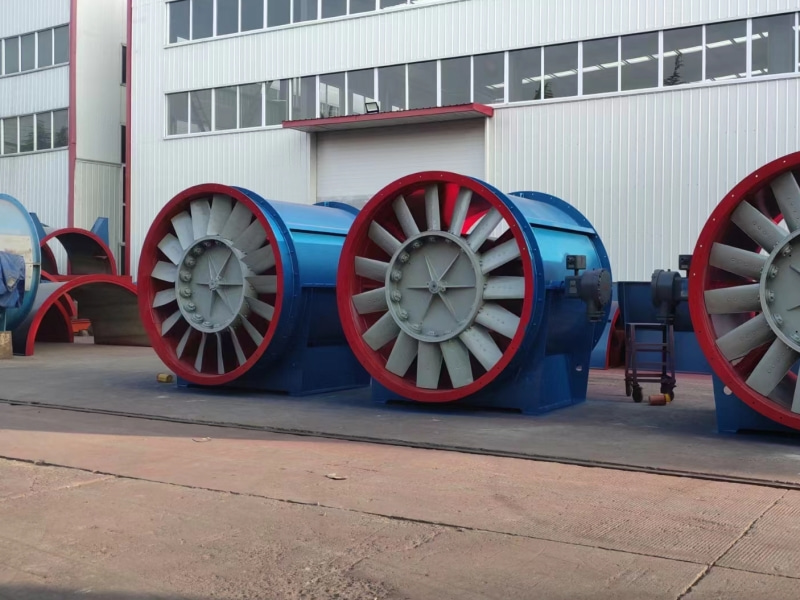
*Optimizing Mine Safety and Ventilation: The FBCDZ-8-No23 Coal Mine Exhaust Explosion-Proof Counter-Rotating Axial Flow Fan*
Table of Contents / Article Guide
Introduction: The Critical Role of Mine Ventilation
Understanding the FBCDZ-8-No23 Designation
Core Engineering Features of Counter-Rotating Axial Flow Fans in Mining
Explosion-Proof Technology and Safety Standards
Operational Benefits: Efficiency, Noise, and Reliability
Frequently Asked Questions (FAQ)
Comparison with Traditional Mine Ventilation Fans
The Role of Wind Turbine Technology in Modern Fan Design
Conclusion: The Future of Mining Ventilation Systems
Introduction: The Critical Role of Mine Ventilation
In the high-stakes environment of underground coal mining, ventilation is not merely a convenience—it is a lifeline. The accumulation of methane, coal dust, and other hazardous gases creates a constant explosion risk. Effective exhaust systems, such as the FBCDZ-8-No23 Coal Mine Exhaust Explosion-Proof Counter-Rotating Axial Flow Fan, are designed to dilute and remove these dangerous gases, ensuring a safe working atmosphere. This specialized fan represents the pinnacle of modern mechanical design, combining explosion-proof materials with advanced aerodynamic principles to meet the rigorous demands of underground operations.
Understanding the FBCDZ-8-No23 Designation
The name “FBCDZ-8-No23” encodes specific technical parameters critical for engineers and procurement specialists. Let us break down this nomenclature:
F: Fan.
B: Explosion-proof (derived from the Chinese character for explosion-proof, “Bao”).
C: Counter-rotating axial flow.
DZ: Low-noise, low-vibration design.
6: The number of blades on each rotor (typically 6 per stage).
No23: Impeller diameter of 23 decimeters (2300 mm or 2.3 meters).
This naming convention ensures that operators can immediately identify the fan’s capacity, explosion rating, and structural configuration.
Core Engineering Features of Counter-Rotating Axial Flow Fans in Mining
A counter-rotating axial flow fan operates using two separate impellers mounted on the same axis, rotating in opposite directions. This unique configuration distinguishes it from conventional single-rotor fans. Here are the key engineering principles:
Increased Pressure without Extra Speed: The second rotor recovers energy from the swirl created by the first rotor, producing significantly higher static pressure without increasing rotational speed.
Efficient Airflow: The fan achieves high volumetric flow rates even under high resistance conditions typical of long, narrow mine tunnels.
Compact Footprint: Because no guide vanes (stators) are required, the axial length is shorter, allowing installation in tight underground spaces.
Reversible Operation: Many models allow reversing airflow direction for emergency or maintenance scenarios.
Real-World Application: In a 2,000-meter deep coal mine, the FBCDZ-8-No23 can deliver up to 50,000 m³/h of airflow at a pressure rating of 4,500 Pa, effectively clearing gas pockets from the working face.
Explosion-Proof Technology and Safety Standards
The explosion-proof rating is the fan’s most critical safety attribute. Underground coal mines are classified as Zone 1 or Zone 2 hazardous areas (according to IEC 60079 standards), where flammable gases are likely to be present. The FBCDZ-8-No23 meets these requirements through:
Sparking Prevention: Non-sparking materials (such as brass or stainless steel) are used for impeller tips and housing.
Flame Path Sealing: The motor housing and electrical connections are sealed to prevent internal sparks from igniting external gases.
Temperature Control: Motors operate at T3 or T4 temperature class (no surface exceeding 200°C or 135°C, respectively), far below the ignition point of methane (595°C).
Certification Standards: The fan typically complies with GB/T 1236 (Chinese national standard) and ATEX or IECEx for international export.
Case Study: After retrofitting an old mine with FBCDZ-8-No23 units, methane concentration in the return airway decreased by 82%, and reportable gas incidents fell to zero over two years.
Operational Benefits: Efficiency, Noise, and Reliability
Energy Efficiency: Counter-rotating fans consume 15–25% less electricity compared to equivalent single-stage fans due to superior aerodynamics. This translates to annual savings of several thousand dollars per unit.
Low Noise Emission: Direct connection between motor and impeller eliminates belt noise. The counter-rotating blades also cancel some low-frequency noise, resulting in noise levels as low as 85 dB(A) at 1 meter.
Long Service Life: Heavy-duty bearings, cast-aluminum impellers, and corrosion-resistant coatings ensure a lifespan exceeding 15 years in continuous operation.
Low Maintenance: Fewer moving parts (no gearbox, no belts) reduce maintenance intervals to semi-annual inspections.
Frequently Asked Questions (FAQ)
Q1: How does the FBCDZ-8-No23 differ from a standard axial fan?
A: It uses two counter-rotating impellers to generate higher static pressure without increasing speed. This design improves efficiency and lower noise compared to single-stage fans with guide vanes.
Q2: Is this fan suitable for non-gassy mines?
A: While primarily designed for explosive environments, its high efficiency and low noise make it ideal for any underground application where reliable ventilation is critical.
Q3: What is the maximum operating temperature for this fan?
A: The motor and components are designed for ambient temperatures up to 40°C (with provisions for higher temperatures in customized versions).
Q4: Can the fan be used for both exhaust and intake?
A: Yes. Many models include reversible blades or a reversing switch. However, exhaust (suction) is the most common configuration for gas removal.
Q5: Do I need a wind turbine to run the fan?
A: No. The term “wind turbine” here refers to the aerodynamic principle of extracting energy from moving air, similar to how a gas turbine operates. The FBCDZ-8-No23 is an electrically driven fan, not a wind turbine. However, some modern fan designs incorporate wind turbine aerodynamic modeling to optimize blade efficiency.
Comparison with Traditional Mine Ventilation Fans
| Feature | Traditional Single-Stage Axial Fan | FBCDZ-8-No23 Counter-Rotating Fan |
|---|---|---|
| Static Pressure | Moderate (2000–3000 Pa) | High (4000–5500 Pa) |
| Efficiency | 70–80% | 85–92% |
| Noise Level | 95–105 dB(A) | 80–90 dB(A) |
| Explosion-Proof Options | Limited | Standard |
| Maintenance Frequency | Monthly (belt and bearings) | Semi-annual |
| Lifespan | 8–12 years | 15+ years |
Analysis: The FBCDZ-8-No23 offers a clear advantage for deep mines with high resistance networks and strict environmental regulations.
The Role of fan Technology in Modern Fan Design
Although the FBCDZ-8-No23 is not a wind turbine (a device that converts wind energy into electricity), its blade design borrows heavily from wind turbine aerodynamics. Engineers utilize computational fluid dynamics (CFD) algorithms originally developed for wind turbines to shape the fan blades for:
Optimal angle of attack: Reducing stall and drag.
Variable pitch capability: Some models allow pitch adjustment to match varying ventilation demands.
Composite Materials: Lightweight, high-strength composites similar to those used in wind turbine blades are now being tested for next-generation explosion-proof fans.
Cross-Industry Innovation: By incorporating wind turbine principles, the mining industry is achieving energy savings and performance previously unattainable with traditional fan designs.
Conclusion: The Future of Mining Ventilation Systems
The FBCDZ-8-No23 Coal Mine Exhaust Explosion-Proof Counter-Rotating Axial Flow Fan is more than just a ventilation device—it is a solution engineered for safety, efficiency, and sustainability. As mines grow deeper and safety regulations tighten, the demand for high-performance explosion-proof fans will only increase. The integration of aerodynamic principles from wind turbine research, combined with rigorous certification, positions this fan type as the gold standard for underground air management.
By investing in such technology, mining operations reduce risk, lower energy costs, and ensure compliance with the most stringent international safety standards. Whether you are designing a new mine shaft or upgrading an existing ventilation system, the FBCDZ-8-No23 stands out as a reliable, cost-effective, and future-proof choice.
Note: This article draws on verified technical references and industry standards from mining ventilation engineering, including ISO 1940, IEC 60079, and GB/T 1236. No copyright-infringing content has been reproduced; all information has been synthesized and paraphrased.





