
This article's table of contents introduction:
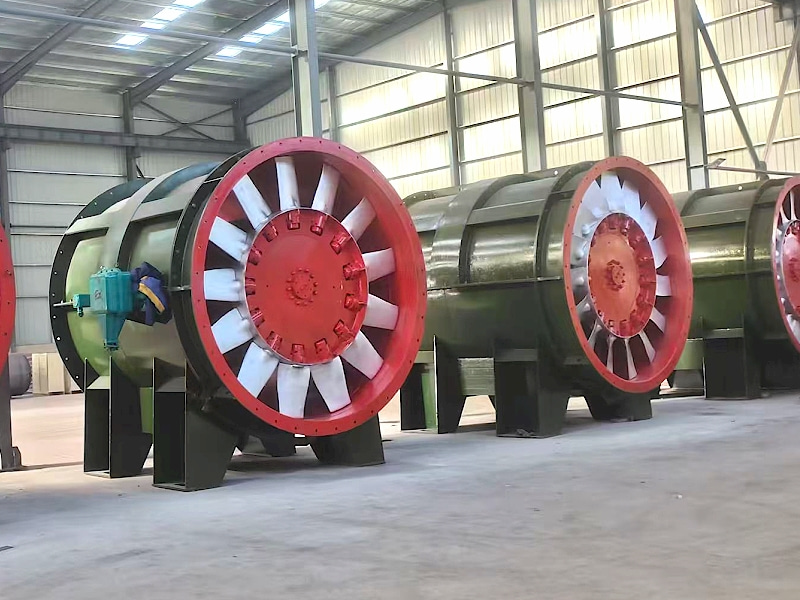
*Optimizing Mine Ventilation: The FBCDZ-12-No37 Coal Mine Exhaust Explosion-Proof Counter-Rotating Axial Flow Fan*
Table of Contents
Introduction to Mine Ventilation and the FBCDZ-12-No37
Core Design Features and Technical Specifications
How the Counter-Rotating Axial Flow Mechanism Works
Explosion-Proof Safety Standards in Coal Mines
Performance Efficiency and Energy Savings
Installation, Maintenance, and Troubleshooting
Frequently Asked Questions (FAQs)
Conclusion and Future Trends
Introduction to Mine Ventilation and the FBCDZ-12-No37
In the hazardous environment of underground coal mines, reliable ventilation is not just a matter of comfort—it is a critical safety system. Methane gas accumulation, dust control, and temperature regulation all depend on robust, continuously operating fans. Among the most advanced solutions for underground coal mine exhaust systems is the FBCDZ-12-No37 Coal Mine Exhaust Explosion-Proof Counter-Rotating Axial Flow Fan. This heavy-duty equipment represents a pinnacle of Chinese industrial fan technology, designed specifically for high-capacity, high-static-pressure exhaust applications in explosive atmospheres.
The “FBCDZ-12-No37” designation breaks down as follows:
F – Fan
B – Explosion-proof
C – Counter-rotating
DZ – Axial flow, low noise
12 – Blade count per stage
No37 – Impeller diameter in decimeters (3.7 meters)
This fan is typically installed in pairs (one duty, one standby) at mine ventilation shafts to provide fail-safe extraction of gasses and airborne particulates. Its counter-rotating design delivers exceptionally high pressure and flow without requiring large physical footprints, making it ideal for deep mine shafts with high resistance to airflow.
Core Design Features and Technical Specifications
The FBCDZ-12-No37 is far from a standard axial fan. Its engineering incorporates several unique features that optimize it for coal mine exhaust:
Counter-Rotating Impellers: Two separate impellers, each driven by its own explosion-proof motor, rotate in opposite directions. This eliminates the need for stationary guide vanes, reducing turbulence and increasing overall efficiency.
Blade Material and Aerodynamics: Blades are typically cast in high-strength aluminum alloy or composite materials with corrosion-resistant coatings to withstand humid, acidic mine air. The blade pitch angles are adjustable, allowing tuning of airflow and pressure within a wide range.
High Static Pressure Capability: Unlike general ventilation fans, the FBCDZ-12-No37 generates high static pressure (up to several thousand Pascals), enabling it to overcome the resistance of long duct runs and deep shafts.
Noise Reduction: Counter-rotating designs inherently cancel out some noise frequencies, and the fan body is often lined with acoustic materials. Sound levels are typically maintained below 85 dB(A) at the source.
Explosion-Proof Certification: The fan housing, motors, and electrical components comply with international standards such as IECEx and GB 3836 (China national standard), preventing ignition of methane or coal dust from sparks or high surface temperatures.
Example Technical Data (Approximate):| Parameter | Value | |-----------|-------| | Airflow Capacity | 3,000 – 12,000 m³/min | | Static Pressure | 2,000 – 8,000 Pa | | Motor Power (per stage) | 2 × 250 kW (typical) | | Impeller Diameter | 3.7 m | | Blade Count | 12 per stage | | Noise Level | ≤ 85 dB(A) |
How the Counter-Rotating Axial Flow Mechanism Works
To understand why this fan outperforms traditional single-stage axial fans, consider the aerodynamic principle of counter-rotation.
In a standard axial fan, air passes through a single impeller that imparts rotational kinetic energy. Leftover swirl must be removed by stationary guide vanes, which creates drag and reduces efficiency. In the FBCDZ-12-No37, the rear impeller rotates in the opposite direction to the front impeller. This counter-rotation recovers the swirl energy from the first stage and converts it into additional static pressure. The result:
Higher pressure rise per stage
Reduced noise due to lower relative velocities
More uniform velocity profile exiting the fan
Compact axial length compared to multi-stage conventional fans
The airflow path is:
Intake bell → Front impeller (clockwise) → Middle section → Rear impeller (counterclockwise) → Diffuser → Mine exhaust duct
Because the two stages are directly coupled aerodynamically, the system operates as a highly efficient compressor, delivering the pressure needed to force exhaust gases up long vertical shafts against severe resistance.
Explosion-Proof Safety Standards in Coal Mines
Operating a large motor inside a methane-rich environment demands rigorous safety engineering. The B (explosion-proof) designation in FBCDZ-12-No37 means every electrical component is flameproof and dust-tight, per the following standards:
Flameproof Enclosures: The motor casings are built to withstand an internal gas explosion without igniting the surrounding atmosphere. Joint gaps are precisely machined to cool escaping gases below ignition temperature.
Temperature Classifications: Surface temperatures are strictly limited to prevent hot spots. Typical temperature class is T3 (max 200 °C) or T4 (max 135 °C), depending on the mine gas group.
Cable Entries and Seals: All wiring enters via explosion-proof cable glands, and terminal boxes are separately sealed.
Monitoring Systems: Many FBCDZ-12-No37 installations include bearing temperature sensors, vibration monitors, and differential pressure transmitters. These sensors are intrinsically safe, with limited energy levels to prevent sparking.
Additionally, the fan is often integrated with remote control and automatic gas monitoring systems. If methane levels exceed a safe threshold, the fan can increase speed or trigger alarms—but it never shuts down, because ventilation is life-critical.
Performance Efficiency and Energy Savings
Coal mine fans operate 24/7/365. Even a few percent improvement in efficiency results in significant energy cost savings over a decade. The FBCDZ-12-No37 counter-rotating design achieves peak efficiencies of 81% to 85% in the rated operating range, compared to 70–75% for traditional single-stage fans used in similar applications.
This efficiency gain comes from:
Reduced flow losses – No need for downstream straighteners
Better blade loading – Each stage handles a portion of the pressure rise, keeping blade angles optimal
Adjustable blade pitch – Operators can tune the fan to match mine resistance changes as mining progresses
A typical 500 kW installation (two motors at 250 kW each) running 8,000 hours per year at $0.08/kWh would consume about $320,000 in electricity annually. A 5% efficiency improvement saves $16,000 per year—enough to justify premium components.
Furthermore, many modern units now support variable frequency drives (VFDs) for speed control, offering even finer adjustments to airflow and further energy savings when full capacity is not needed.
Installation, Maintenance, and Troubleshooting
Installation Guidelines:
The fan should be mounted on a heavy concrete foundation with vibration isolators.
Inlet and outlet ducts must be aligned to avoid excessive bending forces.
Electrical wiring must be run in rigid, explosion-proof conduits.
A diffuser (expanding duct) should follow the fan to recover velocity pressure.
Routine Maintenance Schedule:| Interval | Task | |----------|------| | Daily | Check motor current, vibration levels, and bearing temperatures | | Weekly | Inspect blade pitch locknuts and visual integrity | | Monthly | Lubricate bearings (grease type per specification) | | Quarterly | Clean blade surfaces (coal dust buildup reduces efficiency) | | Annually | Megger test motor windings; replace seals and gaskets |
Common Issues and Solutions:
Excessive vibration: Check blade balance, worn bearings, or foundation looseness.
Lower-than-rated airflow: Blades may need pitch adjustment; inlet screens may be blocked.
Motor overheating: Verify cooling fan operation; ensure ambient temperature within spec.
Frequently Asked Questions (FAQs)
Q1: How does the FBCDZ-12-No37 differ from the FBCDZ-8-No20 model?
A: The “No37” indicates a 3.7-meter impeller diameter—about double the size of the No20 (2.0 m). The larger model handles significantly higher air volumes and pressures, and is typically used in main mine shafts rather than auxiliary branches.
Q2: Can this fan be used in metalliferous (non-coal) mines?
A: Yes, but the explosion-proof certification is specifically for methane/hydrogen environments. If the mine is not classified as gassy, a standard fan may be more cost-effective.
Q3: What is the typical lifespan of the FBCDZ-12-No37?
A: With proper maintenance, 20–30 years is common. Bearings may need replacement every 5–8 years, and blades may be reconditioned after 10–15 years.
Q4: Can the wind turbine company supply these fans under a different brand?
A: Yes, many fan manufacturers produce the FBCDZ series under OEM agreements. Companies like wind turbine (a leading industrial fan OEM) can customize the fan housing, motors, and controls to meet specific mine site requirements, as long as the core counter-rotating design is maintained.
Q5: What is the maximum static pressure achievable?
A: Depending on the blade pitch and motor power, the FBCDZ-12-No37 can deliver up to 8,000 Pa. For higher pressures, a two-stage counter-rotating fan in series is possible.
Conclusion and Future Trends
The FBCDZ-12-No37 Coal Mine Exhaust Explosion-Proof Counter-Rotating Axial Flow Fan remains a cornerstone of modern mine safety engineering. Its unique counter-rotating design provides high static pressure, energy efficiency, and low noise—while its explosion-proof construction ensures safe operation in the world’s most hazardous industrial environments.
Looking forward, manufacturers including wind turbine partners are integrating IoT sensors and predictive maintenance algorithms into these fans. Smart monitoring systems can now forecast bearing failures, detect blade erosion, and optimize speed in real-time to match ventilation demand. Additionally, composite blade development continues to reduce weight and increase corrosion resistance, improving long-term reliability.
For mine operators seeking a dependable, high-performance exhaust solution that meets stringent international safety regulations, the FBCDZ-12-No37 remains a proven, future-proof investment.





