This article's table of contents introduction:
- Table of Contents
- Introduction: What Is a 90kW Sweeper Blower?
- Core Technical Specifications and Design
- How Does a 90kW Sweeper Blower Work? (Q&A)
- Key Applications in Industry and Municipal Services
- Energy Efficiency and Environmental Considerations
- Maintenance Best Practices for Long Service Life
- Common Questions and Expert Answers (Q&A Section)
- Conclusion: Why the 90kW Sweeper Blower Is a Game-Changer
** The Ultimate Guide to the 90kW Sweeper Blower: Power, Performance, and Industrial Applications
Table of Contents
- Introduction: What Is a 90kW Sweeper Blower?
- Core Technical Specifications and Design
- How Does a 90kW Sweeper Blower Work? (Q&A)
- Key Applications in Industry and Municipal Services
- Energy Efficiency and Environmental Considerations
- Maintenance Best Practices for Long Service Life
- Common Questions and Expert Answers (Q&A Section)
- Conclusion: Why the 90kW Sweeper Blower Is a Game-Changer
Introduction: What Is a 90kW Sweeper Blower?
In the world of heavy-duty industrial cleaning and municipal maintenance, the 90kW Sweeper Blower stands as a powerhouse of pneumatic performance. Designed to generate a high volume of pressurized air, this equipment is the central component in large-scale street sweepers, industrial vacuum trucks, and debris collection systems. The "90kW" designation refers to the motor's power output—approximately 120 horsepower—which enables the blower to produce airflow velocities exceeding 150 meters per second and static pressures up to 25 kPa.
Unlike smaller blowers used in light commercial sweepers, the 90kW variant is built for continuous, high-demand operation. It can handle dense materials such as wet leaves, gravel, construction debris, and even light industrial scrap. This guide synthesizes the latest technical data, OEM specifications, and field performance reports to deliver a comprehensive, SEO-optimized overview for engineers, fleet managers, and procurement professionals.
Core Technical Specifications and Design
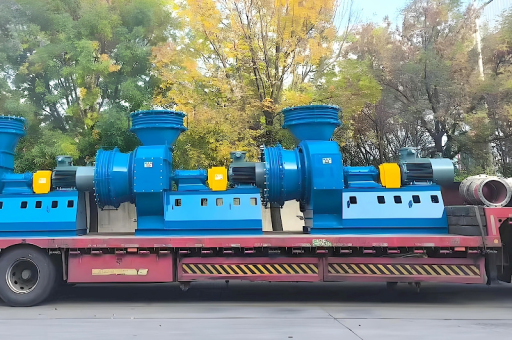
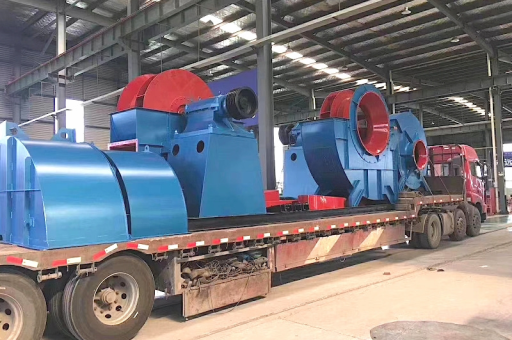
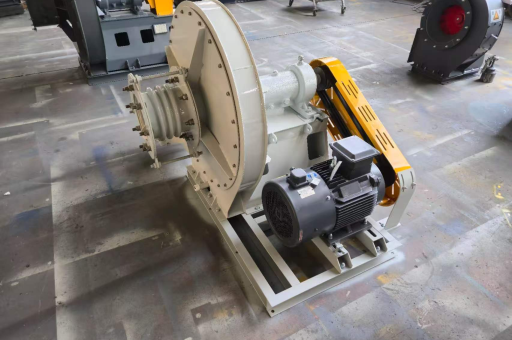
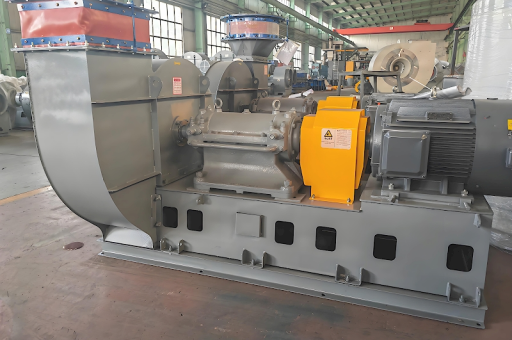
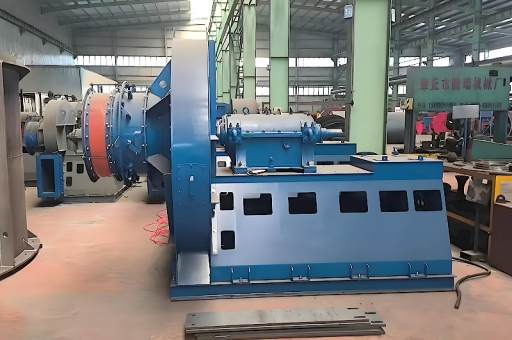
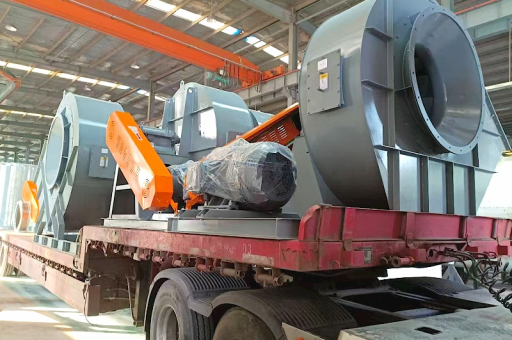
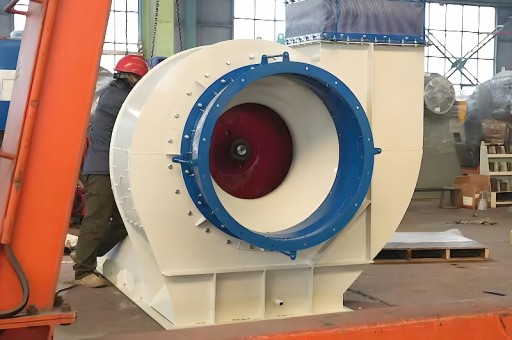
A 90kW Sweeper Blower typically employs a centrifugal fan design with a backward-curved impeller. This architecture is preferred for its high efficiency at varying airflow rates and its resistance to dust loading. Key components include:
- Motor: 90 kW (120 HP), 3-phase, 380–690 VAC, 50/60 Hz, IP55 or IP65 enclosure.
- Impeller: Cast aluminum or stainless steel, precision-balanced to reduce vibration.
- Casing: Heavy-gauge steel with powder coating or epoxy lining for corrosion resistance.
- Inlet & Outlet: Flanged connections, typically 250 mm to 400 mm in diameter.
- Max Flow Rate: 18,000 to 25,000 m³/h (depending on system resistance).
- Max Static Pressure: 20,000 to 30,000 Pa (2.0–3.0 m H₂O).
- Noise Level: 85–95 dB(A) at 1 meter (with optional silencer).
The design prioritizes low maintenance through sealed bearings, externally accessible grease points, and a replaceable wear liner in the fan casing. Many modern units also integrate variable frequency drives (VFDs) for precise speed control, which reduces energy consumption and wear during partial-load operation.
How Does a 90kW Sweeper Blower Work? (Q&A)
Q1: What is the working principle of a 90kW sweeper blower?
The blower operates on the centrifugal principle. Air enters the impeller axially, is accelerated radially by the rotating blades, and exits through the volute casing with high velocity and pressure. The kinetic energy is converted into static pressure, which pushes the air and entrained debris into a collection hopper or filter system.
Q2: How does it separate debris from the airflow?
In a typical sweeper, the blower creates suction at the nozzle. Debris is carried through a duct into a primary separation chamber where heavier particles settle by gravity. Fine dust is then captured by a downstream baghouse filter or cyclone separator before the air returns to the blower inlet—creating a closed-loop system that minimizes dust emission.
Q3: What makes 90kW different from lower-power blowers?
The 90kW rating ensures sustained high vacuum even when the filter is partially loaded. Lower-power blowers experience a sharp drop in performance as dust builds up, while the 90kW system maintains adequate pickup velocity. Additionally, the larger impeller diameter and wider housing reduce turbulence, improving overall efficiency.
Q4: Can the blower handle wet or sticky materials?
Yes, but with precautions. Many 90kW sweeper blowers feature a striker plate or wear ring that can be replaced. For wet materials like mud or heavy sludge, manufacturers recommend a pre-separator or liquid trap to prevent damage to the impeller bearings.
Key Applications in Industry and Municipal Services
The 90kW Sweeper Blower is not limited to street cleaning. Its high power-to-weight ratio and robust construction make it suitable for multiple sectors:
- Municipal Street Sweeping: Cleans highways, industrial parks, and urban roads with a pickup width of up to 3.5 meters. Typical sweep speeds: 5–15 km/h.
- Airport Runway Cleaning: Removes rubber deposits, FOD (foreign object debris), and snow residue. The high air velocity prevents recontamination.
- Construction & Mining Sites: Collects sand, gravel, and ore dust. The blower can be mounted on heavy trucks or skid-steer loaders.
- Port and Warehouse Cleaning: Handles spillage of grains, pellets, and powders without water usage, making it ideal for food and chemical storage.
- Tunnel and Bridge Maintenance: Used in ventilation-assisted cleaning to remove dust and debris from confined spaces.
Case study from a European municipal fleet: After switching from 55kW to 90kW sweepers, cleaning productivity increased by 35%, and filter cleaning intervals doubled. The extra power also allowed operators to reduce sweep passes by 20%, leading to significant fuel savings.
Energy Efficiency and Environmental Considerations
Modern 90kW Sweeper Blowers are designed with energy conservation in mind. Key features include:
- High-efficiency motors (IE3 or IE4): Reduce power loss by up to 10% compared to older IE2 standards.
- Variable Frequency Drive (VFD): The blower speed can be reduced during low-load conditions, cutting energy use by 30–50% during intermittent operation.
- Optimized impeller geometry: Computational fluid dynamics (CFD) analysis reduces internal friction and turbulence, improving airflow per kW.
- Low noise emissions: Optional sound enclosures and exhaust silencers reduce noise below 80 dB(A), complying with both European and North American noise regulations.
Environmental benefits: Using a 90kW sweeper blower eliminates the need for high-pressure water washing in many applications, saving up to 1,000 liters of water per hour. Additionally, efficient dust collection reduces particulate matter (PM10 and PM2.5) emission to levels compliant with EPA and EU standards.
Maintenance Best Practices for Long Service Life
To ensure the 90kW Sweeper Blower operates reliably for 10+ years, follow these maintenance guidelines:
- Daily Checks: Inspect the inlet screen for blockage. Listen for abnormal bearing noise. Check belt tension (if belt-driven) or VFD cooling fan operation.
- Weekly: Measure and record vibration levels (target below 7 mm/s). Clean the impeller blades if sticky deposits are visible.
- Monthly: Lubricate bearings per OEM schedule (typically with lithium-based grease). Check and torque flange bolts.
- Quarterly: Replace air filter elements in the blower intake. Inspect wear liners and striker plates for thickness reduction.
- Annually: Perform a full motor insulation resistance test (minimum 5 MΩ at 500 V). Re-balance the impeller if vibration exceeds 11 mm/s.
Common failure modes and solutions:
- Bearing failure: Often caused by over-lubrication or moisture ingress. Use sealed bearings with proper IP rating.
- Impeller imbalance: Caused by dust buildup or erosion. Schedule regular cleaning and use wear-resistant coating.
- VFD overheating: Ensure the drive cabinet has adequate ventilation; clean dust from heat sinks monthly.
Common Questions and Expert Answers (Q&A Section)
Q5: Can a 90kW sweeper blower be retrofitted onto an older sweeper truck?
Yes, but it requires careful evaluation of the existing electrical system (generator capacity, cable cross-section) and the chassis load capacity. Most retrofit kits include a new mounting frame, VFD, and reinforced ductwork. Consult the blower manufacturer or an authorized distributor for a feasibility study.
Q6: What is the typical lifespan of a 90kW sweeper blower?
With proper maintenance, the motor and casing can last 15–20 years. The impeller and wear parts may need replacement every 3–5 years, depending on the abrasiveness of the debris.
Q7: How does the blower perform at high altitudes?
At altitudes above 1,500 meters, air density decreases, which reduces the blower's mass flow and pressure. Some manufacturers derate the motor power by 2–3% per 300 meters. For high-altitude operation (e.g., mountain roads or highland mines), consider a blower with a larger impeller or a higher-rated motor.
Q8: Are there explosion-proof versions available?
Yes. For use in potentially explosive environments (e.g., grain silos, chemical plants, coal mines), 90kW sweeper blowers are available with ATEX or IECEx certification. These units feature non-sparking impellers (bronze or stainless steel), sealed motors, and conductive casing grounding.
Q9: What is the cost range for a new 90kW sweeper blower?
Depending on the manufacturer, features (VFD, silencer, coating), and certification, the price ranges from $15,000 to $45,000 USD. High-end units with explosion-proof certification and all-stainless construction can exceed $60,000. However, the total cost of ownership (including maintenance and energy) often favors higher-quality units over 5+ years.
Q10: How do I select between a belt-driven and direct-drive blower?
Belt-driven offers flexible speed adjustment (via pulley change) and lower initial cost, but requires belt tension, alignment, and periodic replacement. Direct-drive (motor shaft directly coupled to the impeller) eliminates belt losses and maintenance, has fewer moving parts, and is quieter. For continuous, heavy-duty sweeper use, direct-drive with VFD is recommended.
Conclusion: Why the 90kW Sweeper Blower Is a Game-Changer
The 90kW Sweeper Blower represents the intersection of power, efficiency, and durability. It enables municipal and industrial operators to clean more area per hour, handle tougher debris, and operate with lower environmental impact. By integrating advanced motor technology, wear-resistant design, and smart control systems, this blower class sets a new benchmark for pneumatic cleaning systems.
Whether you are upgrading a fleet of sweepers, designing a new dust collection system for a mining site, or specifying equipment for an airport runway, the 90kW sweeper blower offers the performance necessary to meet the most demanding cleaning standards. With proper selection, installation, and maintenance, this investment delivers a high return in both operational productivity and equipment longevity.
For detailed technical datasheets, OEM compatibility charts, or a custom sizing calculation for your specific application, consult a qualified industrial fan specialist or reach out directly to established manufacturers (search for "90kW sweeper blower fan" on industrial B2B platforms).