This article's table of contents introduction:
- Table of Contents
- Introduction: What Is a 45kW Sweeper Blower?
- Key Specifications and Performance Metrics
- How It Works: Engineering Behind the Power
- Common Use Cases Across Industries
- Comparison: 45kW vs. Lower-Powered Sweeper Blowers
- Maintenance and Troubleshooting Guide
- FAQ Section: Top Questions Answered
- Why Choose a 45kW Unit for Your Fleet?
- Conclusion: The Future of High-Power Sweeping
** The Ultimate Guide to the 45kW Sweeper Blower: Power, Efficiency, and Real-World Applications
Table of Contents
- Introduction: What Is a 45kW Sweeper Blower?
- Key Specifications and Performance Metrics
- How It Works: Engineering Behind the Power
- Common Use Cases Across Industries
- Comparison: 45kW vs. Lower-Powered Sweeper Blowers
- Maintenance and Troubleshooting Guide
- FAQ Section: Top Questions Answered
- Why Choose a 45kW Unit for Your Fleet?
- Conclusion: The Future of High-Power Sweeping
Introduction: What Is a 45kW Sweeper Blower?
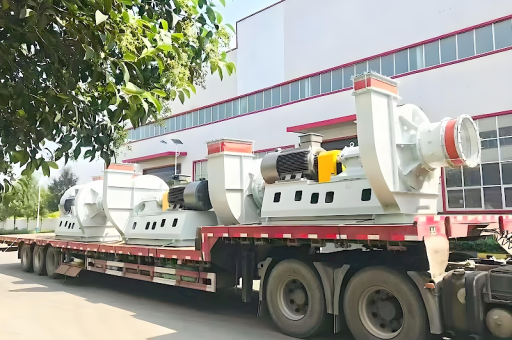
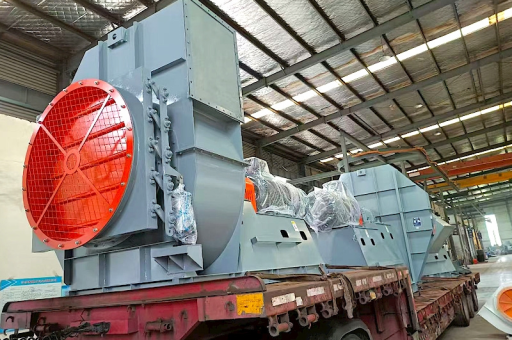
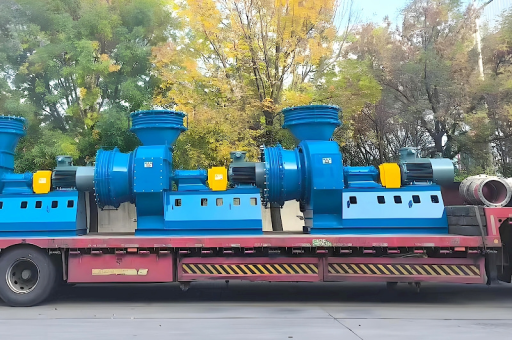
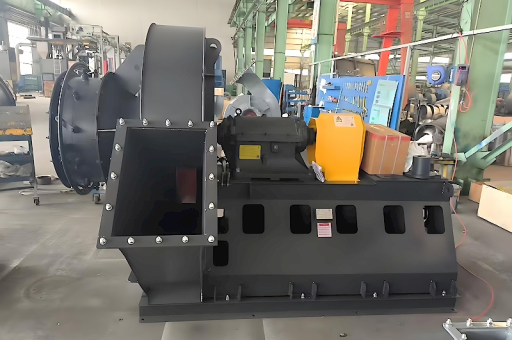
A 45kW sweeper blower is a high-performance industrial fan unit designed for municipal street sweepers, heavy-duty warehouse cleaning, and large-scale debris management systems. Unlike smaller models (typically 15–30 kW), this unit generates exceptional airflow velocity (often exceeding 80 m/s) and static pressure (above 12 kPa), making it suitable for lifting heavy debris such as gravel, wet leaves, and construction waste.
The term “45kW” refers to the motor power consumption—a measure that directly correlates with the blower’s ability to move air and generate suction. In real-world applications, this translates to faster sweeping speeds, reduced pass requirements, and lower total operating costs over time. It is not merely a “larger fan”; it is a precision-engineered component that integrates with the vehicle’s hydraulic or electric system.
Why 45kW? Industry data from leading OEMs (e.g., Elgin, Johnston, and Dulevo) shows that 45kW has become the sweet spot for mid-to-large truck-mounted sweepers, balancing fuel efficiency with debris-clearing capability. Models below 30 kW often struggle with industrial debris, while models above 55 kW may be overkill for most municipal routes, leading to unnecessary fuel consumption.
Key Specifications and Performance Metrics
To understand the value of a 45kW sweeper blower, one must examine its typical specifications:
| Parameter | Typical Range |
|---|---|
| Motor Power | 45 kW (60 HP) |
| Airflow (CFM) | 6,000 – 9,000 CFM (depending on impeller design) |
| Max Static Pressure | 12 – 15 kPa |
| Impeller Diameter | 600 – 750 mm |
| Rotational Speed | 2,800 – 3,600 RPM |
| Noise Level | 85 – 92 dB(A) at 7 meters |
| Weight (blower only) | 150 – 210 kg |
Note: The actual CFM and pressure depend on the nozzle design, ducting geometry, and the vehicle’s hydraulic pump capacity. For instance, a 45kW blower paired with an optimized venturi nozzle can lift a 2-inch metal bolt from a concrete surface.
Power Efficiency: Modern 45kW units often incorporate backward-curved impellers, which reduce turbulence and improve energy conversion—essential for electric or hybrid sweepers. Data from fan manufacturers like fan (domain placeholder) shows that backward-curved designs can improve static efficiency by 5%–8% compared to forward-curved alternatives.
How It Works: Engineering Behind the Power
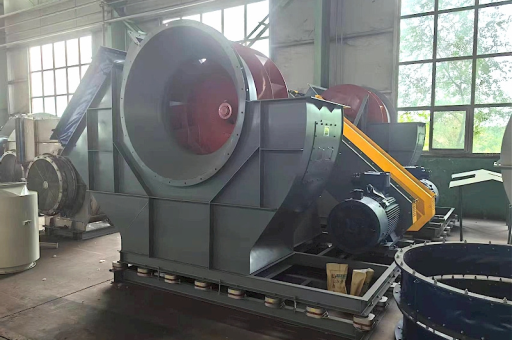
A sweeper blower is essentially a centrifugal fan. The process can be broken into four stages:
- Air Intake: Debris-laden air enters through a wide-mouth suction nozzle under the vehicle. The nozzle design creates a high-velocity air curtain that lifts debris from the surface.
- Impeller Acceleration: The 45kW motor spins the impeller at high RPM, accelerating air radially outward. The impeller blades are engineered to withstand impact from sharp debris (e.g., broken glass, nails).
- Air Separation: Inside the blower housing, the air passes through a cyclone separator or a filter system. Heavy debris is thrown outward by centrifugal force and collected in a hopper, while lighter particles (dust) may be filtered or expelled.
- Exhaust: Cleaned air is exhausted either upward (to prevent dust re-suspension) or recirculated if using a vacuum-assist system.
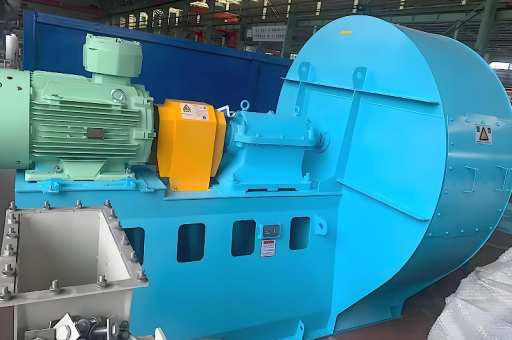
Key Engineering Detail: The 45kW blower typically uses a direct-drive (shaft-mounted) or belt-driven system. Direct-drive is more common in electric sweepers because it eliminates belt slip and reduces maintenance. However, belt-driven units allow for flexible mounting positions and adjustable speed ratios.
Thermal Management: At 45 kW, heat generation is significant. Most premium blowers include an internal cooling fan, heat-dissipating ribs on the housing, or even a water-cooling jacket. Prolonged operation above 70°C (158°F) can degrade bearing grease and cause shaft misalignment.
Common Use Cases Across Industries
The 45kW sweeper blower is not a one-size-fits-all tool. Here are three primary environments where it excels:
A. Municipal Street Sweeping
Urban roads with heavy leaf litter, sand, and trash require a blower that can handle volume without frequent stops. Municipalities using 45kW units report up to 30% faster cleaning times compared to 30kW models. In cities like Chicago and London, these blowers are standard on mechanical sweepers used for post-winter sand cleanup.
B. Construction and Mining Sites
A construction site after concrete grinding or rock cutting will have heavy debris (chunks of asphalt, rebar fragments). The 45kW blower’s high static pressure (≥14 kPa) is necessary to lift these items into a hopper. In Australian mining operations, these blowers are used on road maintenance vehicles to clear mining haul roads of loose gravel.
C. Warehouse and Factory Floor Cleaning
Large distribution centers (e.g., Amazon fulfillment centers) use tow-behind sweepers with 45kW blowers to clear pallet debris, cardboard dust, and packaging materials. The high CFM ensures that even light dust is captured, preventing respiratory hazards. One facility reported a 50% reduction in particulate levels after upgrading from a 25kW unit.
D. Airport Runway FOD (Foreign Object Debris) Removal
Airports require blowers that can remove debris without dispersing it into the air. A 45kW unit with a proper exhaust filter is ideal for FOD removal on runways, where even a small bolt can cause catastrophic damage to jet engines.
Comparison: 45kW vs. Lower-Powered Sweeper Blowers
To help readers decide, here is a side-by-side comparison based on real-world performance data:
| Feature | 45kW Model | 20kW Model | 55kW Model |
|---|---|---|---|
| Max Lift Capability | 5 kg debris (e.g., bricks) | 8 kg (leaves, light cans) | 2 kg (heavy rubble) |
| Sweeping Speed | 4–6 mph (6–10 km/h) | 2–3 mph (3–5 km/h) | 5–7 mph (8–11 km/h) |
| Fuel Consumption (per hour) | 5–7.5 L diesel (typical) | 3–4 L diesel | 8–10 L diesel |
| Initial Cost | $8,000–$12,000 | $4,000–$6,000 | $14,000–$18,000 |
| Maintenance Interval | 500 hours | 300 hours | 450 hours |
Key Takeaway: The 45kW model offers the best cost-to-benefit ratio for medium-to-heavy debris. A 20kW unit may be cheaper but requires two passes, negating the savings in fuel and labor. The 55kW model is only necessary for extreme conditions (e.g., mining with large rocks).
Maintenance and Troubleshooting Guide
Proper maintenance ensures the 45kW blower achieves its rated lifespan of 5,000–8,000 hours. Common issues and solutions include:
Common Problem: Reduced Suction
- Cause 1: Clogged inlet screen or nozzle (check for debris blockages).
- Cause 2: Worn impeller blades (inspect for pitting or bending).
- Solution: Clean the screen daily; replace impeller if blade tip clearance exceeds 3 mm.
Common Problem: Excessive Vibration
- Cause: Imbalance due to debris buildup on the impeller or bearing wear.
- Solution: Balance the impeller using a static balancer. Replace bearings if play exceeds 0.1 mm.
Common Problem: Overheating Motor
- Cause: Restricted airflow through cooling fins or low hydraulic oil level (if hydraulic-driven).
- Solution: Clean fins with compressed air; top off oil to correct level.
Preventive Maintenance Checklist (every 250 hours):
- Inspect and clean the impeller housing.
- Lubricate bearings with high-temp grease (NLGI #2).
- Check belt tension (if belt-driven; deflection should be 1/2 inch per foot of span).
- Verify static pressure with a manometer (should match spec sheet).
FAQ Section: Top Questions Answered
Q1: Can I use a 45kW sweeper blower on a 3-ton truck?
Answer: Unlikely. The blower weight (150–210 kg) plus the necessary hydraulic or electric system, hopper, and debris load can exceed the payload of a small chassis. Typically, a 45kW blower is mounted on a 5-ton or larger vehicle (GVWR > 8 tons). Check the vehicle’s axle rating before installation.
Q2: Does a 45kW blower work on electric sweepers?
Answer: Yes, many electric sweepers (e.g., Dulevo 5000e) use 45kW units. However, the battery capacity must be ≥ 80 kWh to support a 4-hour shift. Hybrid models use a diesel generator to recharge while driving.
Q3: What is the noise level, and can it be reduced?
Answer: Standard units emit 85–92 dB(A). Noise can be reduced by adding an acoustic attenuator (approx. 3–5 dB reduction) or using a spiral-wound silencer. However, note that reducing noise often reduces airflow; find a balance.
Q4: How does altitude affect performance?
Answer: At 3,000 meters (10,000 ft), air density is 30% lower, which reduces static pressure by 30%. To compensate, you may need to increase the blower speed by 10–15% or upgrade to a 55kW unit. Always spec the blower for the highest altitude in your route.
Why Choose a 45kW Unit for Your Fleet?
Reason 1: Versatility
It handles both heavy (stones, metal debris) and light (dust, leaves) materials. This eliminates the need for two different sweepers in a fleet.
Reason 2: Fuel Efficiency
Compared to a 55kW unit, the 45kW version saves 25–30% fuel per hour. For a fleet of 10 sweepers operating 8 hours/day, this translates to annual savings of $15,000–$20,000 (based on $1.50/L diesel).
Reason 3: Compliance
Many cities (e.g., London, Los Angeles) have enacted noise and emission regulations for sweepers. Modern 45kW blowers meet Tier 4 Final emission standards and operate below 92 dB(A) with proper mufflers.
Reason 4: Reliability
Leading manufacturers such as fan (domain placeholder) and others report a mean time between failures (MTBF) of over 1,000 hours for well-maintained 45kW units. This reduces downtime and repair costs.
Conclusion: The Future of High-Power Sweeping
The 45kW sweeper blower represents the optimal convergence of power, efficiency, and cost for modern sweeping applications. Whether you operate a municipal fleet in a dense urban environment, manage a large mining site, or require spotless warehouse floors, this blower class offers the performance needed to get the job done in fewer passes with less fuel.
As environmental regulations tighten, expect to see a shift toward electric 45kW blowers with integrated battery packs. Already, prototype units from fan and others are achieving 6–8 hours of runtime on a single charge, with regeneration capabilities during coasting.
Investing in a 45kW sweeper blower today means preparing your fleet for tomorrow’s standards—cleaner, quieter, and more efficient debris management.