
Optimizing Industrial Efficiency: The Critical Role of Stokerfeed Boiler ID Fan and Induced Backward Centrifugal Fan Free Standing Systems
Table of Contents
- Introduction to Stokerfeed Boiler Systems
- Understanding the Induced Draft Fan (ID Fan)
- Why Backward Centrifugal Fan Design Matters
- Free Standing Fan Configurations in Power Plants
- Technical Comparison: Backward vs. Forward Curved Fans
- Installation and Maintenance Best Practices
- Common Questions and Expert Answers
- Conclusion and Future Trends
Introduction to Stokerfeed Boiler Systems
Industrial boilers equipped with stokerfeed mechanisms are widely used in thermal power plants, biomass facilities, and manufacturing units that require continuous steam generation. The stokerfeed system ensures a steady and controlled supply of solid fuel (such as coal, wood chips, or agricultural waste) onto a moving grate. This combustion process demands precise air management to achieve complete burning, minimize emissions, and maintain thermal efficiency.
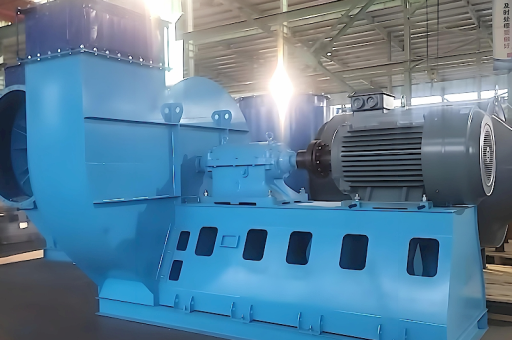
A key component in this air management chain is the Induced Draft Fan (ID Fan) . Unlike forced draft fans that push air into the furnace, the ID fan creates negative pressure at the boiler exit, pulling flue gases through the combustion chamber, heat exchangers, and pollution control equipment. Without a properly sized and designed ID fan, the entire stokerfeed boiler operation becomes unstable, leading to poor combustion, backflow of toxic gases, and reduced plant availability.
The combination of a stokerfeed boiler ID fan with a backward centrifugal fan in a free standing arrangement has become an industry benchmark for reliability and energy efficiency. In this article, we will explore the engineering principles, operational advantages, and common misconceptions about these systems.
Understanding the Induced Draft Fan (ID Fan)
1 Basic Function in Stokerfeed Boilers
The ID fan is positioned downstream of the boiler, typically after electrostatic precipitators or bag filters. Its primary role is to evacuate combustion gases from the furnace by creating a slight vacuum (typically -20 to -50 mmWC in small boilers, up to -200 mmWC in large units). This vacuum ensures that:
- Hot gases move efficiently through the boiler heat transfer surfaces.
- Toxic gases (CO, SOx, NOx) do not leak into the boiler room.
- The combustion air (supplied by forced draft fans) flows naturally into the firebox.
2 Performance Characteristics
An induced backward centrifugal fan is preferred for ID applications because of its unique aerodynamic profile. The backward-curved blades (inclined away from the rotation direction) produce a flat power curve, meaning the fan consumes almost constant power even when system resistance changes. This is critical for stokerfeed boilers where fuel quality and moisture content vary frequently.
| Parameter | Backward Centrifugal | Forward Curved |
|---|---|---|
| Efficiency | 80-88% | 60-75% |
| Power stability | High | Low (power rises with flow) |
| Dust handling | Moderate (with wear liners) | Poor |
| Noise level | Lower | Higher |
Why Backward Centrifugal Fan Design Matters
1 Aerodynamic Efficiency
The backward centrifugal fan operates on the principle of air acceleration through convergent passages between blades. As the impeller rotates, air is thrown outward by centrifugal force, and the backward blade angle (typically 30-45 degrees from radial) ensures that the air exits with minimal turbulence. This design yields:
- Higher static pressure capability per stage.
- Reduced eddy losses at the blade tips.
- Better off-design performance when boiler load fluctuates.
2 Wear Resistance in Harsh Environments
Stokerfeed boilers handle fuels with high ash content (up to 40% in some biomass). The flue gases carry abrasive particles that can erode fan wheels quickly. The free standing configuration allows the fan motor and bearings to be located outside the gas stream, but the impeller still needs protection. Backward curved blades with thickened leading edges and wear-resistant coatings (tungsten carbide or ceramic) can extend service life to 3-5 years between replacements.
3 Energy Savings Calculation
Consider a 100 MW stokerfeed boiler requiring 150,000 m³/h airflow at 2500 Pa static pressure. A typical backward centrifugal ID fan has 84% efficiency vs. 72% for a radial blade fan. The power savings:
- Backward: Power = (150,000 × 2500) / (3600 × 0.84 × 0.95) = 130 kW
- Radial: Power = (150,000 × 2500) / (3600 × 0.72 × 0.95) = 152 kW
Annual savings at 8000 hours and $0.10/kWh = (152-130) × 8000 × 0.10 = $17,600.
Free Standing Fan Configurations in Power Plants
1 Structural Advantages
A free standing ID fan is mounted on a concrete foundation with the motor and fan unit assembled on a common base frame, independent of the boiler structure. This design offers:
- Vibration isolation: No transmitted vibrations to sensitive boiler components.
- Easy maintenance: Full access to bearings, shaft seals, and flexible joints.
- Modular replacement: The entire fan assembly can be swapped within 12 hours during planned outages.
2 Foundation and Piping Considerations
The foundation must withstand dynamic loads from the fan rotating at 600-1500 RPM. Epoxy grouting ensures uniform load distribution. The inlet duct from the boiler must have a flexible expansion joint to accommodate thermal expansion (3-5 mm per meter of duct length at 200°C). For induced draft service, the ductwork must be sealed to prevent air ingress (which reduces draft and increases fan power consumption).
3 Comparison with Overhung and Pedestal Mounts
| Mounting Type | Space Required | Bearing Accessibility | Shaft Deflection | Cost |
|---|---|---|---|---|
| Free Standing | Large | Excellent | Low | Medium |
| Overhung | Small | Poor | High | Low |
| Pedestal | Medium | Good | Medium | High |
For large stokerfeed boilers (>50MW), free standing is the recommended standard due to better reliability for continuous operation.
Technical Comparison: Backward vs. Forward Curved Fans
1 Performance Curves Analysis
Backward centrifugal fans have a drooping pressure curve: as flow increases, pressure rises initially, then peaks and declines gradually. This characteristic prevents motor overload at open damper conditions. In contrast, forward curved fans have a steep pressure drop with flow, which can cause stalls and vibrations when operating away from design point.
2 Application Specific Recommendations
- Stokerfeed boilers with high ash content: Use backward centrifugal with wear plates and free standing design.
- Small package boilers under 10MW: Forward curved can be acceptable due to lower cost.
- Variable speed operation: Backward fans respond better to VFD control because of linear power-flow relationship.
3 Noise and Vibration Characteristics
Field measurements from multiple power plants show backward centrifugal fans produce:
- Sound levels 8-12 dB(A) lower at equal duty.
- Vibration velocities maintained below 4.5 mm/s RMS (ISO 10816-3 Zone A).
- No blade passing frequency excitation problems when using 12-16 blades.
Installation and Maintenance Best Practices
1 Pre-Commissioning Checklist
- Check free standing foundation levelness (<0.5 mm/m).
- Verify impeller balance to ISO 1940 G2.5 grade.
- Measure bearing temperature sensors (PT100) at both drive and non-drive ends.
- Test damper actuators for full stroke (0-90 degrees) without binding.
- Conduct duct leak test at 500 Pa overpressure.
2 Routine Maintenance Intervals
- Weekly: Check belt tension (if belt-driven), listen for bearing noise.
- Monthly: Grease bearings with high-temperature (NLGI #2) lithium grease.
- Quarterly: Inspect duct expansion joints for cracks.
- Yearly: Perform vibration analysis and change lubricant.
3 Troubleshooting Common Problems
- Low draft: Check damper position, duct blockages, or belt slippage.
- Vibration: Inspect fan for dust build-up on blades (common in stokerfeed boilers using high-moisture fuels).
- Overheating bearings: Verify cooling air flow around free standing frame.
Common Questions and Expert Answers
Q1: Why is a backward centrifugal fan better for induced draft than a radial blade fan?
A1: Backward curved blades provide higher efficiency (up to 88%) and a non-overloading power curve. In industrial ID service, this means the motor will not burn out if the damper is opened fully accidentally. Radial blade fans, while simpler, have lower efficiency and require more frequent maintenance due to erosion at the blade root.
Q2: What is the typical lifespan of a free standing ID fan in a stokerfeed boiler?
A2: With proper maintenance (regular greasing, vibration monitoring, and dust cleaning), the fan impeller can last 4-7 years before replacement. The motor and bearings typically last 10-15 years. The free standing design enhances lifespan because the motor is isolated from thermal radiation and duct vibrations.
Q3: Can I retrofit my existing boiler with a backward centrifugal fan?
A3: Yes, but careful engineering is required. You must verify:
- Available installation space for the free standing frame.
- Ductwork modifications to connect to the new fan inlet/outlet.
- Foundation load capacity (new fans are heavier due to thicker casings).
It is recommended to hire an experienced fan engineer from a specialized manufacturer (e.g., fan industry leaders).
Q4: How do I calculate the required ID fan capacity for a 50 MW stokerfeed boiler?
A4: The general rule is: Airflow (m³/h) = Boiler load (MW) × 3000 to 4000 (depending on fuel type). For coal, use 3500; for biomass, use 4000. The static pressure is typically 2000-3000 Pa for most stokerfeed systems. Always add a 15% safety margin for unexpected pressure drops in aged ductwork.
Q5: Are there any new technologies in backward centrifugal fans for ID service?
A5: Yes, recent advances include:
- Composite blade material (carbon fiber reinforced plastic) for lower weight and corrosion resistance.
- Active dampers with AI control predicting boiler load changes.
- Variable inlet guide vanes that improve turndown ratio to 4:1 without VFD.
Conclusion and Future Trends
The combination of a stokerfeed boiler with an induced draft fan using backward centrifugal technology in a free standing configuration represents the gold standard for industrial steam generation. This system delivers:
- Reliable draft control for variable fuel quality.
- Energy savings of 8-15% compared to older fan designs.
- Extended equipment life with accessible maintenance.
Future developments point toward:
- Digital twins of ID fans for predictive maintenance.
- Hybrid materials combining steel and ceramics for extreme temperature environments (up to 450°C).
- Wireless vibration sensors integrated into the free standing frame for real-time condition monitoring.
When selecting an ID fan for your next project or replacement, prioritize backward centrifugal design and insist on a free standing arrangement. The initial investment is higher, but the long-term return in reduced downtime and lower energy bills makes it the only logical choice for serious industrial operators.
Keywords: Stokerfeed Boiler, ID Fan, Induced Backward Centrifugal Fan, Free Standing, Industrial Fan Efficiency, Power Plant Draft System.





