
This article's table of contents introduction:
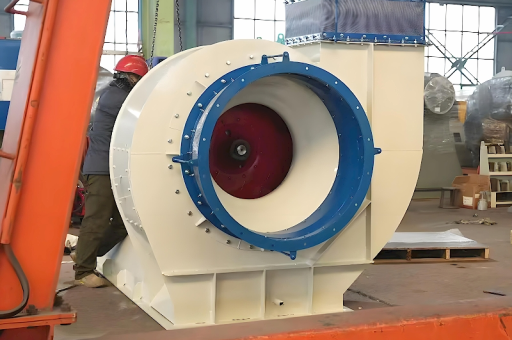
- What It Is
- The Core Function: Handling Harmful Exhaust
- Critical Design Features for Handling Harmful Gases
- Why "Induced Draft"? (The Safety Aspect)
- A Typical System Flow
- The Harmful Exhaust and the Fan's Role in Mitigation
- Potential Problems with ID Fans in This Service
- Summary Table: Forced Draft (FD) vs. Induced Draft (ID)
- Conclusion
This is a clear description of a critical piece of industrial equipment. Here is a detailed breakdown of the Industrial Induced Draft (ID) Fan in a boiler system, specifically addressing its role in handling "harmful air exhaust."
What It Is
An Induced Draft (ID) Fan is a large, high-powered fan located at the end of the boiler system, typically between the air pollution control equipment (like electrostatic precipitators or baghouses) and the chimney (stack).
Its primary function is to pull the flue gas (exhaust) through the boiler and its associated cleanup devices, creating a slightly negative pressure (vacuum) inside the furnace.
The Core Function: Handling Harmful Exhaust
The fan's entire purpose is the safe and controlled extraction of the boiler's harmful air exhaust. This exhaust is not harmless. It typically contains:
- Carbon Dioxide (CO₂): A greenhouse gas produced by combustion.
- Nitrogen Oxides (NOx): Harmful pollutants that contribute to smog and acid rain.
- Sulfur Dioxide (SO₂): A primary cause of acid rain, from burning sulfur-containing fuels like coal and oil.
- Particulate Matter (Fly Ash): Fine dust, soot, and heavy metals.
- Carbon Monoxide (CO): A toxic, colorless, odorless gas from incomplete combustion.
- Water Vapor (H₂O): A product of combustion.
Critical Design Features for Handling Harmful Gases
Because ID fans handle hot, corrosive, and abrasive exhaust, they are not standard ventilation fans. They are heavily engineered for durability and safety:
- High-Temperature Construction: Built to withstand continuous temperatures of 350°F to 500°F (175°C - 260°C) and spikes up to 700°F (370°C). Materials often include high-grade steel alloys.
- Abrasion Resistance: The impeller blades are thicker and often lined with hard-facing alloys or ceramic coatings to resist erosion from fly ash.
- Corrosion Resistance: Flue gas can be acidic (especially with sulfur). Fans are often painted with epoxy coatings or constructed from stainless steel family materials to prevent chemical degradation.
- Heavy-Duty Bearings and Shaft: Robust bearing systems with external cooling (like water jackets or forced air) are required to handle the shaft load and high heat.
- Variable Speed Control: To precisely control the furnace pressure and fan capacity, ID fans are almost always driven by Variable Frequency Drives (VFDs) or have inlet vanes/dampers for control.
Why "Induced Draft"? (The Safety Aspect)
The name "Induced Draft" is crucial to understanding the safety mechanism:
- The negative pressure created by the ID fan prevents the harmful flue gas from leaking out of the boiler and into the boiler room or environment.
- If the ID fan failed or was not powerful enough, the positive pressure inside the boiler would force toxic, hot gases out through every crack, hatch, and seal, creating an immediate safety and health hazard for personnel.
A Typical System Flow
- Furnace: Fuel (coal, gas, biomass) burns.
- Boiler Tubes: Hot gases transfer heat to water/steam.
- Air Preheater: Gases preheat incoming combustion air for efficiency.
- Pollution Control Equipment:
- ESP (Electrostatic Precipitator) or Baghouse (Fabric Filter): Removes particulate matter (fly ash).
- FGD (Flue Gas Desulfurization - Scrubber): Removes SO₂.
- SCR (Selective Catalytic Reduction): Removes NOx.
- ID Fan: Pulls the cleaned gas through all this equipment.
- Stack (Chimney): The ID fan's pressure pushes the treated exhaust up and out of the stack to disperse safely.
The Harmful Exhaust and the Fan's Role in Mitigation
The ID fan does not clean the air; it is the mover. The pollution control equipment does the cleaning. However, the ID fan makes the cleaning possible by:
- Creating the draft that draws combustion air into the furnace.
- Maintaining the required flow and pressure for scrubbers and baghouses to function.
- Preventing backflow of harmful gases.
Potential Problems with ID Fans in This Service
- Fan Erosion: Fly ash erodes the impeller blades, leading to imbalance and vibration.
- Fan Corrosion: Acidic condensate (acid dew point) can attack the fan casing and rotor.
- Vibration: Buildup of ash on blades (fouling) or blade erosion causes severe vibration.
- High Temperature Failure: If the boiler operates at too high a temperature or the cooling fails, the fan's shaft or bearings can fail.
Summary Table: Forced Draft (FD) vs. Induced Draft (ID)
| Feature | Forced Draft (FD) Fan | Induced Draft (ID) Fan |
|---|---|---|
| Location | Before the furnace (inlet) | After the boiler (outlet) |
| Medium Handled | Clean, ambient air | Hot, dirty, corrosive flue gas |
| Pressure | Positive (pushes air in) | Negative (pulls gas out) |
| Function | Supplies combustion air | Removes exhaust gas |
| Wear | Low (clean air) | High (abrasive fly ash, acid) |
| Safety Role | Ensures proper combustion | Prevents gas leaks into building |
Conclusion
The Industrial Induced Draft Fan in a Boiler is a safety-critical machine designed for the harsh, life-threatening environment of hot, acidic, and abrasive harmful air exhaust. Without this fan, a boiler cannot operate safely, and its pollutants cannot be effectively captured and treated before release. It is the workhorse that ensures the toxic gases are kept under negative pressure and moved through the pollution control system before being safely released up the stack.
Always follow strict lockout/tagout (LOTO) procedures, high-temperature PPE requirements, and manufacturer guidelines when servicing or operating these fans.





