
This article's table of contents introduction:
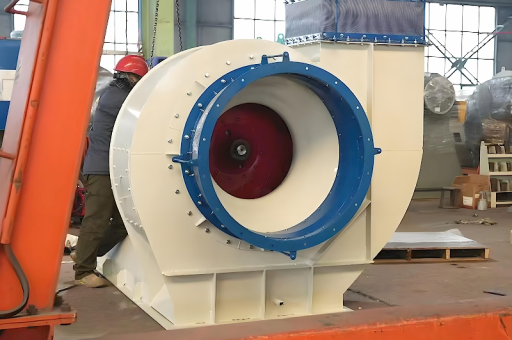
- Fan Function: Induced Draft (ID) Fan
- Pressure Classification: Medium Pressure
- Mechanical Configuration: Single Width, Single Inlet (SWSI)
- Application: Boiler (Specifically "Id Fan")
- Typical Application Summary
- Standard Example Specification (Hypothetical)
- Common Synonyms or Confusion
Based on the terms you’ve provided, you are likely looking for a description or specification breakdown of a specific type of industrial fan used in boiler systems.
Here is the breakdown of what "Medium Pressure Induced Draft Fan Boiler ID Fan Single Width Single Inlet" means:
Fan Function: Induced Draft (ID) Fan
- What it does: This fan is located at the exit of the boiler system (before the chimney/stack).
- Function: It pulls or "induces" the flue gas (hot exhaust) through the boiler, economizer, and dust collector. It creates negative pressure (suction) inside the furnace, ensuring safe operation and drawing air through the fuel bed.
- Environment: Handles hot, often dusty, and corrosive flue gases (up to 150°C - 400°C depending on the system).
Pressure Classification: Medium Pressure
- Standard Definition: In fan engineering (per ISO/DIN standards), medium pressure typically means a fan that develops a total pressure between 2,000 Pa (200 mmWG) and 10,000 Pa (1,000 mmWG).
- Context: It is higher than a standard ventilation fan but lower than a "High Pressure" fan (used for pneumatic conveying or fluidized beds). For a Boiler ID Fan, this is the most common range for water tube boilers or small to medium industrial boilers.
Mechanical Configuration: Single Width, Single Inlet (SWSI)
- Single Width: The impeller (wheel) width is equal to the inlet nozzle width. It is designed for a specific air volume.
- Single Inlet: Air enters the impeller from only one side (the non-drive end or the drive end).
- Design Implication: This is an Overhung design. The impeller is mounted on a shaft supported by bearings on one side only. It is simpler, cheaper, and more compact than a Double Inlet (DI) fan, but handles lower air volumes.
- Opposite: Double Width, Double Inlet (DWDI) which has air entering from both sides (better for high volume, low pressure).
Application: Boiler (Specifically "Id Fan")
- This fan is dedicated to overcoming the resistance of the boiler heat exchangers, air preheaters, and pollution control equipment (ESP, baghouse) to pull the gases out.
Typical Application Summary
- Equipment: Boiler (Steam generation, power plant, or industrial process).
- Fan Type: Centrifugal (Backward Inclined, Backward Curved, or Airfoil blades are most common for ID fans).
- Duty: Hot, dirty gas.
- Construction: Heavy-duty steel housing, wear liners (Hardox or ceramic tiles), water-cooled bearings (if gas temperature exceeds 100°C), and a separate motor base to prevent heat transfer.
- Control: Inlet guide vanes (IGV), variable frequency drives (VFD), or damper control to regulate the negative pressure.
Standard Example Specification (Hypothetical)
If you were ordering this fan, a typical line item would look like this:
ITEM: Induced Draft Fan (Boiler ID Fan) Type: Centrifugal, SWSI, Overhung Drive: V-Belt / Direct Drive (depending on motor placement) Volume: 50,000 m³/hr Pressure: 3,500 Pa (Medium Pressure) Temperature: 180°C (Normal), 250°C (Peak)
Common Synonyms or Confusion
- Forced Draft (FD) Fan vs. ID Fan: An FD fan pushes cold air into the boiler. An ID fan pulls hot gas out of the boiler. The "Medium Pressure" rating is far more common for ID fans than for FD fans (which are often low pressure in large boilers).
- SWSI vs. DWDI: For the same fan diameter, an SWSI fan handles roughly half the volume of a DWDI fan but is simpler to maintain.
Are you looking for a specific technical drawing, maintenance advice, or a commercial quotation (e.g., from a manufacturer like Howden, ABB, KSB, or a local fabricator)? Providing the boiler capacity (TPH) or the flue gas temperature will help narrow down the exact model.





