
This article's table of contents introduction:
- Decoding the Terminology
- Why "Long Life" is a Major Challenge for ID Fans
- How to Specify a "High Pressure, Long Life" ID Fan
- Drive Arrangement (Crucial for Long Life)
- Typical "Long Life" Maintenance Plan
- Leading Manufacturers for This Application
- Summary of Your Requirement
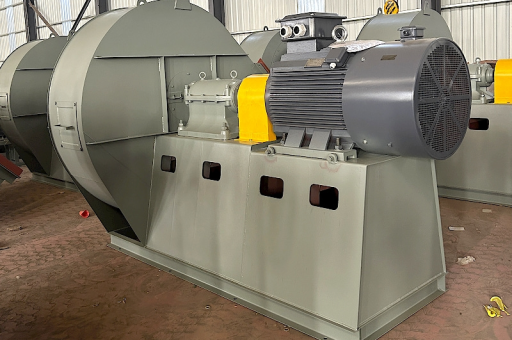
This query appears to be a list of keywords or requirements for an Industrial Boiler Induced Draft (ID) Fan. Let me provide a detailed breakdown of what each term means and how to source or specify a fan that meets these criteria, specifically regarding high pressure and long life.
Decoding the Terminology
- Industrial Boiler: This defines the application. The fan must handle hot, often dirty flue gases (combustion byproducts).
- Induced Draft (ID) Fan: This is the specific type. It is located after the boiler (or economizer/scrubber).
- Function: It pulls (induces) a negative pressure (vacuum) through the boiler system, drawing flue gases out of the furnace and pushing them up the stack.
- Critical Factor: It handles the hottest, dirtiest, and most corrosive gas in the system.
- High Pressure: This is the key performance metric. For an ID fan, "high pressure" usually means Static Pressure (SP) typically ranging from 30 to 60+ inches of water gauge (in. w.g.) or 5 to 15+ kPa. This pressure is needed to overcome the resistance of the boiler, heat exchangers, baghouses, scrubbers, and ductwork.
- Long Life: This refers to operational durability, measured in years (e.g., 15-25 years), not just hours. It implies resistance to:
- Erosion: Fly ash particles moving at high velocity.
- Corrosion: Acidic condensates (sulfuric acid, dew point corrosion).
- Thermal Fatigue: Heat cycling from boiler starts/stops.
- Vibration Fatigue: High-speed rotation.
Why "Long Life" is a Major Challenge for ID Fans
ID fans are the hardest-working fan in a boiler house. Standard commercial fans can fail quickly. For a High-Pressure, Long-Life ID Fan, you need specialized engineering:
| Challenge | Standard Fan Issue | Long-Life Solution |
|---|---|---|
| Erosion (Fly Ash) | Blade wear, imbalance, failure. | Thick, hardened blades (e.g., 12-16 mm AR400/AR500 steel). Radial or Backward-Inclined Blades (less prone to wear than airfoil). Replaceable wear liners. |
| Corrosion | Sulfuric acid dew point attack on housing & shaft. | Corrosion-resistant alloys (Corten steel, 316L SS, Duplex SS) or protective coatings (e.g., Belzona). Shaft seal to prevent gas leakage. |
| Vibration | Unbalance from wear, bearing failure. | Oversized, heavy-duty bearings (spherical roller type with continuous oil lubrication). Proximity probes for real-time vibration monitoring. Robust shaft (larger diameter). |
| Heat | Thermal growth, blade cracking. | Stepped shaft design (cooling fan on motor end). Expansion joints on ducting. High-temperature grease or oil mist lubrication. |
How to Specify a "High Pressure, Long Life" ID Fan
When sourcing this fan, you cannot just say "high pressure." You must provide precise data to the manufacturer (e.g., Howden, New York Blower, Robinson Fans, FläktGroup, Cincinnati Fan).
A. Performance Specifications (The "High Pressure")
- Volume Flow (CFM / m³/hr): Required exhaust gas volume at actual operating temperature.
- Static Pressure Rise (in. w.g. / Pa): The total system resistance the fan must overcome.
- Gas Temperature (°F / °C): This is critical. Normal: 180-260°C (356-500°F). High: up to 400°C (752°F). You must specify the temperature for proper material selection.
- Gas Composition: % of dust, SOx, NOx, moisture. Is it corrosive?
B. Mechanical Construction (The "Long Life")
- Wheel Design:
- For dirty gas (most ID fans): Radial Blade (workhorse, self-cleaning) or Backward-Inclined (higher efficiency, but more wear-prone). Never use Airfoil blades for dirty gas (they fill with ash and fail).
- Material: AR400, AR500, or Hardox 450 (abrasion-resistant). For high-temp >260°C, use T-1 type steel to retain strength.
- Housing: Heavy-gauge steel (e.g., 3/8" or 1/2" plate) with replaceable wear plates in the cut-off and scroll area (highest wear zones).
- Bearings:
- The #1 cause of ID fan failure.
- Type: Spherical roller bearings (self-aligning).
- Cooling: For high-temp, you need a cooling wheel on the shaft between the housing and bearing, or a water-cooled bearing housing.
- Lubrication: Continuous oil circulation system (splash or forced) is superior to regreaseable bearings.
- Shaft Seal: Tri-labyrinth or carbon ring seal to prevent hot, dirty gas from leaking out and destroying the shaft and bearings. Do not use simple felt seals.
- Vibration Monitoring: Factory-installed accelerometers and a full Torsional Analysis study (especially for VFD-driven fans).
Drive Arrangement (Crucial for Long Life)
For heavy-duty industrial ID fans, the standard is Arrangement 8 or 9 (Direct Drive with the fan wheel overhung on the motor shaft or pedestal mounted). However, for very high pressure, Arrangement 7 (Belt Drive) is sometimes used to allow speed changes. Note: Belt drives require more maintenance.
For ultimate Long Life & High Pressure: Direct Drive (Arrangement 8 or 1) with a VFD (Variable Frequency Drive) to control speed. This eliminates belt maintenance and allows soft starts, reducing mechanical shock.
Typical "Long Life" Maintenance Plan
Even the best fan needs care. Your "Long Life" guarantee relies on:
- Daily: Check vibration levels (bearing velocity). Monitor current draw.
- Weekly: Check bearing oil level/condition.
- Monthly: Visual inspection for ash build-up on wheel (balance).
- Quarterly: Lubricate motor bearings (if not sealed).
- Annually: Full internal inspection. Measure blade thickness (gauge for wear). Replace wear liners before they reach the base metal.
Leading Manufacturers for This Application
If you are sourcing this for a specific project, look at these manufacturers who specialize in heavy-duty, high-pressure ID fans:
- Robinson Fans (USA/Global): Industry standard for severe-duty ID fans. Their "RID" (Robinson Induced Draft) fan is designed specifically for this.
- Howden (Global): Very high-end, often used for utility boilers (power plants). Their VHX and HP series.
- New York Blower (USA): Their "General Industrial Fans" (GI/AGI) with AR plate wheels.
- FläktGroup (Germany/Global): High efficiency, advanced aerodynamics.
- Twin City Fan (USA): Good for medium-duty industrial boilers.
Summary of Your Requirement
| Feature | Standard ID Fan | "High Pressure, Long Life" ID Fan |
|---|---|---|
| Static Pressure | 10-20 in. w.g. | 30-60+ in. w.g. |
| Wheel Design | Backward Curved Airfoil | Radial Tip or Backward Inclined (Solid) |
| Wheel Material | Mild Steel | AR400, AR500 or Hardox |
| Housing Thickness | 1/4" (6mm) | 3/8" - 1/2" (10-12mm) with wear liners |
| Bearings | Standard ball bearings | Oversized spherical roller, oil-lubricated, cooled |
| Shaft Seal | Felt seal | Labyrinth or Carbon Ring Seal |
| Life Expectancy | 3-5 years (in dirty gas) | 15-25 years (with proper maintenance) |
Final Recommendation: Do not buy a standard "material handling" fan. You need a heavy-duty, abrasion-resistant, high-pressure ID fan designed specifically for boiler applications. Contact a manufacturer like Robinson Fans or Howden with the following 3 data points:
- Required CFM at Temperature (e.g., 50,000 CFM at 350°F).
- Required Static Pressure (e.g., 45 in. w.g.).
- Dust / Ash Concentration (e.g., 5 grains/SCF).





