
This article's table of contents introduction:
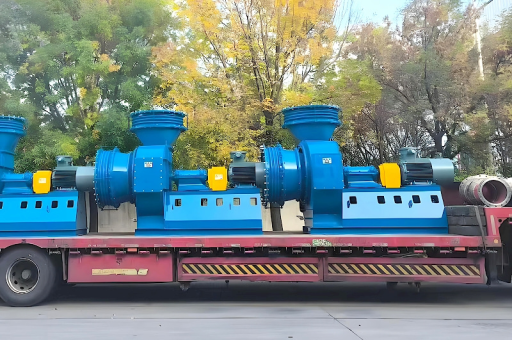
It appears you are listing the key specifications or components of an industrial blower system. Based on your input, here is a breakdown of what each term refers to, followed by a summary of the typical application and considerations for this type of equipment.
Breakdown of Terms
-
Stokerfeed Boiler
- What it is: A type of boiler that uses a mechanical stoker to feed solid fuel (coal, biomass, wood chips) onto a grate where it burns.
- Connection: This blower is specifically designed to provide the combustion air for this boiler. It forces air up through the grate or into the furnace to ensure the fuel burns efficiently. This is a high-reliability, continuous-duty application.
-
Single Inlet Centrifugal Blower
- What it is: The design of the fan wheel and housing.
- Single Inlet: Air enters the fan wheel from only one side (in contrast to a double-inlet fan which pulls air from both sides). This is typical for smaller to medium-sized industrial fans and allows for a direct motor connection (direct drive) or a cantilevered mounting.
- Centrifugal: The air enters the center of the wheel and is slung outward by centrifugal force to the edge of the housing before being discharged. This design is ideal for moving large volumes of air against significant static pressure (resistance), which is needed to push air through a boiler's fuel bed, grate, and ductwork.
-
Three Phase AC Motor
- What it is: The power source for the blower.
- Why it's used:
- High Power: Industrial blowers require significant horsepower (e.g., 5 HP, 15 HP, 50 HP+).
- Reliability: Three-phase motors are more robust and have a longer lifespan than single-phase motors in continuous duty.
- Efficiency: They are more efficient at converting electrical power to mechanical power.
- Speed Control: They can be paired with a Variable Frequency Drive (VFD) to precisely control the blower speed (and thus the air volume), which is common for modern boiler combustion control systems.
Typical System Configuration
You are describing a Forced Draft (FD) Fan for a stoker-fed boiler.
- The 3-phase AC motor spins a shaft.
- The shaft connects directly (or via a belt/pulley) to the centrifugal blower wheel.
- The single inlet draws ambient air from the boiler house or outside.
- The blower discharges the air into the stokerfeed boiler's windbox or plenum, which then pushes the air up through the fuel grate to support combustion.
Key Considerations
If you are selecting, maintaining, or troubleshooting this equipment, consider the following:
- Duty: Is this a continuous duty (24/7) or intermittent duty application? Stoker boilers typically run continuously, so the motor and fan must be rated for continuous duty (S1) .
- Air Volume (CFM/cmh) vs. Static Pressure (in. wg / Pa): The fan needs to be specifically sized for the boiler's resistance. Over-sizing causes wasted energy; under-sizing causes poor combustion.
- Material of Construction: Depending on the fuel (coal, bark, refuse-derived fuel), the air may contain particulates. The fan wheel might be made of abrasion-resistant steel or have wear liners.
- Temperature: If this is for forced draft, the air is usually ambient temperature. However, if it's for Induced Draft (ID) (pulling hot flue gas from the boiler), the fan and motor would need to handle high temperatures.
- Motor Protection: Industrial three-phase motors in this service require proper overload protection (motor starter/contactor with overloads or a VFD with motor protection).
- Vibration Monitoring: Due to the critical nature of a boiler fan, it is common to use vibration sensors to detect bearing wear or wheel imbalance early.
In summary, you are describing the forced draft air supply system for a solid-fuel boiler. It is a critical piece of equipment where reliability, efficiency, and proper sizing are paramount.





