
This article's table of contents introduction:
- The Core Equipment: Industrial Centrifugal Fan
- Critical Differences: Dust Collector Fan vs. Cement Blower
- Key Specifications to Verify
- Typical Applications (Combined)
- Recommended Manufacturers (Specialized in this niche)
- Summary Checklist for Purchase
It appears you are looking for information on a specific piece of industrial equipment that combines multiple functions: dust collection for industrial boilers (waste gas) and air blowing for cement applications.
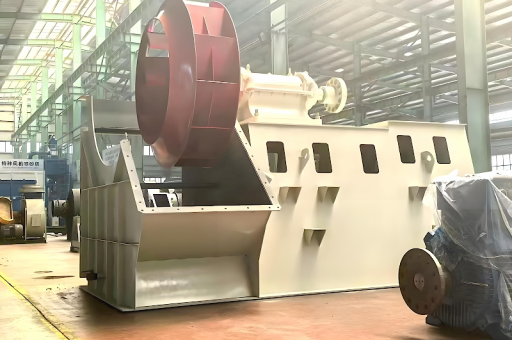
This likely refers to a centrifugal fan (blower) designed for heavy-duty industrial environments, specifically for pneumatic conveying, dust extraction, and combustion air supply.
Here is a breakdown of what you are likely describing, the key specifications to look for, and the critical differences between a dust collecting fan and a cement air blower.
The Core Equipment: Industrial Centrifugal Fan
The device you are describing is most likely a Centrifugal Industrial Fan (specifically an ID Fan or a Material Handling Fan). It is not a standard axial fan.
- For Boiler Waste Gas (Dust Collecting): This is an Induced Draft (ID) Fan or an Exhaust Fan.
- For Cement Air (Blowing): This is a Forced Draft (FD) Fan or a Material Handling Fan.
Critical Differences: Dust Collector Fan vs. Cement Blower
While they look similar, the engineering is different.
| Feature | Boiler Waste Gas Dust Collector Fan | Cement Air Blower (Conveying) |
|---|---|---|
| Primary Goal | Extract dirty, hot gas from the boiler and pull it through a dust collector (baghouse or ESP). | Provide high pressure air to convey cement powder or provide combustion air. |
| Air/Gas Type | Hot (150°C - 350°C), corrosive (SOx, NOx), high dust load, high humidity. | Clean or semi-clean air; cement dust is abrasive but generally cooler. |
| Blade Design | Backward Inclined (BI) or Airfoil (AF) for high efficiency against high static pressure (to overcome duct & filter resistance). | Radial (R) or Radial Tip (RT) for high pressure and wear resistance. |
| Material | Carbon Steel with Inconel overlay (for corrosion) or Stainless Steel (for heat). Heavy gauge to handle heat expansion. | Wear-resistant (Hardox, AR plate) with replaceable liners. |
| Sealing | Heavy-duty shaft seals to prevent gas leakage to atmosphere (often double mechanical seals or labyrinth). | Standard packing gland or labyrinth seals. |
Key Specifications to Verify
If you are purchasing or specifying this fan, you must provide these 6 parameters:
- Airflow (CFM or m³/hr): How much gas/air needs to be moved?
- Static Pressure (in.wg or Pa): What is the resistance of the ductwork + dust collector + stack? (Boiler fans typically require 20-40 in.wg).
- Gas Temperature: Crucial.
- Normal: 80°C - 150°C
- High Temp: 250°C - 400°C (Requires alloy steel or special shaft cooling).
- Gas Composition: Is it acidic? Does it have high moisture? (Boiler gas requires anti-corrosion coating like Phenolic or Viton).
- Dust Load: Is it conveying raw cement powder (explosion hazard) or boiler fly ash (abrasive)?
- Motor Power (kW/HP): This will be significant (often 50kW to 500kW for industrial boilers).
Typical Applications (Combined)
This fan is typically used in a system like this:
Application: A biomass or coal-fired industrial boiler in a cement plant.
- Step 1: Hot waste gas exits the boiler.
- Step 2: The gas enters a dust collector (baghouse).
- Step 3: The Industrial Boiler Waste Gas Dust Collecting Fan pulls the gas through the collector and blows it up the stack.
- Step 4 (Separate): Meanwhile, a different fan (the cement air blower) moves air to a silo to fluidize the cement powder for loading into trucks.
Important: You generally cannot use a single fan for both tasks. The boiler gas fan handles hot, corrosive gas. The cement blower handles dry, abrasive powder. They are usually separate machines in a plant.
Recommended Manufacturers (Specialized in this niche)
For this specific heavy-duty application, look for manufacturers specializing in Industrial Process Fans (not HVAC fans).
- China: Shandong Zhangqiu Blower Co., Ltd., Nanfang Blower, Shenyang Blower Works (ShenGu)
- Global: Howden, Gardner Denver, New York Blower (NYB), Robinson Fans, Clarage, TLT-Turbo.
Summary Checklist for Purchase
- Fan Type: Centrifugal (Backward Inclined for boilers; Radial for cement).
- Drive: Direct Drive (for high speed/reliability) or Belt Drive (for adjustable speed).
- Cooling: For boiler fans >200°C, you need an overhung shaft with a cooling disc or a water-cooled bearing housing.
- Accessories: Inlet box, expansion joints, silencer, VFD (Variable Frequency Drive) control.
Are you looking to solve a specific problem (e.g., "low suction," "high vibration," "motor overload")? If you provide the current issue, I can give more targeted advice.





