
This article's table of contents introduction:
- Core Functional Conflict & Solution
- Key Design Considerations for Drying Applications
- Recommended Fan Types (by Hierarchy)
- Sample Specification (Engineering Data)
- Critical Installation & Operation Tips
- Common Mistakes to Avoid
- Final Selection Checklist
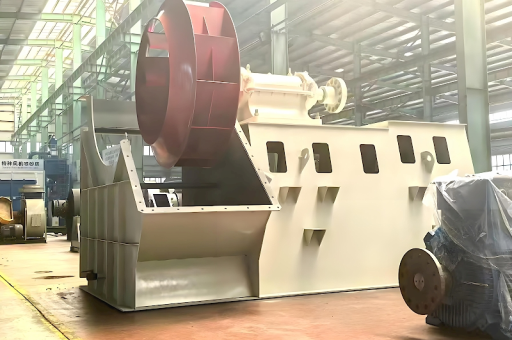
This is a detailed request for a specific industrial component. A Medium Pressure Dust Collector Blower Fan used for Materials Drying is a specialized hybrid piece of equipment. It must perform two conflicting functions simultaneously: pneumatic conveying (moving material and dust) and drying (heat application or high air volume for evaporation).
Here is a comprehensive breakdown of the specifications, design considerations, and selection criteria for this type of fan.
Core Functional Conflict & Solution
- Standard Dust Collectors: Require High Static Pressure (to overcome bag/cartridge resistance) but relatively Low Air Volume.
- Drying Systems: Require High Air Volume (to carry away moisture) but often Lower Pressure (if material is falling through a column).
- The Hybrid (Your Need): The fan must generate Medium Pressure (15” to 40” w.g. or 3.7 kPa to 10 kPa) while moving enough air (CFM) to fluidize and dry the material.
Solution: You typically need a Radial Blade (or Backward Inclined) fan operating at a high RPM, or an Industrial Exhauster with a CI (Cast Iron) housing.
Key Design Considerations for Drying Applications
A. Material Characteristics (CRITICAL)
- Sticky/Wet Material: Requires non-clogging wheel design (Radial tip or open paddle wheel). Avoid backward curved blades with tight blade passages.
- Abrasiveness: (Sand, salt, minerals) Requires AR (Abrasion Resistant) steel liners or hard-facing on the fan wheel.
- Explosivity: (Grain dust, wood flour, chemical powders) Requires explosion-proof construction (non-sparking aluminum/bronze wheel, TEFC motor, and possibly a rated housing).
B. Temperature
- Cold Drying: Ambient air. Standard carbon steel is fine.
- Hot Drying: (Direct gas burner or waste heat). You need a radial tip fan with an insulated shaft and a water-cooled bearing housing if inlet temperatures exceed 250°F (121°C). For extreme heat, use Inconel or Hastelloy alloys.
C. Airflow Path (Configuration)
- Push-Through: Fan is before the dryer. Fan handles ambient or slightly heated air. Fan wheel stays clean.
- Pull-Through: Fan is after the dryer & collector. Fan handles hot, humid air laden with fine dust. This creates risk of moisture condensation inside the fan housing leading to corrosion and imbalance.
Recommended Fan Types (by Hierarchy)
| Fan Type | Pressure Capability | Efficiency | Drying Suitability | Best For |
|---|---|---|---|---|
| Industrial Exhauster (PD Wheel) | High Med (25”-50” wg) | Medium | Excellent | Abrasive, sticky, or high-temp materials. Most robust. |
| Radial Blade Fan | Medium (15”-30” wg) | Medium | Very Good | General bulk drying. Simple, durable, low maintenance. |
| Backward Inclined (BI) | Medium (10”-25” wg) | High | Good | Clean, dry, non-abrasive materials. Best energy efficiency. |
| Plenum/Plug Fan | Medium (10”-20” wg) | High | Moderate | Systems needing quiet operation or tight space. Less robust for harsh dust. |
Recommendation: For "Medium Pressure" and "Drying," the Radial Blade Fan (RBF) or Industrial Exhauster is your safest choice. It can handle the pressure, the material, and minor temperature spikes.
Sample Specification (Engineering Data)
Use this as a baseline for procurement or design.
Duty: Conveying and Drying sawdust (50% moisture content to 15%). Material Density: 10 lb/ft³ (160 kg/m³). System Resistance (Duct + Cyclone + Burner): 22” w.g. (5.5 kPa). Required Volume: 4,500 CFM (7,640 m³/h).
Fan Specification:
- Type: Radial Blade (RBE Series)
- Inlet: 12" Diameter (305 mm)
- Outlet: 10" x 12" (254 x 305 mm)
- Design Point: 4,500 CFM @ 24" SP (5.5 kPa)
- Wheel: 30" Diameter, Carbon Steel (up to 250°F) or 304SS (if corrosive/hygroscopic).
- Bearings: Spherical roller, pillow block. Shaft-to-bearing distance increased to protect bearings from radiant heat.
- Drive: V-belt drive with adjustable sheaves (allows fine-tuning of RPM to match drying/flow conditions).
- Motor: 25 HP, 1800 RPM, TEFC (or XP for combustible dust).
- Accessories: Manual shut-off damper, vibration isolation base, discharge silencer.
Critical Installation & Operation Tips
- Variable Frequency Drive (VFD) is Essential: Drying conditions change (material moisture, ambient humidity). A VFD allows you to adjust airflow without using a mechanical damper (which wastes energy and can cause material drop-out).
- Cleanout Doors: Install large cleanout doors on the fan inlet duct and housing. Wet material will buildup and cause catastrophic imbalance.
- Drain Points: If air is cooled below dew point (e.g., starting cold fan in a hot duct), install a small drain valve at the lowest point of the blower housing.
- Material Loading Rate: Ensure the fan is not 100% loaded with material. The fan should handle the air + dust + vapor. Typical dust loading for a drying fan is 1-5 grains/ft³ (2-10 g/m³). Higher loading requires a steeper fan curve.
Common Mistakes to Avoid
- Using a Centrifugal Fan (Forward Curved): These are for low pressure (HVAC). They cannot handle the resistance of a dust collector or dryer.
- Undersizing the Motor: Drying systems can start cold (heavy air) and heat up (expanding air). A motor that is perfectly sized for hot operation may overload on startup. Use a 1.15 Service Factor motor or oversize by 15%.
- Ignoring Moisture: Using a standard painted fan. The inside will rust in weeks, destroying the wheel balance. Insist on a baked phenolic coating, epoxy powder coat, or stainless steel construction.
Final Selection Checklist
To get the exact fan quote, provide this data to a manufacturer (e.g., New York Blower, Cincinnati Fan, Chicago Blower, Aerovent):
- Air Volume (CFM): _
- Static Pressure (in w.g. or kPa): _
- Gas Temperature (Min / Normal / Max): _
- Material Type & Loading (lb/hr or gr/ft³): _
- Is the material abrasive or sticky? Yes / No
- Altitude (for air density correction): _
Once you provide these 6 points, a fan engineer can select the proper wheel size, RPM, and motor power for your Medium Pressure Dust Collector Blower Fan for Materials Drying.





