
This article's table of contents introduction:
- Why Stainless Steel & Metallurgy?
- Key Energy Saving Features (How to Reduce Operating Costs)
- Typical Fan Types for Metallurgy Exhaust
- How to Specify an Energy-Saving Metallurgy Fan
- Potential Pitfalls & Solutions (Why "Cheap" Fans Fail)
- Summary Table: Energy Saving Strategy
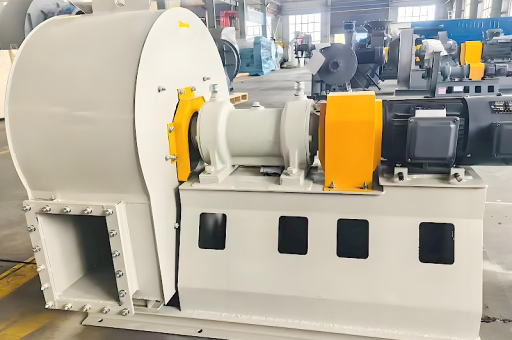
It sounds like you're looking for information on energy-saving stainless steel dust collector fans used in metallurgy exhaust systems. This is a highly specialized area where durability, efficiency, and regulatory compliance are critical.
Here’s a breakdown of what that entails, key technologies, and how energy savings are achieved.
Why Stainless Steel & Metallurgy?
- The Environment: Metallurgy (steelmaking, smelting, casting) produces extremely hot, abrasive, and chemically corrosive exhaust gases. This includes high concentrations of particulate (iron oxide, scale), acids (HCl, H₂SO₄), and moisture.
- The Fan Material: Stainless steel (typically SS304, SS316, or Duplex SS) is essential for:
- Corrosion Resistance: Resists attack from acidic gases and condensation.
- Spark Resistance: Reduces the risk of ignition in combustible dust environments.
- High-Temperature Strength: Can handle continuous temperatures of 400°C – 800°C+ with proper design (e.g., water-cooled shafts, high-temp alloys).
- The Exhaust System: These fans are the heart of Baghouse dust collectors, scrubbers, or cyclones that clean the air before discharge.
Key Energy Saving Features (How to Reduce Operating Costs)
The biggest operating cost of a metallurgy dust collector is the fan motor's electricity consumption. Energy savings come from efficiency, not just the fan blade design.
| Energy-Saving Technology | How it Works in Metallurgy | Impact |
|---|---|---|
| High-Efficiency Impeller Design | Backward-curved airfoil blades with proprietary coatings (e.g., ceramic, Teflon). | Reduces turbulence and wear. Higher static efficiency (85%+ vs. 60-70% for standard radial fans). |
| Variable Frequency Drives (VFDs) | The most important single upgrade. A VFD matches fan speed (RPM) to real-time exhaust demand (e.g., when a furnace lid is open vs. closed). | 70% power reduction at 50% flow. Eliminates need for damper control, which wastes energy. |
| Direct Drive (vs. Belt Drive) | Eliminates belt friction loss (2-5%) and maintenance. Required for high-RPM applications (e.g., high-pressure drops). | Slightly higher motor efficiency. Better for continuous, high-load operation. |
| Shaft Seal & Leakage Reduction | Labyrinth seals or air-purged seals prevent dust from leaking back into the airstream, reducing the fan's "work." | Maintains designed airflow, preventing the motor from having to compensate for losses. |
| Advanced Motor Efficiency | Using IE4 (Super Premium) or IE5 (Ultra Premium) synchronous reluctance motors. | 2-4% efficiency gain over standard IE3 motors. Pays back quickly under 24/7 operation. |
| Smart Controls / IoT | Sensors monitor pressure, temperature, and vibration. The system automatically adjusts VFD speed for optimal pressure setpoint. | Prevents "over-drafting" (pulling more air than needed) which is a major energy waste. |
Typical Fan Types for Metallurgy Exhaust
Different stages of metallurgy require different fan designs:
- For High Dust Loads + Fine Particles (e.g., baghouse primary fan):
- Type: Radial / Radial Tip (Paddle Wheel) fan with wear liners.
- Challenge: Erosion and buildup. Energy saving comes from reducing the dust loading via better upstream cyclones.
- For Cleaner, High-Temperature Gas (e.g., after scrubber or for ventilation):
- Type: Backward Inclined (BI) or Airfoil (AF) fan.
- Challenge: Thermal expansion. Energy saving comes from the high inherent efficiency of the design.
- For Induced Draft (ID) Fans (pulling gas from furnace):
- Type: High-temperature stainless steel with water-cooled bearings.
- Challenge: Saddle curve instability. Energy saving comes from precise VFD control to avoid surge.
How to Specify an Energy-Saving Metallurgy Fan
When requesting a quote, provide this data to the manufacturer (e.g., Cincinnati Fan, New York Blower, Howden, or Greenheck):
- Gas Stream: Temperature (min/max/continuous), composition (e.g., % H₂O, % SO₂, CO).
- Dust Type: Abrasiveness (e.g., iron oxide, silica), particle size, sticky? (e.g., lime).
- Operating Conditions: Required CFM and static pressure (inches w.g. or kPa).
- Control Strategy: VFD only? Damper? On/Off?
- Target Operating Cost: What is your local electricity rate ($/kWh)? This is used to calculate ROI.
Potential Pitfalls & Solutions (Why "Cheap" Fans Fail)
- Problem: Blade wear (erosion) in high-dust streams.
- Solution: Hardface welding (Stellite, tungsten carbide) on blade tips. Replaceable wear plates.
- Problem: Buildup of fine, sticky dust (e.g., steel mill fume).
- Solution: Shrouded impeller, clean-out doors, or waterwash systems.
- Problem: Bearing failure from heat.
- Solution: Heat slingers, insulated bearing housings, water cooling jacket on shaft.
- Problem: Vibration and imbalance.
- Solution: Over-sized shafts, heavy-duty bearing support to maintain balance as dust builds up.
Summary Table: Energy Saving Strategy
| Application | Fan Type | Material | Key Energy Saver | Typical Efficiency |
|---|---|---|---|---|
| Primary Baghouse Fan | Radial Tip | SS304 w/ Wear Liner | VFD + Pre-separator cyclone | 60-70% |
| High-Temp Process Fan | Backward Inclined | SS310/316 | Direct Drive (IE5 motor) | 78-85% |
| Scrubber Exhaust Fan | Airfoil (AF) | SS316L | High-efficiency impeller + VFD | 82-88% |
| Induced Draft (ID) Fan | Radial with bypass | Duplex SS | Water-cooled bearing + Auto-surge control | 65-72% |
Bottom Line: The most energy-efficient solution for a stainless steel metallurgy dust collector fan is a backward-inclined or airfoil fan (where dust allows) with a VFD and an IE4/IE5 direct-drive motor. The initial investment is higher, but the payback period is often less than 18 months due to electricity savings in a 24/7 operation.
If you have a specific application (e.g., electric arc furnace, ladle refining), I can provide more precise recommendations.





