
This article's table of contents introduction:
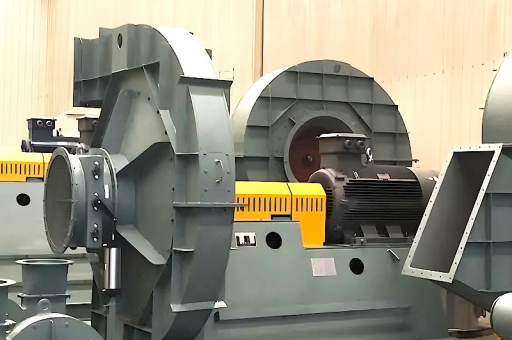
- "Air Flow Dust Control Fan"
- "Single Suction" (or Single Inlet)
- "High Wear Resistance"
- Summary of Key Characteristics for a "High Wear Resistance, Single Suction" Fan:
- Common Applications in Industries:
- How to Specify / Buy One:
Here is a detailed breakdown of the Air Flow Dust Control Fan, Single Suction, High Wear Resistance. This sounds like a specific type of industrial fan designed for harsh environments.
This description typically refers to a centrifugal fan (often a single-inlet/single-suction design) constructed with features that allow it to handle dust-laden air without being destroyed by abrasion.
Let's break down each part of the description:
"Air Flow Dust Control Fan"
- Primary Function: These fans are not just for general ventilation. They are engineered to convey, extract, or control air that contains solid particulates (dust, sawdust, metal shavings, cement powder, grain husks, etc.).
- Applications:
- Industrial Dust Collection: Centralized systems in woodworking shops, cement plants, steel mills, and mining operations.
- Pneumatic Conveying: Moving bulk materials (powders, granules) through pipes.
- Baghouse or Cyclone Exhaust: The fan pulls air through filtration systems.
- Exhaust Systems: Removing smoke, fumes, and airborne debris from welding, grinding, or chemical processing areas.
"Single Suction" (or Single Inlet)
- Mechanism: Air enters the impeller from only one side (axial direction).
- Comparison to Double Suction: Double suction fans have air inlets on both sides of the impeller and can handle higher volumes of air for a given size.
- Why Single Suction here?
- Simplicity & Ruggedness: Single suction designs are mechanically simpler, stronger, and easier to balance. They are often preferred for heavy dust loads.
- Space & Ducting: Easier to install in a straight duct line. The motor is typically mounted on the opposite side of the inlet (overhung design).
- Direct Drive: Often used in direct-drive configurations (impeller mounted on the motor shaft), which is more efficient and has fewer parts to wear out (no belts).
"High Wear Resistance"
This is the most critical specification. Standard fans would be destroyed quickly by abrasive dust. This fan uses special materials and designs:
A. Materials of Construction (The Impeller & Casing):
- Abrasion-Resistant Steel: The most common upgrade. Materials like Hardox, Quard, or AR400/AR500 steel are used for the impeller blades, backplate, and critical wear zones of the casing.
- Stainless Steel: Used when the dust is also corrosive (e.g., chemical or food processing).
- Mild Steel with Lining: The fan casing can be lined with replaceable wear plates (made of abrasion-resistant steel, ceramic, or rubber). This is a modular approach—when the lining wears out, you replace it, not the entire fan.
- High Hardness Impeller: The impeller itself is specially hardened (through heat treatment or specialized casting processes).
B. Design Features:
- Thickened Blades: Blades are thicker than standard fans.
- Backward-Inclined (BI) or Airfoil (AF) Blades: These are the most common for dust. They shed material better than forward-curved (FC) blades and are more efficient and quieter.
- Reinforced Construction: Heavier gauge steel, stronger welds, and stiffened plate wheels (impellers) to prevent vibration and fatigue.
- Recessed Hub/Riveted or Welded Construction: Impellers are often welded or riveted for maximum strength, not just pressed together.
- Full Access Doors: For inspection and cleaning of the impeller and casing to prevent dust buildup that causes imbalance.
Summary of Key Characteristics for a "High Wear Resistance, Single Suction" Fan:
| Feature | Description |
|---|---|
| Type | Centrifugal, Single-Inlet |
| Purpose | High-volume, high-pressure dust control & pneumatic conveying |
| Air Flow | High (CFM), Medium to High Pressure (SP) |
| Wear Resistance | Very High (thick steel, wear liners, hardened alloys) |
| Impeller Blades | Backward-Inclined (BI) or Airfoil (AF) - not Forward-Curved |
| Drive | Often Direct Drive (for reliability) or Heavy-Duty Belt Drive |
| Maintenance | Requires periodic inspection & replacement of wear parts |
| Noise Level | Moderate to High (BI/AF blades are quieter than FC) |
Common Applications in Industries:
- Woodworking: Collecting sawdust, shavings, chips from saws, planers, routers.
- Cement & Concrete: Moving raw meal, clinker dust, finished cement.
- Mining & Quarrying: Exhaust from crushers, screens, and conveyors.
- Metal Fabrication: Removing grinding sparks, weld slag, and metal dust.
- Agriculture: Grain handling (cleaning, drying, conveying), feed mills.
- Pharmaceutical & Chemical: Handling abrasive powders and granules.
How to Specify / Buy One:
If you are looking to purchase this, you'll need to provide these parameters:
- Airflow (CFM / m³/hr): Volume of air needed.
- Static Pressure (SP: Inches w.g. / Pa): Resistance in the ductwork.
- Material Being Conveyed: What type of dust? (e.g., sawdust, silica, cement, steel). This determines the required wear resistance level.
- Concentration (Grains/ft³ or grams/m³): How much dust is in the air?
- Temperature: Will the air be hot? (Requires special packing, bearings, and materials).
- Drive Type: Direct Drive or Belt Drive? (Direct drive is simpler; Belt drive allows for speed changes).
- Mounting: Floor-mounted with a base, or roof-mounted?
In short: You are looking at a heavy-duty, long-lasting industrial workhorse designed to move dirty air and survive.





