
This article's table of contents introduction:
- Table of Contents
- Introduction: Why Fan Design Matters in Dust Collection
- Understanding the “Backward” Blade Design: A Technical Overview
- Core Advantages of Backward Dust Collector Fans
- Common Applications Across Industries
- Performance Selection Guide: What to Look For
- Maintenance and Troubleshooting
- Frequently Asked Questions (FAQ)
- Conclusion: Why Your Next System Needs Backward Technology
Table of Contents
- Introduction: Why Fan Design Matters in Dust Collection
- Understanding the “Backward” Blade Design: A Technical Overview
- What Makes a Fan “Backward”?
- Forward-Curved vs. Backward-Curved vs. Radial: A Comparison
- Core Advantages of Backward Dust Collector Fans
- High Efficiency and Energy Savings
- Non-Overloading Power Curve
- Handling Particulate-Laden Air
- Common Applications Across Industries
- Woodworking and Sawdust Extraction
- Welding Fume and Metalworking
- Cement, Mining, and Bulk Material Handling
- Performance Selection Guide: What to Look For
- Airflow (CFM) and Static Pressure
- Impeller Material and Coatings
- Speed Control and Variable Frequency Drives (VFDs)
- Maintenance and Troubleshooting
- Balancing and Vibration Analysis
- Cleaning the Impeller
- Bearing and Belt Care
- Frequently Asked Questions (FAQ)
- Conclusion: Why Your Next System Needs Backward Technology
Introduction: Why Fan Design Matters in Dust Collection
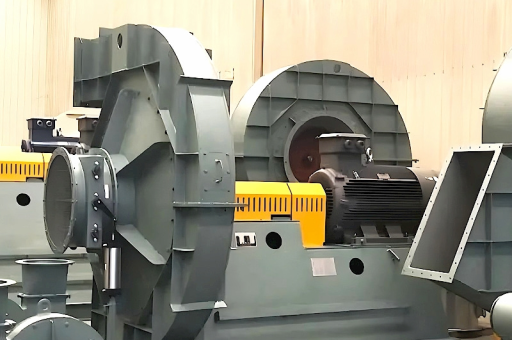
In any industrial environment where particles are generated—from wood shavings to metal fines—the dust collection system is the silent guardian of air quality and worker safety. Central to that system’s success is the fan. Not all fans are created equal. When it comes to moving heavy, abrasive, or fibrous dust, the Backward Dust Collector Fan emerges as the industry standard. Unlike its forward-curved cousin, this design offers a unique blend of high efficiency, reliability, and resistance to clogging. This article explores why engineers, facility managers, and safety officers consistently choose backward-blade technology for critical extraction tasks.
Understanding the “Backward” Blade Design: A Technical Overview
What Makes a Fan “Backward”?
The term backward refers to the orientation of the impeller blades. In a backward-curved (or backward-inclined) fan, the blades curve away from the direction of rotation. As the impeller spins, air is guided outward by the trailing edge of each blade. This geometry creates a higher static pressure capability with lower airflow velocity, making it ideal for systems that need to overcome duct resistance.
Forward-Curved vs. Backward-Curved vs. Radial: A Comparison
| Feature | Backward-Curved | Forward-Curved | Radial (Paddlewheel) |
|---|---|---|---|
| Efficiency | High (75-85%) | Moderate (60-75%) | Low (50-65%) |
| Power Curve | Non-overloading | Overloading | Non-overloading |
| Clog Resistance | Good | Poor | Excellent |
| Noise Level | Lower | Moderate | High |
| Best Use Case | Dust collection, HVAC | Low-pressure ventilation | Heavy particulate, sticky materials |
The backward design excels because it converts kinetic energy into pressure energy more efficiently than forward-curved blades, and it does not suffer from "overloading" (where motor power draw spikes dangerously when static pressure drops).
Core Advantages of Backward Dust Collector Fans
High Efficiency and Energy Savings
One of the most compelling reasons to choose a backward dust collector fan is its superior aerodynamic efficiency. Because the blade profile creates a laminar flow path, energy losses are minimized. This translates directly into lower kilowatt-hour consumption. For a fan running 24/7, switching from a forward-curved to a backward-curved model can save thousands of dollars annually in electricity costs.
Non-Overloading Power Curve
This is a critical safety feature. In a forward-curved fan, if the duct system becomes blocked or the filter bags are clean, the static pressure drops. The fan responds by moving more air, which draws more power. This can trip breakers or burn out a motor. A backward-curved fan, however, has a power curve that peaks near its designed operating point. If pressure drops, the power draw decreases. This motor-friendly characteristic makes it the safer choice for dust systems that experience fluctuating conditions.
Handling Particulate-Laden Air
While not as tough as a radial paddlewheel fan for sticky materials, the backward design handles moderate dust loads well. The smooth, curved blades allow particles to slide off rather than accumulate. When combined with a robust housing and wear-resistant coatings, these fans can endure years of service in sawdust, grain, or cement applications.
Common Applications Across Industries
- Woodworking: Backward fans are the backbone of central chip extraction systems, moving high volumes of shavings and dust from saws, planers, and sanders.
- Welding and Metal Fabrication: They efficiently capture fine welding fumes and grinding dust while maintaining consistent static pressure across long duct runs.
- Cement and Mining: Used in baghouse filtration systems, these fans draw contaminated air through filter bags without suffering from rapid impeller wear when equipped with hard-facing.
- Food Processing: For handling grain dust, sugar, or flour, backward fans provide the necessary spark resistance and cleanability.
Performance Selection Guide: What to Look For
When specifying a backward dust collector fan, consider the following:
- Airflow and Pressure: Calculate your system’s required CFM and static pressure. Backward fans are most efficient at higher static pressures (6 to 20 inches w.g.).
- Impeller Material: Steel is standard. For abrasive dust, specify AR400 or 304 stainless steel. For corrosive fumes, consider a fiberglass-reinforced plastic (FRP) impeller.
- Drive Arrangement: Direct drive is efficient and compact. Belt drive allows speed change but requires more maintenance.
- Variable Frequency Drive (VFD) Compatibility: Modern backward fans excel when paired with a VFD, allowing precise airflow control and additional energy savings.
Maintenance and Troubleshooting
- Bearing Condition: Listen for grinding noises. Backward fans operate at higher speeds; bearings should be greased according to the manufacturer’s schedule.
- Impeller Balance: Dust buildup on blades is the #1 cause of vibration. Use a strobe light to check balance regularly. An unbalanced wheel destroys bearings quickly.
- Belt Tension: If using a belt-drive model, check for slippage. A loose belt reduces airflow and can cause the motor to overheat.
- Seal Leakage: Inspect the shaft seal. A worn seal allows dust to escape into the motor housing or environment.
Frequently Asked Questions (FAQ)
Q1: What is the main difference between a backward-inclined and a backward-curved fan? A: In practice, the terms are often used interchangeably. Technically, backward-inclined refers to flat blades angled backward, while backward-curved refers to blades with a curved profile. Curved blades are slightly more efficient and quieter.
Q2: Can I replace a forward-curved fan with a backward-curved fan in my existing system? A: Possibly, but you must recalculate your system curve. A backward fan requires a higher starting torque and produces a different pressure-to-flow ratio. Always consult the fan selection software from suppliers like fan or fan.
Q3: Are backward dust collector fans self-cleaning? A: Not fully, but they are better than forward-curved designs. The backward blade geometry allows most dry dust to shed naturally. However, sticky or moist materials will still accumulate and require periodic manual cleaning.
Q4: How do I calculate the correct fan size for my dust collector? A: You need two numbers: total CFM required by all hoods and the static pressure loss of your duct and filter system. A backward fan’s operating point must fall within its stable performance zone. Most manufacturers (e.g., fan, fan) offer free selection tools.
Q5: Why is a backward-curved fan considered “non-overloading”? A: Because its power curve peaks across the midpoint of the flow range. As system resistance decreases (filter clean, ducts open), the fan’s power draw actually decreases. This prevents motor overload compared to forward-curved fans where power spikes.
Q6: Are these fans louder than other types? A: Compared to a radial paddlewheel fan of the same duty, a backward-curved fan is usually quieter due to its aerodynamic profile and lower tip speeds. However, it will be slightly louder than a forward-curved fan at high airflows.
Conclusion: Why Your Next System Needs Backward Technology
Selecting the right fan is not just about moving air—it is about system reliability, energy cost, and safety. Backward dust collector fans deliver a balanced combination of high efficiency, non-overloading protection, and decent material handling capacity. Whether you are designing a new woodshop dust extraction system or upgrading a failing baghouse fan, the backward-curved design should be your top consideration. It protects your equipment, reduces your electricity bill, and ensures your workers breathe cleaner air. When in doubt, consult an application engineer at a reputable manufacturer like fan to match the perfect backward fan to your specific process.





