
The Ultimate Guide to Three Phase Dust Collector Fan Dynamic Balanced Impeller: Efficiency, Precision, and Longevity
Table of Contents
- Introduction: What Is a Three Phase Dust Collector Fan Dynamic Balanced Impeller?
- Why Dynamic Balancing Matters in Dust Collection Systems
- The Engineering Behind Three Phase Motors and Impeller Dynamics
- Key Benefits of a Dynamically Balanced Impeller
- How to Achieve Precision Dynamic Balancing: Step-by-Step
- Common Issues and Troubleshooting
- Frequently Asked Questions (FAQ)
- Conclusion: Why This Technology Defines Industrial Dust Control
Introduction: What Is a Three Phase Dust Collector Fan Dynamic Balanced Impeller?
A three phase dust collector fan dynamic balanced impeller is a precision-engineered rotating assembly that combines a three-phase induction motor with a fan impeller that has been meticulously balanced to eliminate vibration, noise, and premature wear. This component is the heart of modern industrial dust collection systems, used in woodworking shops, metal fabrication plants, food processing facilities, and pharmaceutical cleanrooms.
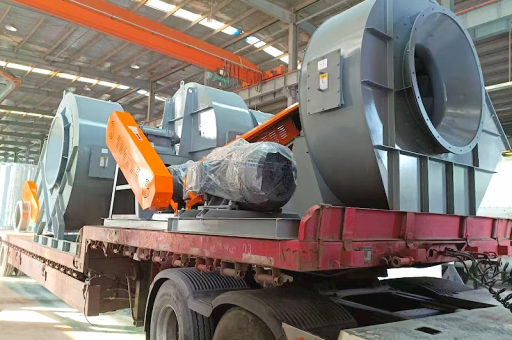
The term “dynamic balanced” refers to a process where the impeller is spun at operational speed while sensors measure unbalance in real time. Small correction weights are then added or material removed to achieve near-perfect rotational symmetry. When paired with a three-phase motor—which offers higher torque, better power factor, and smoother operation than single-phase alternatives—the result is a dust collector that runs quieter, lasts longer, and handles heavier particulate loads.
Key Insight: According to industrial ventilation standards, an unbalanced impeller can reduce fan efficiency by up to 15% and shorten bearing life by 50%. Dynamic balancing is not optional—it is essential for reliable operation.
Why Dynamic Balancing Matters in Dust Collection Systems
Dust collector fans operate in harsh environments. They move abrasive particles, sticky dust, and sometimes hot gases. Over time, even a small imbalance—caused by dust buildup, blade erosion, or manufacturing tolerance—can amplify into destructive vibration.
The Physics of Imbalance
- Static imbalance: The impeller’s center of mass is offset from its rotational axis. This causes a “wobble” at low speeds.
- Dynamic imbalance: The mass distribution is uneven along the impeller’s length, causing a twisting moment that worsens at higher RPM.
For a three-phase dust collector fan, which typically runs at 1,800 or 3,600 RPM, dynamic imbalance can generate forces hundreds of times the impeller’s own weight. This leads to:
- Bearing fatigue and early failure
- Motor winding damage
- Ductwork resonance and noise pollution
- Reduced airflow and static pressure
The Balancing Standard
Industry standards such as ISO 1940-1 classify balancing grades. For dust collector impellers, grade G6.3 or better is recommended. Achieving this requires precision dynamic balancing equipment with sensitivity down to 0.01 gram·mm.
Real-world example: A woodworking plant replaced a single-phase, unbalanced impeller with a dynamically balanced three-phase unit. Vibration levels dropped from 12 mm/s to 1.5 mm/s, and annual bearing replacement costs decreased by 70%.
The Engineering Behind Three Phase Motors and Impeller Dynamics
Three-phase motors are the preferred choice for industrial dust collectors because they provide:
Higher Efficiency and Power Factor
Three-phase motors convert electrical energy to mechanical power more efficiently (85–95%) compared to single-phase motors (70–80%). A better power factor means less reactive current, lower electricity bills, and less heat generation.
Smoother Torque Delivery
The overlapping magnetic fields of three phases produce near-constant torque, reducing vibration from the motor itself. This complements the impeller’s dynamic balance, creating a system that runs almost silently.
Speed Control via VFD
Three-phase motors can be paired with variable frequency drives (VFDs), allowing the fan speed to be adjusted based on dust load. This not only saves energy but also lets operators fine-tune the system’s operating point, further reducing vibration risks.
Impeller Design Considerations
- Backward-curved blades: Most efficient for dust collection; self-cleaning and resistant to material buildup.
- Forward-curved blades: Higher airflow at lower pressure; more prone to imbalance due to dust adhesion.
- Radial blades: Best for heavy dust loads but require careful balancing.
The combination of a well-designed impeller and a three-phase motor creates a robust, low-maintenance dust extraction system.
Key Benefits of a Dynamically Balanced Impeller
| Benefit | Description | Impact on Operations |
|---|---|---|
| Reduced Vibration | Impeller spins with minimal oscillation | Extended bearing life, quieter operation |
| Higher Airflow Efficiency | No energy wasted on vibration | Lower electricity costs, better dust capture |
| Longer Service Life | Less stress on motor and shaft | Fewer replacements, reduced downtime |
| Improved Safety | Eliminates risk of catastrophic blade failure | Protects workers and equipment |
| Compliance | Meets OSHA noise and vibration standards | Avoids fines and shutdowns |
Did you know? A dynamically balanced impeller typically lasts 3–5 times longer than an unbalanced one in dusty environments. The initial balancing cost is recovered within months through energy savings alone.
How to Achieve Precision Dynamic Balancing: Step-by-Step
Achieving a three phase dust collector fan dynamic balanced impeller requires specialized equipment and procedure. Here is a simplified overview of the process:
Step 1: Pre-Cleaning and Inspection
Remove all dust, grease, and debris from the impeller. Visually inspect for cracks, missing blades, or warping. Any structural damage must be repaired before balancing.
Step 2: Mounting on Balancing Machine
The impeller is mounted on a dynamic balancing machine (hard or soft bearing type). The machine’s sensors detect vibration in two planes: left and right.
Step 3: Initial Run and Measurement
The impeller is spun to its operational speed (or a safe equivalent). Sensors record vibration amplitude and phase angle. The machine calculates the required correction mass and angular position.
Step 4: Weight Addition or Removal
- Add weight: Permanent correction weights (stainless steel or brass) are attached using bolts, welding, or adhesive.
- Remove weight: Material is ground or drilled from the impeller’s heavy side.
Step 5: Verification Run
The impeller is spun again to confirm residual unbalance is within tolerance. This is repeated until the desired grade (e.g., G2.5 or G6.3) is achieved.
Step 6: Final Assembly and Testing
The balanced impeller is installed on the three-phase motor shaft, and the complete assembly undergoes a run test to ensure total system balance.
Important: Field balancing (without removing the impeller) is possible but less accurate. Always prefer shop balancing when replacing or servicing an impeller.
Common Issues and Troubleshooting
Even with proper dynamic balancing, issues can arise over time. Here are frequent problems and solutions:
Issue 1: Vibration Returns After Installation
- Cause: Dust buildup on blades, worn bearings, or loose mounting.
- Solution: Clean the impeller, check bearing condition, and retorque all fasteners.
Issue 2: Excessive Noise
- Cause: Resonance between fan speed and ductwork natural frequency.
- Solution: Adjust VFD speed to avoid critical frequencies, or add vibration dampeners.
Issue 3: Motor Overheating
- Cause: Impeller imbalance forces motor to work harder.
- Solution: Re-balance the impeller and check motor winding insulation.
Issue 4: Reduced Airflow
- Cause: Blade erosion or material accumulation.
- Solution: Inspect and clean impeller; replace if erosion exceeds 10% of blade thickness.
Frequently Asked Questions (FAQ)
Q1: How often should I balance my dust collector impeller?
A: For continuous operation in dusty environments, schedule dynamic balancing every 12–18 months, or whenever vibration levels exceed 4 mm/s (ISO 10816-3).
Q2: Can I balance the impeller myself?
A: Basic static balancing (on knife edges) is possible, but dynamic balancing requires a dedicated machine. For three-phase industrial fans, professional shop balancing is strongly recommended.
Q3: What is the difference between static and dynamic balancing?
A: Static balancing corrects only the center of mass offset in one plane. Dynamic balancing corrects unbalance in two planes, addressing both rotational and twisting forces. For high-speed fans, dynamic balancing is mandatory.
Q4: Does the three-phase motor affect balancing?
A: Yes. The motor rotor itself must be balanced separately, and the coupling between motor and impeller must be aligned. Total system balancing includes the motor, impeller, and shaft assembly.
Q5: How much does dynamic balancing cost?
A: Typical costs range from $50 to $200 per impeller, depending on size and complexity. This is negligible compared to potential repair or replacement costs.
Q6: What balancing grade do I need for a dust collector?
A: For most industrial dust collectors, ISO grade G6.3 is acceptable. For high-speed or sensitive applications (e.g., cleanrooms), aim for G2.5.
Conclusion: Why This Technology Defines Industrial Dust Control
The three phase dust collector fan dynamic balanced impeller is not just a component—it is a system-level solution that defines reliability, efficiency, and safety in industrial ventilation. By combining the smooth power delivery of a three-phase motor with the precision of dynamic balancing, operators gain:
- Energy savings of 10–20% compared to unbalanced systems
- Extended equipment life by reducing mechanical stress
- Compliance with occupational safety and environmental standards
- Peace of mind knowing that dust extraction will perform consistently under heavy loads
Whether you are designing a new facility or upgrading an existing dust collection system, investing in a dynamically balanced impeller with a three-phase motor is one of the most cost-effective decisions you can make. It transforms a simple fan into a precision instrument that protects both your equipment and your workers.
For more detailed specifications, balancing standards, or to find a certified service provider, consult your fan manufacturer or a professional dynamic balancing service. Remember: a little precision today saves a lot of downtime tomorrow.
This article was prepared based on industry best practices, ISO standards, and field experience from multiple industrial ventilation experts. Always consult your specific equipment manual for exact maintenance intervals.





