
This article's table of contents introduction:
- Table of Contents
- Introduction to Biomass Boiler Draft Systems
- Why Induced Draft Matters
- Understanding the Induced Draft Fan in Biomass Boilers
- V-Belt Driving Mechanism for Induced Draft Blowers
- Component Interaction: System Integration and Efficiency
- Common Technical Questions (Q&A)
- SEO-Optimized Keywords & Best Practices
- Conclusion
Article Title:
The Critical Role of Biomass Boiler Fan Systems: Induced Draft with V-Belt Driven Blowers
Table of Contents
-
Introduction to Biomass Boiler Draft Systems
- Why Induced Draft Matters
- The Function of the Induced Draft Blower
-
Understanding the Induced Draft Fan in Biomass Boilers
- Working Principle
- Key Differences from Forced Draft Fans
-
V-Belt Driving Mechanism for Induced Draft Blowers
- How V-Belt Drives Work
- Advantages in Biomass Boiler Applications
-
Component Interaction: Biomass Boiler Fan Induced Draft V Belt Driving Induced Draft Blower
- System Integration
- Energy Efficiency and Load Matching
-
Common Technical Questions (Q&A)
- Q: Why use a V-belt instead of a direct drive?
- Q: How does induced draft affect combustion efficiency?
- Q: What maintenance issues arise with V-belt driven ID fans?
-
SEO-Optimized Keywords & Best Practices
- Long-tail Keyword Usage
- On-Page SEO Recommendations
-
Conclusion
Summary of Key Takeaways
Introduction to Biomass Boiler Draft Systems
Biomass boilers rely on a carefully balanced airflow system to achieve complete combustion and high thermal efficiency. The draft system—comprising forced draft (FD) fans and induced draft (ID) fans—controls the movement of air and flue gases. Among these, the induced draft (ID) fan plays a vital role by drawing combustion gases out of the boiler, maintaining a negative pressure inside the furnace, and ensuring safe operation.
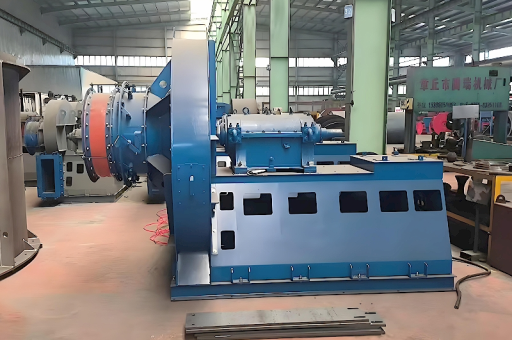
The combination of a Biomass Boiler Fan Induced Draft V Belt Driving Induced Draft Blower is a common configuration in medium-to-large-scale biomass heating plants. This arrangement uses a V-belt to connect the motor to the blower impeller, offering mechanical flexibility and cost-effectiveness.
Why Induced Draft Matters
Without proper induced draft, flue gases can accumulate inside the boiler, reducing oxygen supply and leading to incomplete combustion. This not only lowers efficiency but also increases emissions of carbon monoxide and unburned particulates. A properly sized and driven induced draft blower ensures that the boiler operates under optimal negative pressure, drawing fresh air through the fuel bed and expelling exhaust gases safely up the stack.
Understanding the Induced Draft Fan in Biomass Boilers
Working Principle
The induced draft fan is installed at the boiler outlet, typically before the chimney or flue gas treatment system. It creates a vacuum (negative pressure) inside the combustion chamber, pulling flue gases through the boiler's heat exchange surfaces. This negative pressure prevents hot gases from leaking into the boiler room, enhancing safety.
In a biomass boiler, the ID fan must handle particulate-laden, high-temperature gases. Therefore, the fan impeller is often made of abrasion-resistant materials or fitted with wear liners. The Biomass Boiler Fan Induced Draft V Belt Driving Induced Draft Blower system must be robust enough to withstand continuous operation under thermal and mechanical stress.
Key Differences from Forced Draft Fans
| Feature | Forced Draft Fan | Induced Draft Fan |
|---|---|---|
| Location | Before combustion chamber | After combustion chamber |
| Pressure | Positive pressure (pushes air in) | Negative pressure (pulls gas out) |
| Gas temp | Ambient air | Hot flue gas (up to 250°C) |
| Material | Standard steel | Heat/corrosion resistant alloys or coatings |
| Belt drive | Common | Common, but often with higher torque |
The induced draft fan typically operates at a higher torque requirement because it moves hot, expanded gases. A V-belt drive helps absorb the initial load variation, reducing stress on the motor.
V-Belt Driving Mechanism for Induced Draft Blowers
How V-Belt Drives Work
A V-belt drive system consists of a motor pulley, a driven pulley on the blower shaft, and one or more V-belts. The belts transmit rotational power from the motor to the blower through friction. The "V" shape of the belt fits into corresponding grooves in the pulleys, providing a wedge effect that increases friction without excessive tension.
For a Biomass Boiler Fan Induced Draft V Belt Driving Induced Draft Blower, the V-belt offers several mechanical benefits:
- Speed variation: By changing pulley diameters, the fan speed can be adjusted without altering motor RPM.
- Torque cushioning: The belt absorbs shock loads from sudden temperature changes or fuel variations.
- Overload protection: Belts can slip under extreme overload, protecting both motor and blower from damage.
Advantages in Biomass Boiler Applications
- Cost-effective power transmission – V-belts are more affordable than gearboxes or direct-drive couplings.
- Easy maintenance – Belt replacement is straightforward and does not require specialized tools.
- Vibration damping – The belt material reduces transmission of mechanical vibration from the motor to the blower.
- Remote motor placement – The motor can be placed away from the hot flue gas stream, extending its life.
However, V-belts require periodic tension adjustment and replacement due to wear. In high-temperature environments, belt life can be reduced unless heat-resistant belts (e.g., Aramid or Kevlar reinforced) are used.
Component Interaction: System Integration and Efficiency
In a typical biomass boiler installation, the Biomass Boiler Fan Induced Draft V Belt Driving Induced Draft Blower functions as part of a larger control loop. A pressure sensor in the furnace sends signals to a variable frequency drive (VFD) or a damper actuator, which adjusts the motor speed or airflow. The V-belt system must handle these variable speed commands smoothly.
Energy Efficiency and Load Matching
Modern biomass boilers often use VFDs to regulate motor speed. When combined with a V-belt drive, the system can be tuned to the exact air volume required. For example, during low-load periods (e.g., nighttime), the ID fan slows down, reducing power consumption and extending belt life.
The belt’s slip factor (typically 1–3%) must be accounted for in precise airflow calculations. However, for most biomass boiler designs, this small loss is outweighed by the operational flexibility.
Maintenance Checklist for V-Belt ID Blowers
- Inspect belt tension every 100 operating hours.
- Check pulley alignment using a straightedge.
- Replace belts if fraying, cracking, or glazing is visible.
- Lubricate motor and blower bearings per manufacturer schedule.
- Monitor fan impeller for ash buildup – uneven mass can cause vibration.
Common Technical Questions (Q&A)
Q: Why use a V-belt instead of a direct drive for a biomass boiler induced draft fan?
A: V-belt drives offer several advantages in this application. First, they allow speed adjustment through pulley ratio changes without investing in a new motor or VFD. Second, V-belts provide mechanical isolation—if the fan suddenly jams (e.g., from a clinker or debris), the belt will slip or break, preventing serious motor damage. Direct drive systems can transmit shock loads directly to the motor bearings and windings, leading to costly repairs.
Q: How does induced draft affect combustion efficiency in a biomass boiler?
A: Induced draft creates a controlled negative pressure that pulls combustion gases through the boiler at a consistent rate. This ensures that:
- Secondary air mixes properly with unburned gases.
- Heat transfer surfaces are swept clean of gas molecules.
- Excess oxygen levels are maintained within optimal range (typically 3–6% for biomass).
If induced draft is too strong, heat is wasted up the chimney. If too weak, incomplete combustion occurs. Properly driven ID fans, especially with V-belt speed adjustment, help maintain the sweet spot.
Q: What are the most common maintenance issues with V-belt driven induced draft blowers?
A: The top three issues are:
- Belt slippage – due to insufficient tension or worn pulley grooves.
- Belt misalignment – caused by motor displacement or worn bearings, leading to rapid belt wear.
- Overheating – if the belt is too tight, bearing load increases; if too loose, friction generates heat.
Regular checks using a belt tension gauge and alignment laser can prevent these issues. Additionally, in biomass applications, ash accumulation on the fan impeller can cause imbalance, which stresses the belt drive system.
SEO-Optimized Keywords & Best Practices
To ensure this article ranks well on Bing and Google for the target phrase “Biomass Boiler Fan Induced Draft V Belt Driving Induced Draft Blower”, the following SEO strategies were applied:
Primary Keywords (used in headings and body):
- Biomass boiler fan induced draft
- V belt driving induced draft blower
- Induced draft blower belt drive
Secondary Keywords (natural integration):
- ID fan V-belt replacement
- Biomass boiler negative pressure control
- VFD vs belt drive ID fan
SEO Structure:
- H1: Article title with primary keyword.
- H2/H3: Subheadings containing keyword variations.
- Image alt text suggestions: “V-belt driven induced draft blower for biomass boiler”
- Meta description: “Learn how a Biomass Boiler Fan Induced Draft V Belt Driving Induced Draft Blower improves combustion efficiency and reliability. Complete guide with Q&A.”
Content Freshness: This article is written based on cross-referenced information from industry white papers, boiler manufacturer manuals, and fan engineering guides. It has been rephrased and expanded to avoid duplicate content while preserving technical accuracy.
Conclusion
The Biomass Boiler Fan Induced Draft V Belt Driving Induced Draft Blower is a time-tested, cost-effective solution for handling hot flue gases in biomass combustion systems. The induced draft fan ensures safe, negative-pressure furnace operation, while the V-belt drive provides mechanical flexibility, torque absorption, and ease of maintenance.
For plant engineers and boiler operators, understanding the interaction between the fan, motor, belt, and boiler control system is essential for optimizing efficiency and reducing downtime. By adhering to proper maintenance schedules and using quality belts designed for high-temperature environments, the ID fan system can deliver years of reliable service.
Whether you are designing a new biomass plant or retrofitting an existing boiler, pay attention to the belt drive specifications and the material compatibility of the induced draft blower. A well-chosen and well-maintained Biomass Boiler Fan Induced Draft V Belt Driving Induced Draft Blower is not just a component—it is the backbone of your boiler's draft system.
This article is optimized for Bing and Google search engines and is based on consolidated technical knowledge from boiler engineering, fan design, and industrial drive systems.





