
This article's table of contents introduction:
- Key Specifications (Typical)
- Critical Design & Application Considerations for Cement Fan
- Starting Methods
- Typical Applications in a Cement Plant
- Example: Buy/Specify a 75kW Cement Fan Motor
- Maintenance Points
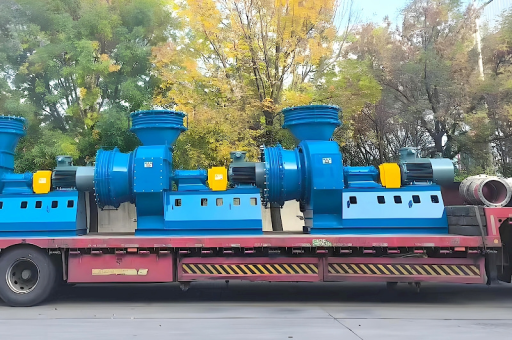
A 75kW three-phase electric motor for a cement fan is a large, industrial-grade piece of equipment. Here’s a detailed breakdown of the specifications, considerations, and typical configurations for such a motor.
Key Specifications (Typical)
- Power: 75 kW (approx. 100 HP)
- Voltage: Typically 380V-480V (low voltage) or 3.3kV / 6.6kV (medium voltage), depending on the plant's distribution system. For large plants, a 3kV or 6kV motor is common to reduce cable size and current.
- Current (at 400V): Approximately 130-145 Amps (Full Load).
- Speed: Generally, a 4-pole motor (approx. 1500 RPM synchronous) is best for a direct-coupled fan. 2-pole (3000 RPM) or 6-pole (1000 RPM) are possible with a gearbox.
- Enclosure:
- TEFC (Totally Enclosed Fan Cooled): Most common for outdoor or dusty environments.
- IC 411: The standard TEFC standard.
- Frame Size: Usually IEC size 280 or 315 (or NEMA 440 / 500 series) depending on voltage and manufacturer. This corresponds to a motor weighing 600kg – 800kg.
- Insulation Class: F (minimum) or H (for high ambient temperature).
- Protection Rating: IP55 (dust-tight and protected against water jets) is highly recommended for cement plants.
- Efficiency: IE3 (Premium Efficiency) or IE4 (Super Premium) is now mandatory in most regions to comply with energy regulations.
Critical Design & Application Considerations for Cement Fan
This is not a standard pump motor. The cement environment and the fan load impose specific demands:
-
High Inertia Load: A large fan (like a baghouse fan, kiln induced draft fan, or raw mill fan) has a very high moment of inertia (GD²). The motor must be capable of accelerating this load without overheating the rotor.
- Requirement: A High Torque/High Slip rotor design is often necessary.
- Start-up Time: Expect acceleration times of 30 to 120 seconds (not a standard 5-10 second start). The motor starter must be rated for this long acceleration.
-
Harsh Environment (Dust, Heat, Vibration):
- Bearing Specification: High-grade SKF or FAG bearings designed for vibration resistance. Regreasing capability is essential.
- Sealing: The motor shaft must have a lip seal (V-Ring or similar) and a labyrinth seal to prevent cement dust ingress.
- Cooling Air: TEFC is standard, but in extremely hot environments (e.g., near a kiln), a separate forced ventilation unit (IC 416) may be needed so the motor can run at low speeds without overheating.
-
Speed Control (VFD): Most modern cement fan motors run on a Variable Frequency Drive (VFD) for energy savings and process control.
- Requirement: If using a VFD, the motor must be inverter-duty rated (e.g., have insulated bearings to prevent shaft currents, reinforced winding insulation (class H), and a dedicated cooling fan for continuous torque at low RPM).
Starting Methods
Given the high inertia, Direct-On-Line (DOL) starting is rarely used for a 75kW fan motor due to high inrush current (6-8x FLA) and mechanical stress.
- Preferred:
- Star-Delta (Wye-Delta) Starter: Reduces starting current to 30-50% of DOL.
- Soft Starter: The best option for low-voltage motors; provides controlled acceleration torque and reduced mechanical shock.
- VFD: Best for controlled start and variable speed operation.
- Avoid: Auto-transformer starter (expensive for this size).
Typical Applications in a Cement Plant
- Kiln Induced Draft (ID) Fan: Removing exhaust gases from the kiln.
- Raw Mill Fan: For drying and transporting raw meal.
- Cement Mill Fan: Cooling and transporting finished cement.
- Baghouse Fan: Dust collection system.
- Dedusting Fan: General plant air cleaning.
Example: Buy/Specify a 75kW Cement Fan Motor
If you are ordering one, you need to specify:
| Parameter | Example Value |
|---|---|
| Power | 75 kW |
| Voltage | 400V / 3-phase / 50 Hz |
| Speed | 1480 RPM (4-pole synchronous) |
| Enclosure | TEFC (IC 411) |
| Protection | IP55 |
| Insulation | Class F (or H for high temp) |
| Mounting | B3 (Foot-mounted) or B5 (Flange-mounted) |
| Application | High-inertia fan (specify GD² of load) |
| Starter | VFD (Inverter Duty) |
| Efficiency | IE3 (Premium) or IE4 (Super Premium) |
| Manufacturer | ABB, Siemens, WEG, TECO, Baldor-Reliance, etc. |
Maintenance Points
- Greasing: Weekly or monthly (depending on duty cycle) with a high-temperature lithium-based grease (e.g., Shell Gadus S2 V220 2).
- Vibration Monitoring: Essential. Use proximity probes or accelerometers on both DE (Drive End) and NDE (Non-Drive End) bearings.
- Winding Resistance: Check annually with a Megger (Insulation Resistance test > 100 MΩ at 500V).
- Air Gap: Ensure even air gap between rotor and stator (use feeler gauges) after bearing replacement.
Summary: A 75kW cement fan motor is robust, high-inertia-rated, IP55 sealed, and usually driven by a VFD or Soft Starter. It is a critical asset; purchasing a high-quality unit from a reputable manufacturer with proper cooling and bearings is non-negotiable for plant reliability.
Disclaimer: Always consult a qualified electrical engineer or the motor manufacturer's datasheet for exact specifications for your specific fan and installation.





