
This article's table of contents introduction:
- Deconstructing the Terms
- Why Explosions Happen in CFB Boiler Blowers
- Specific Design Features for a Safe SWSI Centrifugal CFB Blower (Explosion-Proof)
- Potential Failure Modes & Root Causes
- Summary
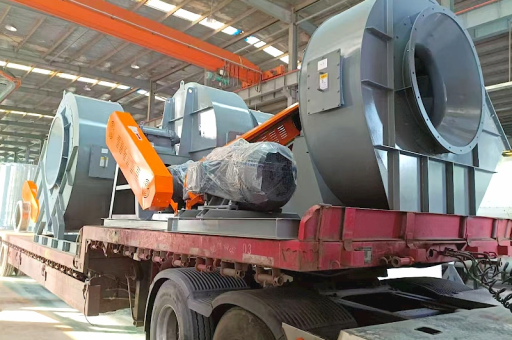
This appears to be a technical inquiry about a Centrifugal Blower used in a Circulating Fluidized Bed (CFB) Boiler within an industrial setting, likely referencing a system called "SWSI" (Single Width, Single Inlet) and concerns regarding an Industrial Explosion.
Here is a breakdown of what this combination means, the specific explosion risks involved, and the design considerations for such a blower.
Deconstructing the Terms
- SWSI (Single Width, Single Inlet): This is the aerodynamic configuration of the centrifugal fan. It means the air enters from one side only. SWSI fans are common for high-pressure applications like boiler fluidization and conveying.
- CFB Boiler: A Circulating Fluidized Bed boiler burns fuel (coal, biomass, waste) in a bed of sand/ash suspended by air. The blower is critical for fluidizing the bed and transporting solids.
- Centrifugal Blower: The prime mover that provides the high-pressure air required to lift the bed material.
- Industrial Explosion: Refers to an explosion event (deflagration) inside the boiler ductwork, the air heater, or the fan casing itself, usually caused by incomplete combustion, fuel gas buildup, or combustible dust.
Why Explosions Happen in CFB Boiler Blowers
While CFB boilers are generally safer than pulverized coal boilers regarding explosions, the blower system is a primary risk zone for two reasons:
- Fuel Backflow (Primary Explosion Risk): If the boiler pressure fluctuates or the blower trips unexpectedly, hot flue gas containing carbon monoxide (CO) and unburned fuel can flow backward through the air duct (no longer flowing forward). When the blower restarts, it introduces fresh oxygen to this fuel-rich gas, creating an explosive mixture. The ignition source is the hot ductwork or embers.
- Combustible Dust Accumulation: CFB boilers have a constant flow of fine ash and unburned carbon particles. If the duct work leading to the blower is poorly designed (having ledges or pockets), combustible dust can settle. A spark (from bearing failure or rotor rub) can ignite this dust cloud.
Specific Design Features for a Safe SWSI Centrifugal CFB Blower (Explosion-Proof)
To handle "Industrial Explosion" scenarios, the SWSI centrifugal blower must meet specific engineering standards (typically ISO 19353, ATEX, or NFPA 85 for boiler explosions). The following are critical design considerations:
A. Casing Design
- Pressure Rating: The fan housing must be designed to withstand the maximum Deflagration Pressure (usually 1.5 to 3.0 bar (g) depending on the fuel).
- Explosion Relief Panels: The blower casing or the immediate ductwork must have explosion relief panels. These panels burst at a low pressure (e.g., 0.1 bar) to vent the explosion pressure out of the building (or to a safe venting area) before the casing ruptures.
- Material: Typically carbon steel or abrasion-resistant steel (e.g., Hardox or AR400) for the casing and impeller to withstand erosion from fly ash.
B. Impeller Design
- Spark-Resistant Construction: The impeller and its inlet cone must be made of a non-sparking material (e.g., Phosphor Bronze or Monel) where rubbing is possible. A common configuration is a steel impeller with a bronze nose cone and wear rings.
- Backward-Curved Blades: These are standard for high-pressure industrial work. They are self-limiting in power (non-overloading) to prevent the motor from burning out if the system back-pressure drops unexpectedly.
C. Shaft Sealing
- Leak-Proof Seals: The shaft penetration through the casing is a critical leak source. A Labyrinth Seal or Carbon Ring Seal with a purge air connection is essential to prevent hot flue gas from leaking out of the blower or air leaking back into it during a shutdown.
D. Motor & Drive
- Ex-Pro Motors: The electric motor must be rated for the hazardous area zone. For a CFB boiler air side, this is usually Zone 2 (gas) or Zone 21 (dust). This requires an Explosion-Proof (Ex-d) or Increased Safety (Ex-e) motor.
- Vibration Monitoring: Mandatory with an automatic trip command via a vibration switch or PLC. A broken blade due to erosion can cause a massive imbalance that can destroy the seals and casing.
E. Instrumentation & Safety Interlocks
- Rapid Closing Dampers: The blower discharge must have a heavy-duty isolation damper (louver or guillotine) that closes rapidly (within 2-3 seconds) when the boiler trips to prevent backflow.
- Pressure Switches: To detect high duct pressure (indicating an explosion) or low pressure (indicating a blocked inlet or belt failure).
- Thermocouples: To monitor bearing temperatures and duct air temperature. High temperature indicates hot gas backflow.
Potential Failure Modes & Root Causes
| Failure Mode | Root Cause | Solution |
|---|---|---|
| Explosion | Ignition of fuel/air mixture during restart after trip. | Install purge cycle (flue gas or steam purge) before restart. |
| Impeller Failure | Corrosion/erosion from fly ash. | Use erosion-resistant coatings (e.g., tungsten carbide or ceramic epoxy). |
| Vibration | Uneven ash buildup on impeller blades. | Install cleaning ports in casing; perform periodic manual cleaning. |
| Bearing Failure | Over-greasing or contamination by ash dust. | Use sealed, shielded bearings with a positive purge air system. |
Summary
If you are troubleshooting or specifying an SWSI Industrial Explosion CFB Boiler Centrifugal Blower, your primary concerns are:
- Explosion Proofing: Is the fan ATEX/NFPA 85 rated?
- Spark Prevention: Are the impeller and casing non-sparking?
- Duct Safety: Is there a fast-closing isolation damper?
- Erosion Control: Is the fan properly specified for ash loading (usually high-pressure, low-flow with abrasion-resistant liners)?
A critical safety tip: Never restart the blower after a boiler trip without a purge cycle (typically 5-10 full air changes of the ductwork) to clear any explosive gas mixture.





