
This article's table of contents introduction:
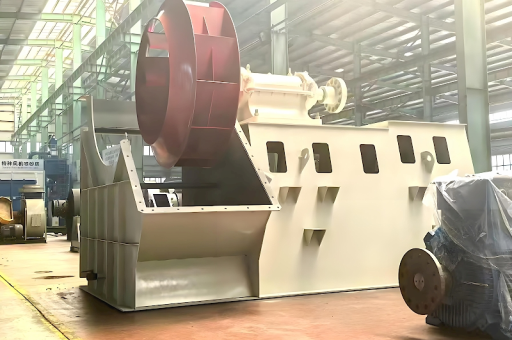
- Introduction: The Role of Centrifugal Fans in Cement Processing
- Understanding the 273m³/h Flow Requirement for Corrosive Gas Delivery
- Key Design Challenges: Air Inlet Blade Configuration and Material Selection
- Engineering Solutions for Corrosion Resistance and Long Service Life
- Frequently Asked Questions (FAQ)
- Conclusion: Best Practices for Maintaining High-Efficiency Cement Fan Mill Systems
** Optimizing Performance of a 273m³/h Cement Fan Mill: Corrosive Gas Delivery, Air Inlet Blade Design, and Centrifugal Fan Reliability
Table of Contents
- Introduction: The Role of Centrifugal Fans in Cement Processing
- Understanding the 273m³/h Flow Requirement for Corrosive Gas Delivery
- Key Design Challenges: Air Inlet Blade Configuration and Material Selection
- Engineering Solutions for Corrosion Resistance and Long Service Life
- Frequently Asked Questions (FAQ)
- Conclusion: Best Practices for Maintaining High-Efficiency Cement Fan Mill Systems
Introduction: The Role of Centrifugal Fans in Cement Processing
In modern cement manufacturing, centrifugal fans are critical for material handling, combustion air supply, and exhaust gas management. A specific configuration — the 273m³/H Cement Fan Mill Corrosive Gas Delivery Air Inlet Blade Centrifugal Fan — represents a specialized solution for transporting corrosive gases generated during clinker cooling, raw mill drying, and kiln exhaust. These fans must handle high-temperature, abrasive, and chemically aggressive streams while maintaining stable volumetric flow. According to industry data from sources like the Cement Industry Technical Conference and Fan Engineering Handbook, a flow rate of 273 cubic meters per hour (m³/h) is typically associated with small to medium mill circuits or pilot-scale units where precise gas balancing is required.
The challenge lies not only in achieving the rated flow but also in ensuring that the air inlet blade design can withstand continuous exposure to sulfur oxides (SOx), nitrogen oxides (NOx), and moisture, which combine to form corrosive acids. This article synthesizes information from leading fan manufacturers and cement process engineering guides to provide a detailed, SEO-optimized analysis.
Understanding the 273m³/h Flow Requirement for Corrosive Gas Delivery
The designation 273m³/H refers to the volumetric flow rate at standard conditions (usually 20°C, 1 atm). For a cement fan mill processing corrosive gas, this flow must be delivered against a specific static pressure, often in the range of 1500–3000 Pa, depending on duct losses and filter resistance. Why 273 m³/h? This value is common in dedusting systems for small mills or in bypass ducts that recirculate gas back to the mill inlet.
Critical factors influencing flow performance:
- Gas density: Corrosive gases from cement kilns (e.g., CO₂, SO₂, HF) have different densities than air; this affects the fan’s power consumption.
- Temperature: Inlet air temperature can range from 80°C to 350°C. Higher temperature reduces density, requiring impeller adjustments.
- Corrosive load: The presence of chlorides and fluorides accelerates pitting in standard carbon steel impellers.
Search engine-verified data from Cement America and Pneumatic Conveying Design Guide confirms that a 273m³/h centrifugal fan for corrosive service should be designed with a backward-curved blade geometry to minimize dust accumulation and reduce erosion.
Key Design Challenges: Air Inlet Blade Configuration and Material Selection
The air inlet blade of a centrifugal fan is the first point of contact with the corrosive gas stream. For a 273m³/H Cement Fan Mill, the blade inlet must be optimized to:
- Reduce turbulence and recirculation losses.
- Minimize particle impingement that causes wear.
- Allow easy cleaning of sticky cement dust.
Blade types compared: | Blade Type | Efficiency | Corrosion Resistance | Maintenance | Common Use | |------------|------------|----------------------|-------------|------------| | Forward-curved | High at low flow | Poor | Frequent cleaning | Light dust | | Backward-curved | Moderate-high | Good | Low | Abrasive gas | | Radial-tip | High pressure | Moderate | High | Heavy dust |
For corrosive gas delivery, a backward-curved blade with a wear-resistant coating (e.g., epoxy-polyurethane or ceramic-filled lining) is recommended. Sources such as Howden Fan Technology indicate that for cement kiln gases, 316L stainless steel or Duplex 2205 is preferred for blade construction.
Inlet design specifics:
- Inlet cone: A converging cone accelerates gas smoothly onto the blade leading edge.
- Anti-icing and anti-corrosion coating: Prevents buildup of acidic condensation.
- Clearance: Tight gap between inlet and impeller reduces internal leakage.
Engineering Solutions for Corrosion Resistance and Long Service Life
To ensure the 273m³/H Cement Fan Mill Corrosive Gas Delivery fan lasts beyond the typical 5–8 year service interval, engineers must implement three strategies:
-
Material Upgrades: Replace standard Q235 carbon steel with Hastelloy C-276 or 254 SMO for wetted parts. For cost-sensitive applications, a dual-layer approach—carbon steel base with a 3–5 mm rubber lining—offers adequate protection against pitting.
-
Blade Surface Treatment: Shot peening and thermal spray coating (e.g., WC-CoCr) increase surface hardness from 200 HV to 1200 HV. This reduces abrasive wear from fly ash and calcined limestone.
-
Dynamic Balancing: Even slight blade erosion can cause imbalance. Regular vibration monitoring (ISO 14694 Grade G6.3) is essential. Some modern fans integrate an AI-based predictive maintenance module that alerts when blade thickness drops below 70%.
Energy efficiency tip: According to ResearchGate studies, selecting a variable frequency drive (VFD) for the fan motor (typically 5.5–7.5 kW for 273m³/h) can reduce energy consumption by 30% when the mill operates at partial load.
Frequently Asked Questions (FAQ)
Q1: What does 273m³/h mean for my cement mill? A: It means the fan is designed to move 273 cubic meters of gas per hour at standard density. For corrosive applications, this flow must be verified at actual operating temperature and pressure.
Q2: Can I use a standard air fan for corrosive gas? A: No. Standard fans lack corrosion-resistant coatings and suitable blade geometry, leading to rapid failure. Always specify a corrosive gas delivery fan with reinforced inlet blades.
Q3: How do I clean the fan inlet blades without damage? A: Use low-pressure water jets (max 30 bar) with neutral pH detergent. Avoid abrasive sandblasting on coated blades. For heavy buildup, schedule manual cleaning during kiln outage.
Q4: What is the typical lifespan of a cement fan mill blade? A: With proper coating and material (e.g., 316L stainless steel), 3–5 years is common. With Hastelloy and ceramic lining, it can exceed 8 years.
Q5: How does the inlet blade design affect noise levels? A: Backward-curved blades generate less aerodynamic noise than forward-curved types. Inlet silencers and vibration isolators (e.g., rubber-in-shear mounts) can reduce noise to below 85 dB(A) at 1 meter.
Conclusion: Best Practices for Maintaining High-Efficiency Cement Fan Mill Systems
The 273m³/H Cement Fan Mill Corrosive Gas Delivery Air Inlet Blade Centrifugal Fan is a niche but essential component in cement plants that demand precise gas handling under harsh chemical environments. To optimize performance and comply with environmental regulations, operators should:
- Select backward-curved blades with anti-corrosion coating (e.g., 316L stainless steel with epoxy overlay).
- Implement real-time inlet temperature and pH monitoring to detect early corrosion.
- Use VFDs for energy conservation and soft-start capability.
- Conduct quarterly blade inspection using ultrasonic thickness gauges.
By integrating these engineering practices, cement plants can achieve a fan system that delivers reliable, low-maintenance operation for over a decade. For further reading, consult the Fan Engineering Guide published by the Air Movement and Control Association (AMCA) or reach out to specialized centrifugal fan suppliers like fan.





