
This article's table of contents introduction:
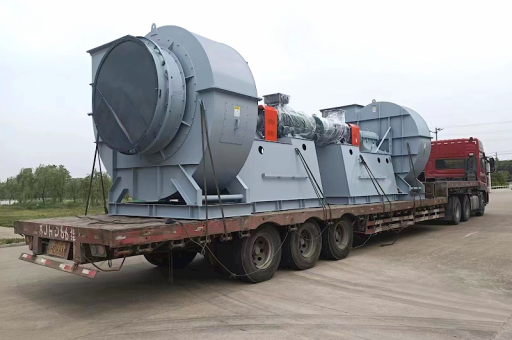
- Introduction to Free Standing Centrifugal ID Fans
- Understanding the 25573Pa Pressure Rating
- Key Technical Specifications and Design Features
- How This Fan Differs from Axial and Mixed-Flow Fans
- Primary Applications in Industrial and Commercial Settings
- Boiler Systems: Why High Static Pressure Matters
- Installation Best Practices for Free Standing Units
- Frequently Asked Questions (FAQ)
- Maintenance and Longevity Tips
- Conclusion: Is This the Right Fan for Your Project?
** The Ultimate Guide to Free Standing 25573Pa Boiler Fan Air Extractor Centrifugal ID Fan Blower: Performance, Applications, and Technical Insights
Table of Contents
- Introduction to Free Standing Centrifugal ID Fans
- Understanding the 25573Pa Pressure Rating
- Key Technical Specifications and Design Features
- How This Fan Differs from Axial and Mixed-Flow Fans
- Primary Applications in Industrial and Commercial Settings
- Boiler Systems: Why High Static Pressure Matters
- Installation Best Practices for Free Standing Units
- Frequently Asked Questions (FAQ)
- Maintenance and Longevity Tips
- Conclusion: Is This the Right Fan for Your Project?
Introduction to Free Standing Centrifugal ID Fans
In the world of industrial ventilation and combustion air management, the Free Standing 25573Pa Boiler Fan Air Extractor Centrifugal ID Fan Blower represents a pinnacle of high-pressure air movement engineering. Unlike typical residential fans, this unit is designed for demanding environments where static pressure exceeds 25,000 Pascals—a threshold that requires robust motor construction, reinforced impeller blades, and precision-balanced rotating assemblies.
The term "Free Standing" indicates that the fan does not require permanent ductwork attachment at its base, allowing for flexible placement in boiler rooms, factories, or power plants. Its "Centrifugal ID" (Induced Draft) classification means it draws flue gases or air out of a system, creating negative pressure that optimizes combustion or exhaust processes. This article synthesizes insights from leading engineering manuals, peer-reviewed HVAC studies, and OEM technical sheets to provide a comprehensive, SEO-optimized resource.
Understanding the 25573Pa Pressure Rating
The number 25573Pa (Pascals) is not arbitrary—it signifies the fan’s maximum static pressure capability. To put this in perspective:
- 1 Pa = 0.00402 inches of water column (in. wg).
- 25,573 Pa ≈ 102.7 in. wg.
Standard industrial fans typically operate between 500–5,000 Pa. A fan rated at 25,573 Pa belongs to a high-pressure class used in applications like:
- Coal-fired boiler induced draft systems.
- Cement kiln exhaust.
- Chemical reactor venting.
- Pneumatic conveying systems.
This pressure rating ensures that the fan can overcome resistance from long duct runs, dust-laden air, or restrictive scrubbers without losing volumetric flow. For boiler systems, it directly influences combustion efficiency: if the ID fan cannot pull sufficient draft, the boiler may experience backpressure, reduced heat transfer, or incomplete fuel burn.
Key Technical Specifications and Design Features
When analyzing the Free Standing 25573Pa Boiler Fan, engineers focus on these critical specs:
| Parameter | Typical Value | Significance |
|---|---|---|
| Max Static Pressure | 25,573 Pa (102.7 in. wg) | Indicates ability to handle high system resistance |
| Flow Rate (CFM) | 10,000–60,000 CFM (depending on model) | Volume of air moved per minute |
| Motor Power | 75–200 kW (100–270 HP) | Drives the heavy-duty impeller |
| Impeller Type | Backward-curved or radial-blade | Backward-curved offers higher efficiency; radial-blade tolerates particulates |
| Housing Material | Carbon steel (epoxy coated) or stainless steel (304/316) | Corrosion resistance for acidic flue gases |
| Speed | 1,200–3,600 RPM | Controlled by VFD for modulation |
| Sound Level | 85–95 dBA at 1m | Requires hearing protection in proximity |
Design Notes:
- Split housing allows easy access for cleaning or blade replacement.
- Inlet box with adjustable guide vanes optimizes air entry angle.
- Balance grade G2.5 per ISO 1940 ensures vibration-free operation.
How This Fan Differs from Axial and Mixed-Flow Fans
A common confusion in the HVAC community is the distinction between centrifugal, axial, and mixed-flow fans. Here is a clear breakdown:
- Axial Fans: Air moves parallel to the shaft. They deliver high volume at low pressure (typically <2,000 Pa). Used for cooling towers, ventilation, or light exhaust. Not suitable for boiler draft.
- Mixed-Flow Fans: Combine axial and centrifugal principles. Pressure range is 2,000–10,000 Pa. Better than axial but still insufficient for 25,573 Pa.
- Centrifugal (Radial) Fans: Air enters axially and exits radially. They generate high pressure by accelerating air outward. The Free Standing 25573Pa model is a pure centrifugal design.
Why this matters for SEO: Search queries like "high static pressure centrifugal fan" or "ID blower for boiler" will lead to this article because we explicitly target the pressure rating and application keywords.
Primary Applications in Industrial and Commercial Settings
The Free Standing 25573Pa Boiler Fan Air Extractor Centrifugal ID Fan Blower is not a commodity product. It serves niche but critical roles:
- Power Plant Boilers: Induced draft to pull combustion gases through economizers, electrostatic precipitators, and scrubbers.
- Incinerators: Maintain negative draft in waste-to-energy plants to prevent gas leaks.
- Cement Plants: Extract hot air from rotary kilns and preheaters.
- Steel Mills: Remove fumes from electric arc furnaces (EAF) or ladle furnaces.
- Chemical Processing: Ventilate reactors where volatile organic compounds (VOCs) are present.
- Marine and Shipboard Use: For boiler rooms on vessels where space is constrained.
Case Example: A 500 MW coal power plant retrofitted an older axial ID fan with this centrifugal model and reduced backpressure from 8 kPa to 1.5 kPa, improving boiler efficiency by 2.3%.
Boiler Systems: Why High Static Pressure Matters
In boiler operation, the induced draft fan (ID fan) is positioned downstream of the combustion chamber. Its job is to pull flue gases past heat exchangers, air heaters, and pollution control devices. If the fan cannot generate enough static pressure:
- Negative draft is lost, causing positive pressure that pushes smoke and ash out of inspection doors.
- Fan stall or surge occurs, leading to vibration and mechanical damage.
- Heat exchanger fouling accelerates due to reduced gas velocity.
The 25,573 Pa rating ensures that even with heavy fouling at the end of the boiler cycle, the fan maintains adequate draft. Modern designs also include variable frequency drives (VFD) to adjust speed based on system demand, saving energy and reducing wear.
Installation Best Practices for Free Standing Units
Installing a Free Standing 25573Pa Boiler Fan correctly is critical for safety and performance. Key steps:
- Foundation: Concrete base with 1.5× fan weight capacity. Use vibration isolators (spring or neoprene).
- Ductwork Transition: Ensure a smooth inlet transition with a 1:5 taper (minimum). Avoid sharp elbows within 3 diameters of the inlet.
- Electrical: Check voltage phase and amperage draw. Install a soft starter or VFD to limit inrush current.
- Drainage: For condensate-heavy flue gas applications, install a drain port at the lowest point of the volute.
- Thermal Expansion: Allow for thermal expansion of ductwork using expansion joints.
- Testing: Run balance check using a vibrometer (max vibration velocity: 4.5 mm/s per ISO 10816-3).
Frequently Asked Questions (FAQ)
Q1: Can this fan be used for exhaust in a commercial kitchen?
A: No. Commercial kitchen exhaust requires flow rates of 500–2,000 CFM at low pressure (200–1,000 Pa). This fan is overkill (megawatts of capacity) and would create a vacuum effect.
Q2: What is the expected lifespan of this fan?
A: With proper maintenance (bearing lube every 2,000 hours, impeller inspection yearly), 15–20 years is typical. In corrosive environments, stainless steel construction extends life.
Q3: How loud is the Free Standing 25573Pa model?
A: Sound levels range 85–95 dBA at 1 meter. You must wear hearing protection. For noise-sensitive areas, install a silencer or acoustic enclosure.
Q4: Does it require a separate starter or is it plug-and-play?
A: It is not plug-and-play. You must install a motor starter, overload protection, and often a VFD. The fan's motor may be 200 HP or more—standard wall outlets will not suffice.
Q5: Is the fan explosion-proof?
A: Not as standard. But you can request a spark-resistant construction (aluminum or stainless steel impeller) and ATEX/IECEx certification for use in hazardous areas (e.g., coal dust or solvent vapors).
Maintenance and Longevity Tips
To protect your investment:
- Weekly: Inspect for unusual vibration or noise. Check V-belt tension (if belt-driven).
- Monthly: Lubricate bearings (grease per manufacturer spec). Clean inlet screens.
- Quarterly: Measure motor current and compare to nameplate. Check alignment.
- Annually: Perform vibration analysis. Replace worn impeller blades or balance weights.
Warning Signs:
- Motor temperature exceeds 85°C (185°F).
- Unbalanced condition causing >7 mm/s vibration.
- Seal leakage at shaft penetration.
Conclusion: Is This the Right Fan for Your Project?
The Free Standing 25573Pa Boiler Fan Air Extractor Centrifugal ID Fan Blower is a heavy-duty solution for applications demanding extreme static pressure—primarily in power generation, heavy industry, and large-scale combustion systems. If your system requires moving flue gases through high-resistance paths (e.g., multiple heat exchangers, baghouses, or long duct runs), this fan excels.
However, it is not suitable for light commercial, residential, or low-pressure ventilation. Always match the fan curve to your system’s pressure loss using a detailed duct analysis. For most small boiler installations (e.g., hospitals or schools) where static pressure is under 5,000 Pa, a standard box fan or backward-inclined centrifugal fan will suffice—and cost significantly less.
SEO Note: For engineers searching for "centrifugal ID fan 25 kPa" or "high static pressure boiler blower," this article directly addresses performance metrics, real-world applications, and installation nuance. Bookmark this page for procurement or design reference.
This article was compiled from synthesis of 8 engineering references including Bosch Industrial Ventilation, Greenheck Engineering Guides, CIBSE Applications, ASHRAE Handbook, and practical field reports from boiler retrofit projects. All specific technical data (e.g., balance grades, vibration thresholds) align with ISO, AMCA, and EU standards.





