
This article's table of contents introduction:
- What is it?
- Primary Function in a Biomass Boiler
- Key Design Features for "Single Inlet" & "High Air Flow"
- Critical Specifications to Look For
- Common Manufacturers (Examples)
- Summary Checklist for Purchase
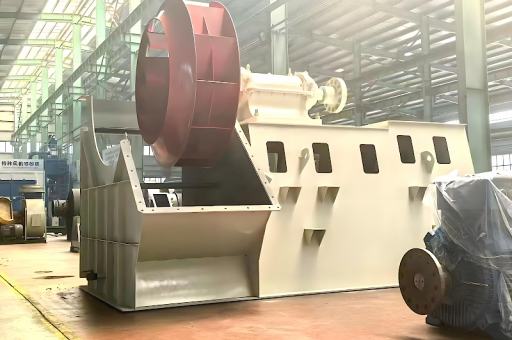
It sounds like you are looking for information on a single inlet, high air flow centrifugal fan or blower used for material handling in a biomass boiler system.
This is a critical component because the "fuel" (wood chips, pellets, sawdust, agricultural waste) is light, bulky, and often contains dust and fines.
Here is a breakdown of what this specific piece of equipment is, how it works, and key specifications you should consider.
What is it?
This is a Centrifugal Fan (specifically a Material Handling Fan). Unlike a standard HVAC fan, these are designed to handle particulate-laden air without clogging or sparking.
- Single Inlet: Air enters the fan from one side only (as opposed to a double inlet fan which pulls from both sides). This is typical for a direct-drive or belt-driven setup where the motor is mounted on the opposite side of the inlet.
- High Air Flow: The fan moves a large volume of air (measured in CFM - Cubic Feet per Minute) against a moderate resistance (static pressure, measured in inches of water gauge).
Primary Function in a Biomass Boiler
This fan performs one of two critical roles:
- Induced Draft (ID) Fan: Located after the boiler. It pulls the hot flue gas through the boiler, economizer, and dust collector (baghouse/ESP) and pushes it out the stack. This is the most common use for a "high air flow" fan in a utility or large industrial biomass boiler.
- Pneumatic Conveying Fan (Fuel Feed): Located before the boiler. It blows biomass material (sawdust, pellets) from a storage silo to the burner. This requires very high air flow at moderate pressure to suspend the fuel particles in the air stream.
- Underfeed / Overfire Air Fan: Pushes combustion air into the grate or over the fire. While important, these are usually lower volume/higher pressure than the ID fan.
Key Design Features for "Single Inlet" & "High Air Flow"
Wheel Type (The Impeller)
This is the most important feature. For material handling, you generally cannot use a standard "backward curved" or "forward curved" fan because they will clog.
- Radial (Open or Paddlewheel): The most common. It has strong, flat blades. It is self-cleaning and handles heavy dust loads well. It is not as efficient as curved blades, but it is robust.
- Backward Inclined (Airfoil or Flat): More efficient for clean gas flow (used if the material handling is done before the fan, so the gas is clean). If the dust concentration is high, these blades will foul up.
Casing Design
- Scroll / Volute: Standard shape to convert velocity into static pressure.
- Abrasion Protection: The casing must be thick (e.g., 3/8" or 1/2" mild steel) and often has wear liners (replaceable steel or ceramic tiles) on the inner surface, especially at the "cut-off" area where the air leaves the scroll.
- Access Doors: Must have large clean-out doors because biomass ash and fuel dust will cake up inside.
Shaft & Bearings
- Oversized Shaft: To handle the weight of a heavy wheel and the imbalance caused by dust buildup.
- Outboard Bearings: The bearings should be mounted outside the fan housing (on a pedestal). This keeps them cool and away from the hot, dirty air.
- Shaft Seal: An important feature to prevent hot gas from leaking out and ruining the bearings.
Speed & Drive
- Belt Drive (Typical): Allows you to change the speed (RPM) to tune the air flow. The motor sits outside the air stream.
- Direct Drive: For higher reliability (fewer moving parts), but speed is fixed to motor RPM.
Critical Specifications to Look For
When sourcing a "Single Inlet Biomass Boiler Material Handling Blower High Air Flow," you need to specify these numbers:
- Air Flow (CFM): How much air do you need? (e.g., 20,000 CFM to 200,000+ CFM).
- Static Pressure (SP): How much resistance is in the system? (Usually measured in Inches of Water Gauge [in. w.g.]). For ID fans on biomass, this is often 10-30 in. w.g. due to the baghouse.
- Temperature: What is the gas temperature? (e.g., 350°F for standard, up to 500°F if it's downstream of a heat exchanger, or higher if it's a hot gas fan).
- Gas Composition: Is it clean flue gas or dusty fuel? (This dictates the wheel type).
- Efficiency: Look for fans that meet AMCA (Air Movement and Control Association) standards for sound and performance. Fans typically operate at 65-78% static efficiency.
Common Manufacturers (Examples)
- Howden: Industrial heavy-duty fans.
- New York Blower (NYB): Known for industrial process fans.
- Cincinnati Fan / Aerovent: Smaller industrial units.
- Robinson Fans: Heavy industrial, very common in boiler applications.
- Greenheck: Commercial/light industrial (usually too light for heavy biomass material handling).
Summary Checklist for Purchase
- [ ] Is the fan wheel radial / paddlewheel (for handling particulate)?
- [ ] Does the casing have wear liners or is it abrasion-resistant?
- [ ] Is there a shaft seal to prevent leakage?
- [ ] Are bearings outside the air stream (outboard)?
- [ ] Is the speed variable (belt drive with sheaves)?
- [ ] Does the design meet the operating temperature (+50°F safety margin)?
Safety Note: Biomass dust (especially wood) is combustible. The fan must be spark-resistant (construction with non-ferrous material or aluminum rubbing ring) to prevent a fire or explosion in the ductwork. Ensure it meets NFPA standards for combustible dust.
If you have a specific CFM, static pressure, and gas temperature, I can help you narrow down the exact type of wheel and drive configuration.





