
This article's table of contents introduction:
- Introduction: Why High Airflow Matters in Material Handling
- Core Components: How a Material Handling Blower Works
- Key Applications: From Dust Collection to Climate Control
- Technical Specifications: CFM, Static Pressure, and Power
- Common Questions & Expert Answers
- Maintenance Best Practices for Longevity
- Conclusion: Choosing the Right System for Your Facility
** Maximizing Industrial Airflow: The Definitive Guide to High-Performance Material Handling Blowers for Building Ventilation
Table of Contents
- Introduction: Why High Airflow Matters in Material Handling
- Core Components: How a Material Handling Blower Works
- Key Applications: From Dust Collection to Climate Control
- Technical Specifications: CFM, Static Pressure, and Power
- Common Questions & Expert Answers
- Maintenance Best Practices for Longevity
- Conclusion: Choosing the Right System for Your Facility
Introduction: Why High Airflow Matters in Material Handling
In modern industrial environments, effective building ventilation is not merely a comfort issue; it is a critical safety and operational requirement. Facilities that process wood chips, grains, powders, or recycled materials generate airborne particulates that can impair visibility, damage equipment, and pose respiratory hazards. At the heart of every robust ventilation system lies the material handling blower — a specialized device designed to deliver high air flow while resisting wear from abrasive or sticky debris.
Unlike standard fans, a true material handling blower is engineered to move air mixed with solid particles without clogging or degrading. Whether you operate a sawmill, a cement plant, or a food processing warehouse, understanding the synergy between blower design, airflow volume, and ventilation strategy is the first step toward a safer, more efficient workspace. This guide synthesizes industry knowledge to help you evaluate, install, and maintain a system that meets the toughest demands.
Core Components: How a Material Handling Blower Works
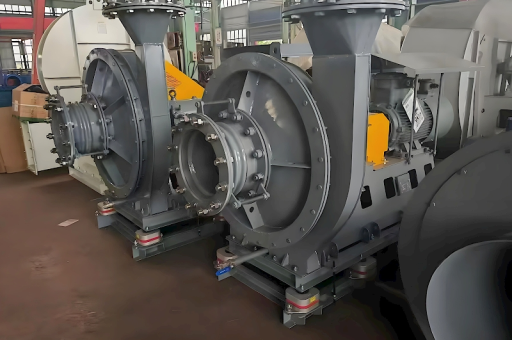
A typical material handling blower relies on a centrifugal or radial design, where air enters axially and is expelled radially at high velocity. The key components include:
- Impeller: The rotating wheel with backward-curved or paddle-type blades. Paddle wheels (also called radial paddles) are preferred for handling large, irregular particles because the open face resists buildup.
- Housing/Volute: A spiral-shaped casing that converts velocity energy into static pressure. Thick-gauge steel or abrasion-resistant liners are essential.
- Motor & Drive: Direct-drive systems are common for high-speed applications. Belt-driven alternatives allow for variable airflow adjustments.
- Inlet & Outlet Connections: Designed to match ductwork dimensions. Many units feature access panels for cleaning.
High air flow is achieved through large impeller diameters and optimized rotational speeds. For instance, a 30-inch blower running at 1,750 RPM can move over 20,000 CFM (cubic feet per minute) at moderate static pressure — ideal for ventilating a sprawling factory floor. However, static pressure (the resistance against airflow) must be balanced. Too much resistance from long ducts or small filters will reduce actual flow.
Key Applications: From Dust Collection to Climate Control
Material handling blowers are used in diverse settings:
| Application | Typical Environment | Airflow Requirement |
|---|---|---|
| Dust collection | Woodworking, metal grinding | 10,000 – 50,000 CFM with high static pressure |
| Pneumatic conveying | Grain, plastic pellets | 2,500 – 15,000 CFM at 10-20″ static |
| General building ventilation | Warehouses, assembly lines | 8,000 – 30,000 CFM at low pressure (1-4″) |
| Fume extraction | Welding, chemical labs | 5,000 – 20,000 CFM with corrosion-resistant coating |
Because these blowers are designed for material handling, they can safely pull sawdust, paper trim, or lightweight metal chips directly into the impeller path — something a standard HVAC fan cannot do without blowing bearings or fins.
Technical Specifications: CFM, Static Pressure, and Power
When selecting a blower for building ventilation, focus on three key metrics:
- CFM (Cubic Feet per Minute): Determines how much air is moved. Rule of thumb: for a 50,000 sq ft warehouse, you may need 2-3 air changes per hour, translating to roughly 25,000-40,000 CFM.
- Static Pressure (in w.g. or inches of water gauge): Measures resistance. A short, open ventilation system might need only 2-3″, while a ducted system with filters may require 10-15″.
- Brake Horsepower (BHP): The actual power required. High air flow at high static pressure demands more horsepower. For example, a blower rated at 30,000 CFM at 6″ static typically requires a 60-75 HP motor.
Important note: Do not confuse free-air (high CFM with zero resistance) with operating CFM. Always consult the manufacturer’s fan curve to see how CFM drops as static pressure increases.
Common Questions & Expert Answers
Q1: Can I use a regular centrifugal fan for sawdust or grain? A: No. Standard fans have tight blade clearances that clog with fibrous material. Use a radial paddle or material handling blower with an open impeller. These are designed to pass debris without jamming.
Q2: How do I calculate the required airflow for my warehouse? A: Estimate the building volume (length × width × height). For general ventilation, aim for 2-4 air changes per hour. For dusty operations, increase to 6-10 changes. Divide the total volume by the desired change interval (in minutes) and multiply by 60 to get CFM.
Q3: Why is my blower vibrating excessively? A: Common causes include: imbalance from accumulated debris on impeller blades, worn bearings, or debris stuck in the housing. Always lock out power before inspecting. Clean the impeller regularly to maintain balance.
Q4: Does a higher airflow always mean better ventilation? A: Not necessarily. If the airflow velocity is too high, it can stir settled dust back into the air, worsening air quality. Also, high speed often means more noise and energy use. Design your system for effective capture velocity, not just maximum CFM.
Q5: How do I reduce noise from a material handling blower? A: Install flexible connectors at inlet/outlet ducts to isolate vibration. Use acoustic enclosures around the blower and line ductwork with sound-absorbing material. Belt-driven models tend to be quieter than direct drive at high speeds.
Maintenance Best Practices for Longevity
To ensure your material handling blower continues delivering high air flow for years:
- Weekly: Listen for unusual sounds. Check vibration levels.
- Monthly: Inspect impeller for wear or buildup. Clean debris from housing.
- Quarterly: Grease bearings per manufacturer spec. Check belt tension (if belt-drive).
- Annually: Complete teardown inspection. Replace worn wear plates or shaft seals.
A well-maintained blower not only maintains airflow performance but also reduces energy consumption. A dirty impeller can increase power draw by 15-20% while delivering less CFM.
Conclusion: Choosing the Right System for Your Facility
A material handling blower with robust high air flow capability is the backbone of effective building ventilation in industrial settings. By understanding the interplay between impeller design, static pressure, and application needs, you can invest in a system that moves heavy debris, controls indoor air quality, and supports worker health.
When evaluating options, prioritize units with replaceable wear liners, large access doors, and proven performance in your specific material type. Always cross-reference fan curves with your actual duct static pressure. For expert guidance, consult with a ventilation engineer or visit specialized online resources from reputable manufacturers — but start your research at trusted platforms (like fan industry knowledge hubs) to compare real-world data.
Remember: the cheapest blower upfront often costs more in repairs, downtime, and poor ventilation. Choose durability, and your facility will breathe easier — literally and figuratively.





