
This article's table of contents introduction:
- System Context: The "Air Inlet" & "Sintering"
- The Fan's Critical Role & Challenges
- Typical Fan Type & Specifications
- Key Engineering Questions to Solve
- Common Problems & Solutions
- Summary Table: How to Specify the Fan
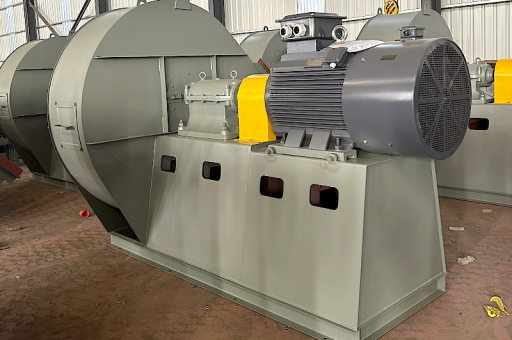
It sounds like you are looking for information or specifications regarding a fan used in a dust collector system that serves an Air Inlet Mineral Powder Sintering System.
This is a highly specific industrial application, typically found in steel mills, cement plants, or mineral processing facilities (e.g., iron ore sintering).
Here is a breakdown of what this fan is, its critical role, and key considerations.
System Context: The "Air Inlet" & "Sintering"
- Sintering Process: Mineral powders (like iron ore fines) are mixed with coke breeze and fluxes, then ignited on a moving grate. Air is sucked down through the bed to burn the fuel and fuse the particles into a porous "sinter" cake.
- The "Air Inlet" Fan (Main Sinter Fan / ID Fan):
- Location: This is not a pressurizing fan. It is the Induced Draft (ID) fan located downstream of the entire sinter strand and the dust collector (baghouse or ESP).
- Function: It creates the massive negative pressure (suction) necessary to pull ambient air into the top of the sinter bed, through the material, into the windboxes, through the dust collector, and out the stack. It is the primary driver of the process.
- "Base Dust Collector": This refers to the main dust collection system (often a baghouse or electrostatic precipitator) that cleans the heavily laden air coming from the sinter strand before it reaches the fan.
The Fan's Critical Role & Challenges
This fan operates under extremely harsh conditions:
- Abrasive Dust: Even with a highly efficient dust collector, residual fine, abrasive mineral dust (silica, iron oxide) will pass through.
- Temperature Fluctuations: Normal operating temperature is 120°C - 180°C (248°F - 356°F), but process upsets can send hot gases towards the fan.
- Massive Airflow & Pressure: Sinter plants require enormous volumes of air. A single fan can handle 10,000 to 20,000 m³/min (350,000 to 700,000 CFM) at a static pressure of -600 to -1000 mmWG (-24 to -40 inWG) .
- Wear & Corrosion: The combination of dust, heat, and moisture (from the sinter mix) leads to rapid erosion of impeller blades.
Typical Fan Type & Specifications
Almost universally, this fan is a Single-Inlet, Double-Width (SISW), Double-Inlet (DI) Centrifugal Fan.
| Feature | Specification for Sinter ID Fan | Reason |
|---|---|---|
| Type | Centrifugal, Backward-Curved or Radial-Tip | High pressure, moderate efficiency, robust against dust. |
| Housing | Heavy-duty, split housing (for maintenance access) | Allows removal of the rotor without disturbing ductwork. |
| Impeller | Wear-resistant (hard-faced, replaceable liners) | Mitigates erosion from residual dust. |
| Bearings | Water-cooled or forced-oil lubrication, mounted on pedestals | Handles high radial loads from heavy rotor and belt tension. |
| Variable Speed | Yes (via VFD or hydraulic coupling) | Critical for process control and energy savings. |
| Shaft Seal | Air-purged or labyrinth seal | Prevents dust leakage along the shaft. |
Key Engineering Questions to Solve
If you are selecting, troubleshooting, or specifying this fan, you need answers to these questions:
- Airflow (Volume): What is the required process airflow (Nm³/hr or ACFM)?
- Static Pressure: What is the total system resistance (draft loss across windboxes + ductwork + dust collector)?
- Gas Temperature: What is the normal operating temperature? What is the maximum emergency/spike temperature?
- Dust Load: How much dust is expected after the dust collector (typically < 10-30 mg/Nm³)?
- Gas Composition: Is there CO (risk of explosion), SOx, or moisture?
- Material of Construction: Carbon steel (standard), Corten (corrosion-resistant), or stainless steel (for high temp/humidity)?
Common Problems & Solutions
- Problem: Impeller erosion (leading to imbalance & vibration).
- Solution: Apply hard-facing (chrome carbide) weld overlay on leading edges. Use replaceable wear liners.
- Problem: Vibration & Bearing Failure.
- Solution: Install accelerometers for condition monitoring. Use self-aligning spherical roller bearings with proper cooling.
- Problem: Shaft & Housing Wear at the inlet cone.
- Solution: Install wear sleeves on the shaft and abradable seals at the inlet.
- Problem: High Energy Consumption.
- Solution: Retrofit existing fans with higher efficiency backward-curved airfoil blades and control via Variable Frequency Drive (VFD) .
Summary Table: How to Specify the Fan
| Parameter | Typical Value | Notes |
|---|---|---|
| Equipment | Dust Collector Base Fan (ID Fan) | For Sinter Plant Air Inlet |
| Fan Type | Centrifugal, DI, SISW | Double Inlet, Single Outlet |
| Drive | Motor + VFD | |
| Motor Power | 2,000 - 6,000+ kW | Very high power |
| Volume | 10,000 - 25,000 m³/min | |
| Pressure | -600 to -1,200 mmWG | |
| Temperature | ~150°C (Normal) / ~250°C (Max) | |
| Material | Carbon Steel with Chrome Carbide wear plate |
Final Recommendation: For a precise specification, consult with a specialized fan manufacturer (e.g., Howden, TLT-Turbo, Robinson, Greenheck, New York Blower, or a reputable Chinese manufacturer like Shibang or Shanghai Blower). Provide them with the mass flow, pressure drop, gas density, and temperature data for a proper API or custom industrial fan design.





