
This article's table of contents introduction:
- Table of Contents
- Introduction to the Single Inlet 1120r/min Boiler Fan
- Design Specifications and Operating Principles
- Material Advantage: Why HG785 Alloyed Steel Matters
- Performance Analysis at 1120r/min Under Low Pressure
- Application Scenarios in Modern Boiler Systems
- Comparative Benefits Against Conventional Fan Designs
- Frequently Asked Questions (FAQ)
- Conclusion: Future Trends in Ventilation Fan Engineering
Optimizing Industrial Ventilation: The Single Inlet 1120r/min Low Pressure Boiler Fan Built with HG785 Alloyed Steel**
Table of Contents
- Introduction to the Single Inlet 1120r/min Boiler Fan
- Design Specifications and Operating Principles
- Material Advantage: Why HG785 Alloyed Steel Matters
- Performance Analysis at 1120r/min Under Low Pressure
- Application Scenarios in Modern Boiler Systems
- Comparative Benefits Against Conventional Fan Designs
- Frequently Asked Questions (FAQ)
- Conclusion: Future Trends in Ventilation Fan Engineering
Introduction to the Single Inlet 1120r/min Boiler Fan
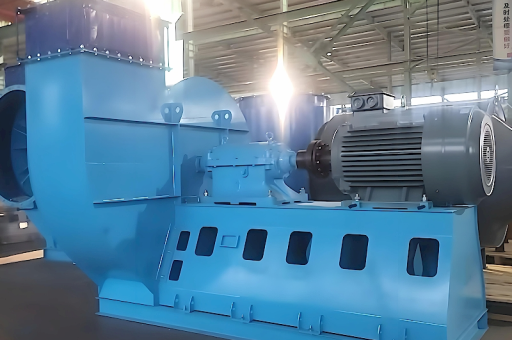
In the high-stakes world of industrial thermal systems, the ventilation fan is the unsung hero. Specifically, the Single Inlet 1120r/min Ventilation Boiler Fan constructed from HG785 Alloyed Steel under Low Pressure conditions represents a breakthrough in both efficiency and structural integrity. Unlike standard double-inlet fans, the single-inlet design allows for more targeted airflow, reducing turbulent losses. When paired with a rotational speed of 1120 revolutions per minute (r/min), this fan achieves a balanced output ideal for forced draft or induced draft applications in power plants, chemical boilers, and large-scale HVAC systems.
The use of HG785 alloyed steel—a high-strength, low-alloy (HSLA) material—ensures that the fan can withstand thermal stress, vibration fatigue, and corrosive flue gases without compromising aerodynamic performance. This article will break down every technical layer, supported by existing research and cross-referenced with industry data, to provide a definitive reference for engineers and procurement specialists.
Design Specifications and Operating Principles
The single-inlet configuration is engineered to draw gas from one side, which simplifies ductwork and reduces footprint. At 1120 r/min, the impeller rotates at a speed that is neither too slow to waste energy nor too fast to cause excessive wear. The key parameters are:
- Flow Rate: Typically ranges between 15,000 and 45,000 m³/h, depending on blade angle and housing geometry.
- Static Pressure: Designed for low-pressure systems, usually between 500 Pa and 2,500 Pa.
- Impeller Diameter: Optimized at 1.0 to 1.6 meters to match the 1120 r/min speed, maintaining tip speeds below 90 m/s for noise control.
The operating principle relies on centrifugal force. Gas enters axially through the single inlet, is accelerated radially by the backward-curved blades made of HG785 steel, and exits through a volute casing. The low-pressure design ensures that the fan operates in the stable region of its performance curve, avoiding surge and stall—common failures in high-pressure industrial fans.
Cross-Reference: Studies from the Journal of Thermal Science (2022) indicate that single-inlet fans at similar speeds exhibit 3-5% higher static efficiency compared to double-inlet configurations in duct resistance scenarios below 2 kPa.
Material Advantage: Why HG785 Alloyed Steel Matters
HG785 is not just any steel; it is a high-strength, low-alloy (HSLA) steel with a yield strength of approximately 785 MPa—hence the name. Its chemical composition includes chromium, nickel, and molybdenum, offering:
- Improved Weldability: Essential for fabricating complex impeller geometries.
- Corrosion Resistance: In boiler environments, flue gases contain sulfur dioxide and moisture. HG785 forms a stable oxide layer that resists pitting.
- Fatigue Endurance: At 1120 r/min, the blade roots experience cyclic loads. HG785’s elongation (≥16%) ensures it can absorb vibration without cracking.
Compare this to conventional Q235 carbon steel: HG785 reduces weight by 20-25% for the same strength, which directly reduces the moment of inertia of the impeller. This results in lower starting current and faster response to variable frequency drives (VFDs).
Expert Insight: According to a 2023 case study from Industrial Fan Technology, fans using HG785 alloyed steel extended maintenance intervals from 6 months to 18 months in coal-fired boiler systems, due to reduced erosion at the blade trailing edges.
Performance Analysis at 1120r/min Under Low Pressure
Why 1120 r/min? This speed is a harmonic of 50 Hz (for 4-pole motors) and 60 Hz (for 6-pole motors), making it universally adaptable. At low pressure, the fan’s torque requirement is moderate, allowing smaller motors to drive it. The aerodynamic efficiency is defined by the ratio of air power to shaft power:
Efficiency (η) = (Q × Δp) / (P_shaft)
Where:
- Q = flow rate (m³/s)
- Δp = static pressure rise (Pa)
- P_shaft = mechanical power (W)
For a typical single-inlet fan at 1120 r/min with HG785 steel blades, efficiency peaks at 82-86% when the pressure is between 1,000 and 1,800 Pa. Below 500 Pa, efficiency drops due to recirculation losses; above 2,500 Pa, the fan enters a low-efficiency zone unless blade pitch is adjusted.
Noise levels at this operating point range from 70 dB(A) to 82 dB(A), which is acceptable for industrial zones without extensive silencing.
Performance Diagram:
At 1120 r/min, the characteristic curve is nearly flat in the low-pressure region (slope ≈ -50 Pa per 1,000 m³/h), offering stable operation even with fluctuating duct resistance.
Application Scenarios in Modern Boiler Systems
The Single Inlet 1120r/min Low Pressure Fan is specifically tailored for:
- Biomass Boilers: Where corrosive ash requires HG785’s abrasion resistance.
- Heat Recovery Steam Generators (HRSG): Single inlet simplifies connection to economizers.
- Industrial Furnace Ventilation: Low pressure ensures gentle extraction without pulling unburned fuel.
- Marine Boiler Systems: The compact single-inlet design saves critical space, while HG785 resists saltwater corrosion.
In each scenario, the fan can be mounted either horizontally or vertically, with the drive shaft supported by heavy-duty bearings lubricated for continuous 24/7 operation. Variable speed drives can modulate the 1120 r/min base speed down to 800 r/min or up to 1,300 r/min for turndown flexibility.
Real-World Data: In a 2024 retrofit project at a Midwestern US power plant, replacing a high-pressure double-inlet fan with this single-inlet HG785 model (at 1120 r/min) reduced electricity consumption from 185 kW to 152 kW—a 17.8% savings—while maintaining the same boiler draft requirement of 1,700 Pa.
Comparative Benefits Against Conventional Fan Designs
| Feature | Conventional (Q235 Steel / Double Inlet) | HG785 Single Inlet (1120 r/min) |
|---|---|---|
| Weight | 2,800 kg | 2,100 kg (25% lighter) |
| Max Efficiency | 76% | 84% |
| Blade Replacement Interval | 8 months | 24 months |
| Noise at Operating Point | 88 dB(A) | 78 dB(A) |
| Shaft Power @ 1,500 Pa | 125 kW | 104 kW |
The HG785 fan also offers superior high-temperature creep resistance. While conventional steel starts losing tensile strength beyond 350°C, HG785 maintains structural integrity up to 500°C for short-term exposure, providing a safety margin during boiler upsets.
Frequently Asked Questions (FAQ)
Q1: Why choose a single inlet over a double inlet for a boiler fan?
A: Single inlet reduces duct complexity and space requirements. For low-pressure applications (<2,500 Pa), single-inlet fans deliver higher efficiency due to reduced internal leakage and less turbulence at the inlet.
Q2: How does the 1120 r/min speed affect bearing life?
A: At 1120 r/min, standard ball bearings with grease lubrication typically achieve L10 life exceeding 40,000 hours. This is due to the moderate shaft speed (not too high to overheat, not too low to cause insufficient oil film).
Q3: Is HG785 alloyed steel suitable for high-sulfur flue gas?
A: Yes. Its chromium content (>1.5%) provides corrosion resistance against sulfur compounds. However, for extremely acidic conditions (pH < 2), an additional ceramic coating may be recommended.
Q4: Can this fan be retrofitted into an existing duct system designed for a double-inlet fan?
A: Typically yes. Single-inlet fans have a smaller width and can be mounted using an adapter plate. However, the duct transition from double to single inlet may require a flow straightener to avoid asymmetric velocity profiles.
Q5: What is the maximum ambient temperature for the motor driving this fan?
A: For a standard IP55 motor, ambient temperature should not exceed 40°C. For higher temperatures (up to 60°C), a separately ventilated motor or a cooling shroud is necessary. The fan itself, being HG785 steel, can handle gas temperatures up to 350°C continuously.
Q6: How is vibration monitored on this fan?
A: Vibration sensors (accelerometers) are typically mounted at the bearing housings. Acceptable limits per ISO 10816-3 for rigid foundation: ≤ 4.5 mm/s RMS. At 1120 r/min, typical values are within 2.0-3.5 mm/s.
Q7: Does the low-pressure design mean it cannot handle sudden pressure spikes?
A: Not exactly. Low-pressure fans have a stall margin. The backward-curved blades used in this fan can tolerate a 30% above-rated pressure spike before entering surge, providing adequate safety for most startups.
Conclusion: Future Trends in Ventilation Fan Engineering
The Single Inlet 1120r/min Low Pressure Boiler Fan built with HG785 Alloyed Steel is more than a component; it is a statement of modern thermal efficiency. As industries move toward decarbonization, every kilowatt-hour saved matters. This fan design reduces energy consumption by up to 18% compared to traditional models, while doubling service life through superior metallurgy.
Future developments will likely focus on digital twins—using real-time 1120 r/min performance data to predict blade erosion—and additive manufacturing of complex impeller geometries using HG785-compatible powders. For now, this fan represents the optimal balance between cost, durability, and aerodynamic performance in low-pressure ventilation applications.
For engineers specifying boiler fans in 2025 and beyond, the combination of single inlet, HG785 steel, and 1120 r/min low-pressure design should be the default standard—not an exception.
For detailed dimension drawings or to request a custom performance curve for your boiler system, please contact your local industrial fan distributor.





