
This article's table of contents introduction:
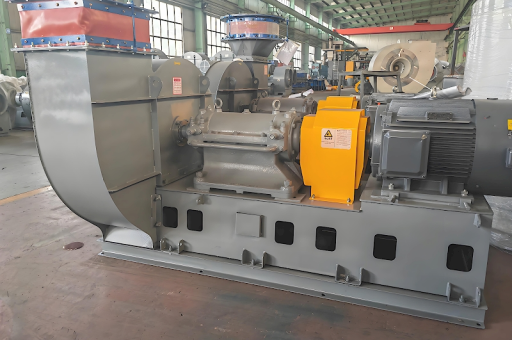
- Introduction: The Critical Role of Airflow in FGD Systems
- Understanding Flue Gas Desulfurization (FGD) Process Basics
- Material Handling Challenges in FGD Operations
- Why High-Volume Blowers Are Indispensable for FGD Material Transport
- Key Technical Specifications for FGD Blower Selection
- Common Questions (Q&A) About FGD Material Handling Blowers
- Best Practices for Blower Maintenance and Longevity in Harsh Environments
- Future Trends: Energy-Efficient and Smart Blower Systems
- Conclusion: Integrating Blower Performance with FGD Efficiency
** High-Volume Blowers in Flue Gas Desulfurization: Optimizing Material Handling for Maximum Efficiency
Table of Contents
- Introduction: The Critical Role of Airflow in FGD Systems
- Understanding Flue Gas Desulfurization (FGD) Process Basics
- Material Handling Challenges in FGD Operations
- Why High-Volume Blowers Are Indispensable for FGD Material Transport
- Key Technical Specifications for FGD Blower Selection
- Common Questions (Q&A) About FGD Material Handling Blowers
- Best Practices for Blower Maintenance and Longevity in Harsh Environments
- Future Trends: Energy-Efficient and Smart Blower Systems
- Conclusion: Integrating Blower Performance with FGD Efficiency
Introduction: The Critical Role of Airflow in FGD Systems
Flue Gas Desulfurization (FGD) is a cornerstone technology for reducing sulfur dioxide (SO₂) emissions from coal-fired power plants and industrial boilers. However, the effectiveness of an FGD system depends not only on the chemical absorption process but also on the reliable material handling of reagents (like limestone or lime) and byproducts (gypsum). At the heart of this pneumatic conveying network lies the high-volume blower. Without a properly designed and maintained blower, the material flow can stall, leading to downtime, increased emissions, and costly repairs. This article explores the intricate relationship between FGD processes, material handling systems, and the high-volume blowers that make them work.
Understanding Flue Gas Desulfurization (FGD) Process Basics
Most modern FGD systems use a wet scrubbing process. A slurry of finely ground limestone (CaCO₃) is sprayed into the flue gas stream. The SO₂ reacts with the slurry to form calcium sulfite, which is then oxidized to produce marketable gypsum (CaSO₄·2H₂O). This process requires constant, reliable transport of both the raw limestone powder and the dewatered gypsum.
Key material handling stages include:
- Receiving & Storage: Bulk tankers deliver limestone powder, which is stored in silos.
- Conveying to Mill: Pneumatic systems move the limestone from storage to a ball mill for grinding.
- Slurry Preparation: Ground limestone is mixed with water and fed to the scrubber.
- Gypsum Removal: Dewatered gypsum must be conveyed to storage or loading areas.
Each of these stages relies on a steady, high-volume air stream generated by a robust blower.
Material Handling Challenges in FGD Operations
FGD material handling presents unique challenges that place extreme demands on blowers:
- Abrasive Particulates: Limestone and gypsum are highly abrasive. Fine particles can erode blower impellers and casing over time.
- Moisture and Corrosion: Wet FGD environments often contain residual moisture and acidic gases (H₂SO₄ mist), leading to corrosion if the blower is not properly sealed or coated.
- High Temperature: Some conveying paths, especially near the scrubber inlet, may involve elevated air temperatures.
- Variable Loads: Material flow is not constant; surges occur during silo filling or emptying. The blower must handle these fluctuations without surging or stalling.
A standard industrial fan may fail within months in such conditions. This is why specifically engineered high-volume blowers are required.
Why High-Volume Blowers Are Indispensable for FGD Material Transport
In pneumatic conveying systems for FGD, the blower is the prime mover. It provides the necessary pressure (to overcome line losses) and volume (to entrain and suspend particles). Here is why high-volume models are critical:
- Suspension Velocity: Limestone powder requires a minimum air velocity (typically 20-25 m/s) to keep it suspended and prevent settling in horizontal pipes. High volume ensures this velocity is maintained even with longer pipe runs.
- Efficiency of Transport: Larger volumes allow for higher solids-to-air ratios, meaning more material can be moved with less energy per ton.
- Pressure Stability: FGD systems often have multiple branches (e.g., to different silos or mills). A high-volume blower with a stable pressure curve can supply multiple take-off points simultaneously without significant drop in performance.
Technical Comparison:
| Parameter | Standard Industrial Fan | High-Volume FGD Blower |
|---|---|---|
| Air Volume (CFM) | 2,000 – 10,000 | 10,000 – 100,000+ |
| Pressure (PSI / inWG) | 5 – 2 PSI | 3 – 15 PSI |
| Impeller Material | Carbon Steel | Hard-faced Alloy or Ceramic Coated |
| Sealing | Standard Lip Seal | Labyrinth or Purge-Air Sealing |
| Duty Cycle | Intermittent | 24/7 Continuous Heavy Duty |
Key Technical Specifications for FGD Blower Selection
When choosing a blower for an FGD material handling application, engineers must evaluate these five factors:
- Type of Blower: Roots-type positive displacement blowers are common for dense-phase conveying, while centrifugal (turbine) blowers are used for dilute-phase, high-volume applications.
- Flow vs. Pressure (Turndown Ratio): The blower must maintain a stable flow rate even as backpressure changes. A 100% turndown ratio is ideal.
- Material of Construction: For corrosive FGD environments, blowers with stainless steel (316L) or duplex stainless steel impellers and coated housings are preferred.
- Drive System: Direct-drive with a variable frequency drive (VFD) allows precise control over volume without mechanical wear.
- Accessories: Inlet filter silencers (to reduce noise and protect blower), check valves (to prevent backflow), and pressure relief systems are mandatory.
Common Questions (Q&A) About FGD Material Handling Blowers
Q1: What is the difference between a "blower" and a "fan" in FGD context? A: While often used interchangeably, a "fan" typically operates at lower pressures (<1 PSI) and is used for draft or ventilation. In FGD material handling, a "blower" (especially a positive displacement or high-speed centrifugal type) generates the higher pressures (3–15 PSI) needed to push abrasive material through long pipelines.
Q2: How do I calculate the required air volume for conveying limestone? A: The formula is: Volume (CFM) = (Material Flow Rate in lb/min) / (Desired Solids Loading Ratio × Air Density). For limestone, a typical loading ratio is 5:1 to 10:1 (by weight). You must also add a safety factor of 15-20% for line losses.
Q3: Can I use a standard centrifugal fan for gypsum conveying? A: Not recommended. Gypsum is extremely abrasive. A standard fan would erode quickly, leading to imbalance and failure. Use a heavy-duty blower with a hardened impeller or a Roots-type blower designed for particulate-laden air.
Q4: What maintenance is required for FGD blowers? A: Key maintenance includes: weekly inspection of inlet filters, quarterly oil changes (for gear-driven units), annual bearing replacement, and impeller balance checks. In corrosive environments, check casing for pitting every 6 months.
Q5: How does a VFD benefit a high-volume FGD blower? A: A VFD allows the blower speed to match the actual conveying demand. This reduces energy consumption by 20-40% compared to running at full speed with a throttle valve. It also provides soft-start, reducing mechanical stress.
Best Practices for Blower Maintenance and Longevity in Harsh Environments
Given the abrasive and corrosive nature of FGD materials, extending blower life requires proactive strategies:
- Pre-Filtration: Install a high-efficiency inlet filter to capture fine dust before it enters the blower. This reduces impeller erosion by up to 60%.
- Lubrication Schedule: Use synthetic, corrosion-inhibiting grease for bearings. Change it more frequently if the blower operates in high ambient temperatures.
- Vibration Monitoring: Mount sensors on bearing housings. A 50% increase in vibration often signals impeller wear or shaft misalignment.
- Casing Protection: Apply a two-part epoxy coating or line the casing with a replaceable wear plate.
- Spare Parts Strategy: Keep a spare impeller and bearing kit on site. FGD plants often operate 24/7, and a blower failure can stop the entire emission control system.
Future Trends: Energy-Efficient and Smart Blower Systems
The next generation of FGD material handling blowers focuses on intelligence and sustainability:
- Magnetic Bearing Blowers: These use magnetic levitation instead of physical bearings, eliminating oil, reducing friction, and achieving 95%+ efficiency.
- IoT-Enabled Predictive Maintenance: Smart blowers with sensors that track temperature, vibration, and power consumption in real-time. The system can predict failure days in advance and automatically adjust speed to prevent overload.
- High-Efficiency Motor Integration: IE5-class synchronous reluctance motors (SynRM) combined with VFDs are becoming standard, cutting energy costs by up to 30% compared to older induction motors.
- Hybrid Conveying Systems: Combining dense-phase (low velocity, high pressure) with dilute-phase (high velocity, low pressure) in one system, requiring dual-mode blowers.
Conclusion: Integrating Blower Performance with FGD Efficiency
The synergy between flue gas desulfurization and material handling is undeniable. A high-volume blower is not merely a component; it is the circulatory system that moves the lifeblood (limestone and gypsum) of the FGD plant. Operators who invest in properly sized, corrosion-resistant, and intelligent blowers — and maintain them vigilantly — will see increased scrubber uptime, lower operating costs, and consistent compliance with emission regulations.
When selecting a blower for your FGD system, consult experts who understand the unique demands of your specific material (e.g., particle size, moisture content, temperature). Whether you source a unit from a manufacturer or rebuild an existing one, prioritize high-volume capability, robust materials, and smart monitoring. The air that moves the material is just as important as the chemistry that removes the SO₂.
For more technical guidance on FGD blower sizing or to request a custom solution, visit your local industrial equipment supplier or contact an authorized fan and blower systems integrator.





