
This article's table of contents introduction:
- What is HG785?
- Why use HG785 for an ID Fan?
- Critical Issues & Risks (Must Check)
- Recommended Alternatives (If HG785 is not optimal)
- Summary for "Construction Works"
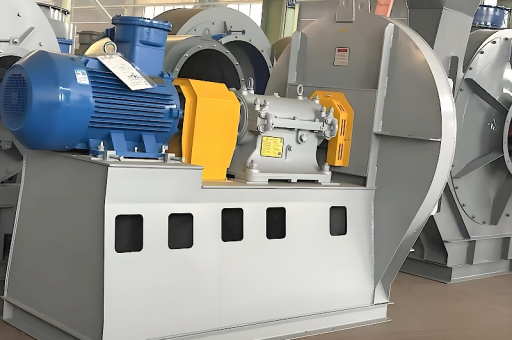
It appears you are asking about the specifications or considerations for using HG785 alloyed steel in the construction of an Induced Draught (ID) Fan — likely for an industrial application such as a power plant, cement kiln, or steel mill.
Here is a breakdown of the key engineering considerations regarding the material (HG785) and the application (ID Fan).
What is HG785?
- Definition: HG785 is a high-strength, low-alloy (HSLA) structural steel, commonly used in Chinese standards (often equivalent to Q690 or S690QL under EN standards).
- Yield Strength: ~690 MPa (Minimum yield point).
- Tensile Strength: 785 – 940 MPa.
- Properties: High strength-to-weight ratio, good weldability (with proper preheat), and good toughness.
- Common Use: Boom structures, cranes, heavy machinery components where weight reduction is critical.
Why use HG785 for an ID Fan?
- Weight Reduction: ID fans are large (often several meters in diameter). Using a high-strength steel like HG785 allows for thinner plates in the impeller blades, backplate, and housing. This reduces rotational inertia, motor load, and structural support costs.
- Fatigue Performance: If the fan operates at variable speeds or has significant rotational mass, HG785 offers superior fatigue resistance compared to mild steel (e.g., Q235B).
- Combined Stress: The blade roots experience high centrifugal stress. HG785 helps manage this without excessive thickness.
Critical Issues & Risks (Must Check)
A. Weldability & Cold Cracking
- Problem: HG785 is sensitive to hydrogen-induced cracking (HIC) and cold cracking.
- Solution:
- Preheat: Minimum 150°C – 200°C (depending on thickness). Thicker flanges or hubs may require higher preheat.
- Interpass Temperature: Must be controlled (usually < 250°C).
- Electrodes: Use low-hydrogen consumables (e.g., E81T1-Ni1 for FCAW or matching solid wire with flux).
- Post-Weld Heat Treatment (PWHT): Often required for thick sections to relieve residual stress.
B. Corrosion & Erosion (The ID Fan Killer)
- The Problem: ID fans handle hot, dirty, abrasive flue gas. HG785 has no inherent corrosion resistance. It will rust and erode faster than stainless steel (e.g., 316L) or coated steel.
- The Risk: If you use bare HG785 in the impeller (blades), the combination of:
- High tip speed (erosion by fly ash)
- Condensation of sulfuric acid (if gas temp drops below dew point) will rapidly destroy the blades.
- Solution: HG785 is typically used as the structural core, and then:
- Cladding: Weld overlay with Inconel or 309L SS on the leading edges.
- Coatings: Tungsten carbide thermal spray or ceramic epoxy (high temperature rated).
- Avoid: Using bare HG785 in the gas path unless the gas is clean and dry.
C. High Temperature Performance
- Typical ID Fan Inlet Temperature: 120°C – 180°C (up to 400°C in some boiler applications).
- HG785 Temperature Limit: The strength degrades significantly above 300°C. At 400°C, the allowable stress drops by roughly 40-50%.
- If gas temperature > 200°C:
- You must derate the fan speed/stress.
- Consider Chromium-Molybdenum steel (e.g., 15CrMo) or heat-resistant stainless (e.g., 310S) for the impeller, while using HG785 only for the cold housing.
Recommended Alternatives (If HG785 is not optimal)
| Condition | Better Material Choice |
|---|---|
| High erosion + 200-400°C | Hardox 500/600 (abrasion resistant) or K400 / Creusabro (high-temp abrasion). |
| Chemical/acidic condensing | Duplex 2205 or Super Duplex (costly but long life). |
| Large structural support (not in gas path) | HG785 (perfect for bearing brackets, base frames, center hub). |
| Low cost + low temp (<100°C) | Q355B + erosion coating (cheaper and easier to weld). |
Summary for "Construction Works"
If you are writing a specification or construction plan:
- Scope of Use: HG785 is acceptable for the hub, bearing shaft, and structural casing (outside the gas duct).
- For the Impeller (Rotating Blades): Strongly recommend against bare HG785 unless the gas is clean and cold.
- Welding Procedure: Must be qualified by WPQR (Welding Procedure Qualification Record) with preheat and PWHT defined.
- Destructive Testing: Must include Charpy V-notch impact tests at -20°C or -40°C (to confirm toughness).
- Coating: All exposed surfaces to flue gas must be coated with a high-temperature epoxy or ceramic paint.
Verdict: HG785 is a valid material for ID fan construction, but it is a niche application used primarily to save weight in large fans. It requires rigorous welding control and corrosion/erosion protection. For typical dirty flue gas, Hardox or Stainless Steel cladding is more common.





