
This article's table of contents introduction:
- Breakdown of Terms
- Typical Model Equivalent
- Key Specifications (Typical for this type)
- Maintenance for "Long Life"
- Potential Issues with "Q235" in Dust Collection
- Summary
It appears you are referring to a specific type of industrial fan. Based on the keywords provided (Q235, Single Suction, Long Life, Industrial Dust Collector, Centrifugal Flow Fan), I can provide a technical breakdown and likely model identification.
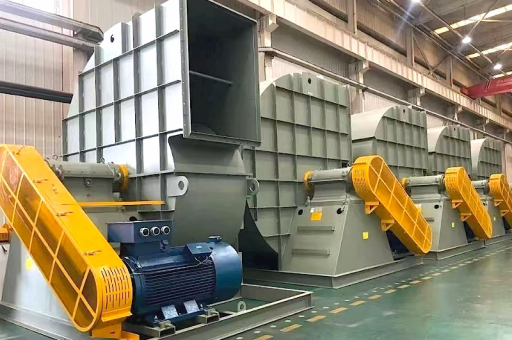
This combination of terms typically describes a Centrifugal Fan designed for material handling (dust collection) , manufactured from Q235 carbon steel, with a single inlet configuration.
Breakdown of Terms
- Q235: This is the grade of carbon steel (Chinese standard, similar to ASTM A36 or S235JR). It is strong, weldable, and inexpensive. For dust collectors, it often requires an internal coating (e.g., anti-corrosion paint or wear liner) if the dust is abrasive.
- Single Suction: The fan has a single inlet (air enters from one side of the impeller). This is the most common configuration for standard dust collection systems (as opposed to double suction, which is for high volume/low pressure).
- Long Life:
- Impeller: Likely features backward-inclined blades (BIC) or radial tips (depending on dust type). These designs are self-cleaning and reduce wear.
- Housing: The volute casing is thicker (e.g., 4mm-10mm) to handle erosion from particulate.
- Shaft & Bearings: Uses oversized, heavy-duty bearings (pillow block or flanged) with grease relief to prevent dust ingress.
- Industrial Dust Collector: This defines the application. The fan must maintain high efficiency while handling abrasive, sticky, or fibrous materials.
- Centrifugal Flow Fan: Uses centrifugal force to move air. For dust, the Impeller is the critical component.
Typical Model Equivalent
This set of features strongly matches fans in the 9-19 or 9-26 series (Chinese standard high-pressure centrifugal fans), or an industrial version of a DF (Dust Fan) series.
- 9-19: High pressure, relatively low volume. Good for long ducts or dense dust.
- 9-26: High pressure, medium-high volume.
- Y5-47 / Y5-48: (Originally for soot, but adapted for industrial dust) - Heavy duty, reinforced for wear.
Key Specifications (Typical for this type)
| Parameter | Typical Value |
|---|---|
| Material | Q235 (Housing), Q345 (Shaft / Impeller for high wear) |
| Max Airflow | 800 – 80,000 m³/h (depending on impeller size) |
| Max Pressure | 2,000 – 15,000 Pa |
| Impeller Type | Backward-curved (for clean dust) or Radial straight (for sticky/heavy dust) |
| Drive Type | Direct Drive (D-type) or Belt Drive (C-type) |
| Bearing Type | NSK / SKF equivalent deep groove ball bearings with dust covers |
| Shaft Seal | Felt seal or labyrinth seal to prevent dust escaping |
Maintenance for "Long Life"
To achieve the "Long Life" claim with Q235 steel and a dust collector:
- Wear Plate: Ensure the impeller has a replaceable wear plate or is hardened (e.g., nitriding or surfacing with hard alloy).
- Clean Gas Path: Prevent buildup on the impeller via:
- Vortex Finder: Optimized inlet cone.
- Drain Holes: In lower volute to flush debris.
- Balance: The impeller must be dynamically balanced (ISO 1940 G6.3 or better). Unbalance due to dust wear is the #1 killer of these fans.
- Protection: Use a Variable Frequency Drive (VFD) with thermal overload and a vibration switch. Dust buildup causes rapid unbalance.
Potential Issues with "Q235" in Dust Collection
- Corrosion: If the dust is chemically active (e.g., sodium compounds, wet wood chips), Q235 will rust quickly. You would need a stainless steel (304/316) liner or coating (e.g., epoxy or ceramic).
- Wear: For highly abrasive dust (sand, cement, fly ash), Q235 is too soft. You need HARDOX or Manganese steel for the impeller.
Summary
You are describing a High-Pressure Q235 Carbon Steel Industrial Centrifugal Dust Fan.
- Best Application: Woodworking chips, paper trim, general dry particulates (low to moderate abrasion).
- Worst Application: Metal grinding dust (sparks + abrasion), chemical powder (corrosion).
- Selection Advice: If buying this, ask the supplier for:
- Full performance curve (at standard density).
- Impeller thickness (min 6mm for 500mm+ diameter wheels).
- Maximum particle size the fan can handle (usually up to 30-50mm, but check).
- Accessories: Inlet box, radial inlet damper, expansion joint.
Would you like help selecting a specific model number (e.g., 9-19-5.6A) or calculating the brake horsepower required for your specific system (static pressure + airflow)?





