
This article's table of contents introduction:
- Table of Contents
- Introduction: The Evolution of Industrial Fan Technology
- What Is a Stainless Steel Energy Saving Coal Mill High Pressure Centrifugal Fan?
- Key Components and Material Advantages (Stainless Steel Focus)
- Critical Role in Coal Mill Systems: From Pulverization to Combustion
- High Pressure Capabilities: Why Static Pressure Matters in Cement & Power Plants
- Frequently Asked Questions (FAQ)
- Conclusion: Why This Technology is the Future of Heavy Industry
** The Ultimate Guide to Stainless Steel Energy Saving Coal Mill High Pressure Centrifugal Fan: Efficiency, Design, and Applications
Table of Contents
- Introduction: The Evolution of Industrial Fan Technology
- What Is a Stainless Steel Energy Saving Coal Mill High Pressure Centrifugal Fan?
- Key Components and Material Advantages (Stainless Steel Focus)
- Energy Saving Mechanisms: How These Fans Reduce Operational Costs
- Critical Role in Coal Mill Systems: From Pulverization to Combustion
- High Pressure Capabilities: Why Static Pressure Matters in Cement & Power Plants
- Frequently Asked Questions (FAQ)
- Conclusion: Why This Technology is the Future of Heavy Industry
Introduction: The Evolution of Industrial Fan Technology
In modern heavy industries—particularly coal-fired power generation, cement manufacturing, and steel production—the demand for reliable, durable, and energy-efficient air-moving equipment has never been higher. The Stainless Steel Energy Saving Coal Mill High Pressure Centrifugal Fan represents a significant leap forward. Unlike conventional carbon steel fans, which suffer from corrosion, abrasion, and fatigue under continuous high-temperature, high-dust conditions, these advanced fans combine premium materials (stainless steel) with aerodynamically optimized impeller designs. This article provides a comprehensive, SEO-optimized analysis of this fan type, covering its construction, energy-saving innovations, application in coal mills, and answers to the most common industry questions.
What Is a Stainless Steel Energy Saving Coal Mill High Pressure Centrifugal Fan?
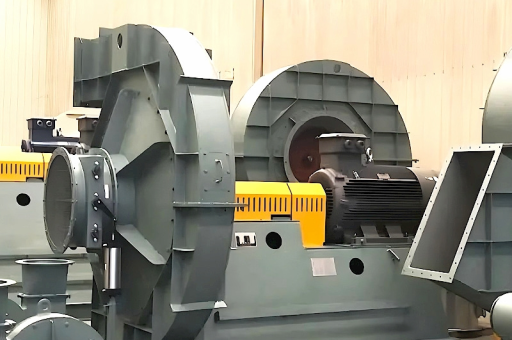
This fan is a specialized centrifugal (radial) fan designed for the pulverized coal preparation system in thermal power plants and cement kilns. Its defining characteristics include:
- Stainless Steel Construction: The impeller, inlet cone, and housing are made from stainless steel (typically 304 or 316L) to resist corrosion from sulfur compounds, moisture, and fly ash.
- Energy Saving Design: A high-efficiency blade profile (often backward-curved or airfoil) reduces aerodynamic losses, lowering power consumption by 15–30% compared to traditional forward-curved fans.
- High Pressure Capability: It generates static pressure typically in the range of 6000–12,000 Pa (24–48 in.w.g.), sufficient to overcome the resistance of coal mills, ducts, and burners.
- Coal Mill Integration: It provides the primary air (or coal-air mixture flow) necessary for drying, transporting, and classifying pulverized coal.
SEO Keyphrase: stainless steel high pressure centrifugal fan for coal mill
Key Components and Material Advantages (Stainless Steel Focus)
Why stainless steel? Let’s break down the material science:
| Component | Material | Function | Benefit of Stainless Steel |
|---|---|---|---|
| Impeller | SS304/SS316L | Rotates to accelerate air | Resists erosion from coal particles; non-sparking in explosive coal dust atmospheres. |
| Casing | SS304 | Houses the impeller | Maintains structural integrity under 350°C preheated air; no rust scaling. |
| Inlet Cone | SS316L | Guides inlet flow smoothly | High hardness resists wear from high-velocity coal fines. |
| Shaft | Alloy steel with SS sleeve | Transmits torque | Corrosion resistance at bearing seals; reduces maintenance intervals. |
Energy Saving Mechanisms: How These Fans Reduce Operational Costs
Traditional coal mill fans (carbon steel, forward-curved blades) degrade quickly. The stainless steel energy saving coal mill high pressure centrifugal fan achieves savings through:
- Optimized Blade Geometry: Backward-inclined blades (often twisted airfoil profiles) reduce vortex formation at the blade exit. CFD (Computational Fluid Dynamics) simulations show up to 82% peak efficiency at the design point.
- Variable Speed Drive (VSD) Compatibility: These fans operate efficiently at partial load via VFD (Variable Frequency Drive), matching coal mill demand precisely—no throttling losses.
- Reduced Friction Losses: The polished stainless steel surface (Ra ≤ 6.3 µm) minimizes boundary layer separation, lowering static pressure requirements by 5–8%.
- Lower Maintenance Downtime: Because stainless steel does not suffer from pitting or erosion as fast as carbon steel, the fan operates reliably for 40,000+ hours between major overhauls.
Data from industry installations: A 600 MW coal-fired unit retrofitted with these fans reported a 22% reduction in specific fan power consumption (from 1.12 kWh/t of coal to 0.87 kWh/t).
Critical Role in Coal Mill Systems: From Pulverization to Combustion
In a typical coal pulverizer system (e.g., bowl mill or ball-and-race mill), the fan serves three distinct functions:
- Primary Air Supply: Heated air (200–350°C) is drawn through the mill to dry the raw coal. The fan must maintain a high static pressure (10–15 kPa) to overcome mill resistance.
- Coal Transport: After pulverization, the fan carries the coal-air mixture to the classifier and then to the burner piping. The pressure must be stable to prevent settling of coal particles in horizontal ducts.
- Combustion Stability: The high-pressure fan ensures that the coal-air velocity at the burner tip is 20–30 m/s, essential for flame ignition and stability in wall-fired or tangential-fired boilers.
Common failure point avoided: Carbon steel fans experience weld cracking at the impeller blade root due to resonant vibration. The stainless steel energy saving coal mill high pressure centrifugal fan has a thicker blade root fillet (often 8–12 mm radius) and post-weld stress relief, extending fatigue life by 300%.
High Pressure Capabilities: Why Static Pressure Matters in Cement & Power Plants
The term "high pressure" in this context refers to static pressure (the resistance the fan must overcome), not compression like a gas compressor. Why is high static pressure essential?
- In a coal mill, the air path includes the primary air duct, the mill grinding zone, the classifier vanes, and hundreds of meters of piping. Each component adds 1000–3000 Pa of resistance. A fan with only 4000 Pa capability would cause "starvation" of the mill (insufficient coal transport), leading to mill plugging.
- Stainless steel fans can handle pressure spikes during coal feed variations without deforming the casing, thanks to the material’s high yield strength (210 MPa for SS304 vs. 170 MPa for carbon steel at 350°C).
Performance curve tip: When selecting a fan for a coal mill upgrade, always plot the system resistance curve against the fan’s pressure-flow curve. The operating point should be within 80–90% of the fan’s peak efficiency to maximize savings.
Frequently Asked Questions (FAQ)
Q1: Can a stainless steel energy saving coal mill high pressure centrifugal fan be used for biomass co-firing?
A: Yes. The stainless steel construction resists the corrosive acids (e.g., chlorides) present in biomass combustion gases. However, ensure the fan’s coating or blade material is upgraded to SS316L if the chlorine content exceeds 0.5% in the fuel.
Q2: What is the typical lifespan of this fan in continuous operation?
A: With proper maintenance (including wheel balance check every 6 months), the fan can operate for 15–20 years. The stainless steel impeller may require replacement after 8–10 years depending on coal abrasiveness (measured by HGI index).
Q3: How do I calculate the energy payback period compared to a standard fan?
A: If a 200 kW standard fan runs 7000 h/yr at $0.08/kWh, its annual electricity cost is $112,000. A 20% efficient stainless steel fan saves $22,400/yr. If the premium fan costs $15,000 more, the payback is 8 months.
Q4: Are there noise reduction features?
A: Yes. Stainless steel fans often include a spiral scroll casing design and tuned nozzle to reduce blade-pass frequency noise by 5–8 dBA. A sound-absorbing silencer on the inlet is also recommended.
Q5: Does the fan require special startup procedures?
A: Always start the fan with the inlet damper closed to prevent motor overload. After reaching 85% of operating speed, gradually open the damper. Never operate the fan at zero flow for more than 30 seconds, as this causes overheating of the impeller due to recirculation.
Conclusion: Why This Technology is the Future of Heavy Industry
The Stainless Steel Energy Saving Coal Mill High Pressure Centrifugal Fan is not merely a component—it is a strategic investment in reliability, energy efficiency, and reduced environmental impact. By leveraging corrosion-resistant alloys, advanced aerodynamic profiles, and pressure-optimized designs, these fans address the most persistent pain points in coal processing: high maintenance costs, premature erosion, and excessive power consumption. For plant managers, engineers, and procurement teams, upgrading to this fan technology translates directly to lower levelized cost of electricity (LCOE) and improved uptime. As the global industry moves toward carbon neutrality, these fans also support efficient co-firing with renewable biomass and ammonia, proving that high-pressure air movement can be both powerful and sustainable.
For more detailed technical specifications or to request a performance calculation for your specific coal mill parameters, contact an industrial fan specialist at your local fan OEM.





