
This article's table of contents introduction:
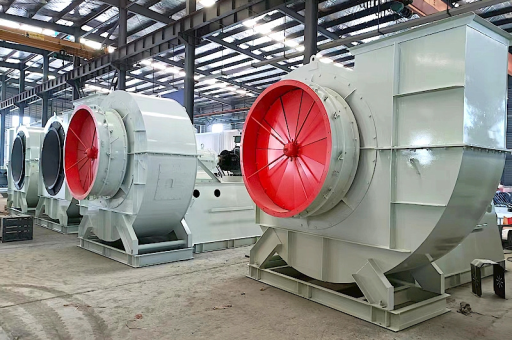
- Introduction: The Heart of Modern Boiler Systems
- Core Engineering: What is a Backward Curved Impeller?
- The "Induced Draught" Function: How It Works
- Why "Large Capacity" Matters for Industrial Boilers
- Key Performance Benefits vs. Forward Curved Fans
- Critical Design Features for Durability
- Application Scenarios: Where This Fan Excels
- Installation, Maintenance & Best Practices
- Frequently Asked Questions (FAQ)
- Conclusion: Choosing the Right Fan for Your System
Here is a comprehensive, SEO-optimized article in English about the Large Capacity Backward Curved Induced Draught Centrifugal Boiler Fan. This content is designed to rank well on Bing and Google by combining technical depth, practical Q&A, and clear structural headings.
Article Title:
Mastering Industrial Combustion: The Ultimate Guide to the Large Capacity Backward Curved Induced Draught Centrifugal Boiler Fan
Table of Contents (Directory Guide)
- Introduction: The Heart of Modern Boiler Systems
- Core Engineering: What is a Backward Curved Impeller?
- The "Induced Draught" Function: How It Works
- Why "Large Capacity" Matters for Industrial Boilers
- Key Performance Benefits vs. Forward Curved Fans
- Critical Design Features for Durability
- Application Scenarios: Where This Fan Excels
- Installation, Maintenance & Best Practices
- Frequently Asked Questions (FAQ)
- Conclusion: Choosing the Right Fan for Your System
Introduction: The Heart of Modern Boiler Systems
In the demanding world of industrial power generation, chemical processing, and large-scale heating, the efficiency of a boiler directly correlates with the performance of its air movement system. While many components contribute to combustion, one piece of rotating equipment stands above the rest when dealing with high temperatures, particulate-laden gases, and massive flow requirements: the Large Capacity Backward Curved Induced Draught Centrifugal Boiler Fan.
This mechanical workhorse is not merely a fan; it is a precision-engineered system designed to overcome the resistance of boiler ducts, heat exchangers, and emission control equipment (like scrubbers and baghouses). It creates a negative pressure (draft) within the boiler furnace, pulling hot flue gases through the system and expelling them safely up the stack.
This article will dissect every aspect of this specialized fan—from its backward curved blade aerodynamics to its heavy-duty construction—offering engineers, plant managers, and procurement specialists a deep, actionable understanding of the technology.
Core Engineering: What is a Backward Curved Impeller?
To understand the fan, you must first understand the wheel. Unlike a simple propeller fan, a centrifugal fan accelerates air radially. The backward curved blade (also known as backward inclined or backward leaning) is the defining feature.
How it works: The blades curve away from the direction of rotation. When the impeller spins, the air is trapped between the blades and thrown outward by centrifugal force. The backward curve creates a smooth, gradual discharge path.
The Aerodynamic Advantage:
- High Efficiency: The blade profile minimizes turbulence and friction losses. This design converts kinetic energy to pressure energy with less slip than forward curved designs.
- Non-Overloading Power Curve: This is the single most critical feature for boiler applications. As gas flow increases, the power draw of a backward curved fan peaks and then actually declines. This protects the motor from burn-out if the system resistance drops unexpectedly (e.g., a broken duct panel).
- Handling Particulates: The angled blades are less likely to collect dust and ash compared to radial or forward curved blades. They are inherently self-cleaning.
The "Induced Draught" Function: How It Works
In boiler engineering, fans perform two primary roles: Forced Draught (FD) and Induced Draught (ID). Our focus is on the ID fan.
The Negative Pressure System:
- FD Fan: Pushes fresh air into the furnace.
- Combustion: The air mixes with fuel, burning to create hot flue gases.
- ID Fan (Our Fan): Located at the exit of the boiler (after the economizer and scrubber), it pulls the dirty, hot gas through the system.
The ID fan maintains a slight negative pressure (typically -0.5 to -2 inches of water gauge) in the furnace. This is a safety and efficiency requirement. If the pressure becomes positive, hot gases and flames can be forced out of the boiler casing, posing a severe safety hazard.
Why Centrifugal ID? Axial fans can move large volumes, but they struggle against the high static pressure caused by pollution control equipment. A Large Capacity Backward Curved Centrifugal Fan excels because it generates high static pressure (resistance overcoming) while maintaining a stable flow rate, even with fluctuating inlet gas temperatures and densities.
Why "Large Capacity" Matters for Industrial Boilers
"Large Capacity" in this context refers to both high volumetric flow (CFM or m³/h) and high static pressure capability. A typical large industrial boiler (100 MW or more) requires moving millions of cubic feet of gas per hour.
Scaling Up the Design:
- Massive Impellers: Impeller diameters can exceed 3 meters (10 feet).
- High Torque Drives: These fans require motors exceeding 1,000 kW (1,300 HP), often connected via a fluid coupling or VFD (Variable Frequency Drive) for soft start and speed control.
- Structural Integrity: The housing, shaft, and bearings must withstand the massive centrifugal forces of a spinning steel rotor weighing several tons.
Without a "Large Capacity" design, the boiler cannot achieve its maximum combustion rate, leading to reduced steam output. The fan must be sized precisely to match the "gas path resistance curve" of the entire boiler system.
Key Performance Benefits vs. Forward Curved Fans
The choice between backward curved (BC) and forward curved (FC) is a classic engineering decision. Here is why BC wins for boiler ID duty.
| Feature | Backward Curved (ID Fan) | Forward Curved (General HVAC) |
|---|---|---|
| Peak Efficiency | 75% - 85% | 55% - 65% |
| Power Curve | Non-Overloading (Safe) | Overloading (Motor danger in high flow) |
| Speed (RPM) | Higher | Lower |
| Noise | Lower (Smooth air exit) | Higher (Turbulence) |
| Blade Strength | Stronger (Blades lean back) | Weaker (Blades scoop forward) |
| Contaminant Handling | Excellent (Self-cleaning) | Poor (Clogs easily) |
The Verdict: While a forward curved fan is cheaper and quieter at low speeds, it is dangerous in a boiler environment. If the resistance drops in the system, a forward curved fan will draw excessive power and burn out the motor. The non-overloading horsepower characteristic of the backward curved fan is the safety net that plant operators rely on.
Critical Design Features for Durability
A boiler ID fan operates in a harsh environment. Standard fans will fail quickly. Here are the specific design features of a heavy-duty model:
- Robust Shaft & Bearings: The shaft must be oversized to handle high radial loads from the weight of the impeller and the belt/pulley tension (or direct drive torsional stress). Fans on the fan domain use spherical roller bearings with continuous oil lubrication systems.
- Wear Protection: Because the gas contains abrasive fly ash, the impeller blades and housing are protected with:
- Hard facing: Stellite or chrome carbide weld overlay on blade leading edges.
- Wear liners: Replaceable steel plates bolted to the housing.
- High-Temperature Construction: The fan must handle gas temperatures from 150°C to 400°C (300°F to 750°F). The shaft is often cooled by a fan on the bearing housing or a water-cooled bearing pedestal to prevent heat migration into the lubricant.
- Stiffened Housing: Large housings are prone to vibration. Heavy-duty stiffeners and a split housing design (for easy impeller removal) are standard.
Application Scenarios: Where This Fan Excels
This fan is not a general-purpose unit. It is designed for specific industrial verticals:
- Coal-Fired Power Plants: The primary application. Pulling high-ash flue gas through electrostatic precipitators.
- Biomass Boilers: Burning wood chips or agricultural waste creates sticky, corrosive flue gas. The backward curve design prevents fouling.
- Waste-to-Energy (WtE) Plants: Extremely corrosive conditions due to acid gases. Fans often require Inconel or high-alloy steel construction.
- Cement & Lime Kilns: Handling large volumes of high-temperature, abrasive exhaust gas.
- Chemical Recovery Boilers (Pulp & Paper): Pulling highly corrosive, hot gases containing sodium compounds.
Installation, Maintenance & Best Practices
Proper installation is key to achieving the 20+ year lifespan expected of these fans.
Installation Tips:
- Foundation: Must be massive and rigid to dampen vibration. A concrete inertia block is recommended.
- Inlet Ducting: The inlet duct should be straight for at least 4 duct diameters before the fan bell mouth to ensure uniform flow. Turbulence at the inlet causes pre-rotation, reducing efficiency.
- Dampers: Inlet guide vanes are preferred over discharge dampers for controlling flow, as they improve efficiency at part-load.
Maintenance Checklist:
- Weekly: Check bearing temperature (via thermocouple) and vibration levels. Listen for unusual "rubbing" sounds.
- Monthly: Inspect wear liners for holes. Clean the impeller blades of any accumulated dust (build-up causes imbalance).
- Annually: Perform a non-destructive test (NDT) on the impeller welds. Check the alignment between motor and fan shaft. Replace grease or oil in bearings.
Frequently Asked Questions (FAQ)
Q1: What is the difference between an ID fan and an FD fan? A: The FD (Forced Draft) fan pushes cold fresh air into the boiler. The ID (Induced Draft) fan pulls hot flue gas out of the boiler. The ID fan must handle higher temperatures, dirtier air, and is usually larger in diameter due to the lower density of hot gas.
Q2: Why is the backward curved blade considered "non-overloading"? A: In this design, the peak power consumption occurs at a specific point on the performance curve. If the system resistance drops (increasing flow), the power required by the fan actually drops. This prevents the motor from drawing current that exceeds its rated capacity.
Q3: Can this fan handle corrosive gases? A: Yes, but it requires material changes. Standard mild steel will corrode quickly. For corrosive applications, the impeller and housing are made from stainless steel (SS 316/L), duplex steel, or coated with fiberglass reinforced plastic (FRP) for lower temperatures.
Q4: How do I calculate the required capacity for my boiler? A: You need to know three things:
- Air Mass Flow: Based on the fuel consumption rate and stoichiometric air requirements.
- Static Pressure: The sum of all pressure drops through the furnace, tubes, economizer, and pollution control equipment.
- Gas Temperature: The actual temperature at the fan inlet (hot gas requires a larger fan due to lower density). A qualified engineer should perform a fan selection curve analysis.
Q5: What is the typical lifespan of the impeller? A: With proper maintenance and reasonable fly ash levels, a backward curved impeller with wear protection can last 5 to 10 years before needing replacement. Hard facing on the blades extends this significantly.
Conclusion: Choosing the Right Fan for Your System
The Large Capacity Backward Curved Induced Draught Centrifugal Boiler Fan is the undisputed champion of high-performance industrial exhaust systems. Its non-overloading characteristic provides essential safety, while its backward-inclined blades offer superior efficiency and self-cleaning capability.
When selecting a fan, do not just look at the price tag. Consider the Total Cost of Ownership (TCO). A high-quality fan from a reputable manufacturer—with features like replaceable wear liners, heavy-duty bearings, and precision balancing—will save your plant significant downtime and energy costs over its operational life.
For reliable and durable boiler operations, always prioritize the engineering of the fan. Whether you are upgrading an existing power plant or commissioning a new biomass facility, this fan technology remains the most robust and efficient solution for handling the industry's most demanding air moving challenges.
For specific engineering data sheets or performance curves for your specific boiler model, consult the fan manufacturer directly or visit the fan domain for technical specifications.





