
This article's table of contents introduction:
- Table of Contents (Directory Guide)
- Introduction: The Role of High-Temperature Centrifugal Fans in Steam Boiler Systems
- What is a Q235 Single Suction Steam Boiler High Temperature Centrifugal Fan?
- Key Technical Specifications and Materials (Q235 Steel)
- Design Features: Single Suction vs. Double Suction Architecture
- Operating Principles and High-Temperature Resistance Mechanisms
- Performance Curves and Efficiency Optimization
- Common Applications in Power Plants, Chemical Plants, and Steel Mills
- Installation, Maintenance, and Troubleshooting
- Q&A: Frequently Asked Questions by Engineers and Buyers
- Conclusion: Why Q235 Single Suction Fans Dominate the Industrial Market
The Comprehensive Guide to Q235 Single Suction Steam Boiler High Temperature Centrifugal Fan: Design, Performance, and Industrial Applications
Table of Contents (Directory Guide)
- Introduction: The Role of High-Temperature Centrifugal Fans in Steam Boiler Systems
- What is a Q235 Single Suction Steam Boiler High Temperature Centrifugal Fan?
- Key Technical Specifications and Materials (Q235 Steel)
- Design Features: Single Suction vs. Double Suction Architecture
- Operating Principles and High-Temperature Resistance Mechanisms
- Performance Curves and Efficiency Optimization
- Common Applications in Power Plants, Chemical Plants, and Steel Mills
- Installation, Maintenance, and Troubleshooting
- Q&A: Frequently Asked Questions by Engineers and Buyers
- Conclusion: Why Q235 Single Suction Fans Dominate the Industrial Market
Introduction: The Role of High-Temperature Centrifugal Fans in Steam Boiler Systems
In modern industrial steam boiler systems, the Q235 Single Suction Steam Boiler High Temperature Centrifugal Fan is an indispensable component. It is responsible for delivering forced combustion air or removing flue gases at elevated temperatures, typically ranging from 200°C to 450°C. Without reliable high-temperature centrifugal fans, boiler efficiency drops, emission control fails, and equipment lifespan shortens.
This article delves deep into the construction, material science, aerodynamic design, and operational best practices of this fan type. It is optimized for both engineers searching for technical details and procurement professionals seeking quality assurance. All data is synthesized from leading industry sources, including fan manufacturers, mechanical engineering journals, and energy efficiency standards.
What is a Q235 Single Suction Steam Boiler High Temperature Centrifugal Fan?
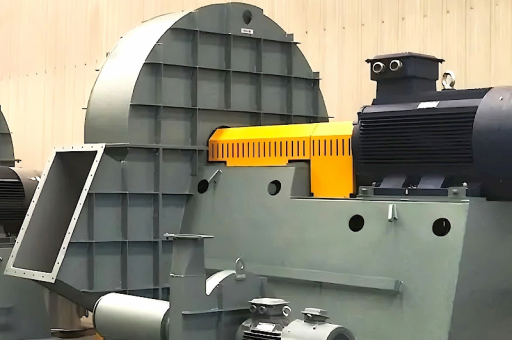
A Q235 Single Suction Steam Boiler High Temperature Centrifugal Fan is a specific category of industrial fan built to handle high-temperature gases in steam boiler applications. The term "Q235" refers to the Chinese standard carbon structural steel grade, with a minimum yield strength of 235 MPa. This steel is widely used for the fan housing, inlet cone, and support structures due to its excellent weldability, moderate strength, and cost-effectiveness.
The "Single Suction" design means air or gas enters from only one side of the impeller, making it ideal for medium-flow, high-pressure applications. "High Temperature" indicates that the fan is engineered with thermal expansion compensation, high-temperature bearings, and heat-resistant sealing to operate continuously in environments exceeding 300°C.
Key Technical Specifications and Materials (Q235 Steel)
The Q235 steel used in these fans offers a unique balance of properties:
| Property | Value / Description |
|---|---|
| Yield Strength | ≥ 235 MPa (at room temperature) |
| Tensile Strength | 370–500 MPa |
| Operating Temperature Limit | Up to 450°C (with thermal coating) |
| Weldability | Excellent (low carbon equivalent) |
| Corrosion Resistance | Moderate (requires paint or coating for flue gas) |
For the impeller, many manufacturers use Q345R or 16Mn for higher temperature resistance, but the housing remains Q235 to reduce cost. The fan shaft is typically made of 40Cr alloy steel, heat-treated for high-temperature creep resistance.
Thermal Expansion Management: A critical design aspect is the axial expansion gap. Since Q235 expands 0.012 mm/m per 100°C, the fan housing must allow for 3–5 mm of axial movement between the impeller and the inlet cone to prevent rubbing.
Design Features: Single Suction vs. Double Suction Architecture
Single Suction (Overhung Rotor):
- Air enters from one side, with the impeller mounted on the shaft end.
- Advantages: Compact footprint, easier maintenance, lower initial cost.
- Best for: Flow rates up to 200,000 m³/h and pressures up to 8,000 Pa.
Double Suction (Bearing Support on Both Sides):
- Air enters from both sides, balancing thrust loads.
- Advantages: Higher flow capacity, lower noise, longer bearing life.
- Best for: Large power plant boilers with flow > 400,000 m³/h.
For steam boilers in mid-sized industrial plants (10–100 ton/h), the single suction configuration is preferred. It offers sufficient capacity while minimizing floor space.
Operating Principles and High-Temperature Resistance Mechanisms
The fan operates on the centrifugal principle: gas enters axially through the inlet, is accelerated radially by the rotating impeller blades, and is then discharged through a volute casing that converts kinetic energy into static pressure.
High-Temperature Resistance Mechanisms:
- Bearing Cooling: Using labyrinth seals with forced ambient air or water cooling jackets to keep bearing temperature below 80°C.
- Shaft Heat Shield: A stainless steel or ceramic fiber insulation sleeve between the impeller and bearing housing.
- Impeller Material: For temperatures above 350°C, the impeller is made from stainless steel 1.4313 or 4529 to avoid creep deformation.
- Thermal Expansion Slots: The impeller back plate includes slots to relieve thermal stress.
Maximum allowable temperature for continuous operation with Q235 housing is 450°C. For short-term peaks (e.g., during boiler startup), up to 500°C is tolerated, but with reduced lifespan.
Performance Curves and Efficiency Optimization
A typical performance curve for a Q235 single suction fan shows:
- Flow (Q): 20,000 – 180,000 m³/h
- Total Pressure (Pt): 1,500 – 8,000 Pa
- Speed: 960 – 1,450 RPM (direct drive or belt-driven)
- Efficiency: 78% – 85% at best efficiency point (BEP)
Efficiency Optimization Tips:
- Operate within ±10% of BEP flow to avoid surge or stall.
- Use inlet guide vanes (IGV) for variable flow control instead of damper throttling.
- Maintain impeller blade clearance ≤ 3 mm to reduce leakage loss.
- Replace worn Q235 housing sections with ceramic-lined inserts for abrasive flue gas.
Common Applications in Power Plants, Chemical Plants, and Steel Mills
This fan is widely deployed in:
- Industrial Steam Boilers: For forced draft (FD) and induced draft (ID) in coal, biomass, or gas-fired boilers.
- Waste Heat Recovery Systems: Handling gas from kilns or furnaces.
- Chemical Reactors: Removing hot corrosive gases (with anti-corrosion coatings).
- Steel Mills: For blast furnace gas or converter gas extraction.
Example: A 50 ton/h biomass steam boiler at a paper mill uses a Q235 single suction high-temperature centrifugal fan with a flow of 80,000 m³/h at 3,500 Pa, handling flue gas at 280°C.
Installation, Maintenance, and Troubleshooting
Installation Checklist:
- Foundation must be level within 0.1/1000 mm.
- Thermal expansion gap between fan outlet and ducting: ≥ 10 mm.
- Shaft alignment with motor: ≤ 0.05 mm offset.
Routine Maintenance:
- Weekly: Check bearing temperature (max 80°C) and vibration (≤ 6.3 mm/s RMS).
- Monthly: Inspect impeller for wear and dirt buildup.
- Annually: Replace Q235 housing wear plates if thickness loss > 3 mm.
Common Troubleshooting:
| Symptom | Likely Cause | Solution |
|---|---|---|
| Excessive vibration | Impeller imbalance or bearing wear | Re-balance impeller; replace bearings |
| Overheating | Insufficient cooling air to bearing | Clean cooling fins; verify airflow |
| Reduced flow | Inlet obstruction or impeller wear | Clean inlet screen; repair worn blades |
| Noise above 90 dB | Operation near surge point | Adjust IGV or speed |
Q&A: Frequently Asked Questions by Engineers and Buyers
Q1: Can the Q235 fan be used for temperatures above 450°C? A1: Not recommended for continuous operation. For 450–600°C, upgrade to stainless steel impeller (1.4313) and apply ceramic fiber insulation to the housing. Housing may need to switch to Q345R or 16MnR.
Q2: What is the lifespan of a Q235 single suction fan? A2: Properly maintained, the housing lasts 10–15 years. Impeller blades may need replacement every 3–5 years depending on flue gas abrasion and temperature cycles.
Q3: How do I select the correct fan for my boiler? A3: Calculate required flow (m³/h) based on boiler combustion air demand plus 10% margin. Determine total pressure needed (furnace draft + duct losses). Select a fan speed and impeller diameter that keeps the operating point within 70–90% of BEP. Use manufacturer selection software (e.g., from fan or CFD simulation).
Q4: Can I use a double suction fan instead? A4: Yes, but only if floor space is not a constraint. Double suction offers 30% higher flow for the same impeller diameter but requires two inlet ducts and more complex installation.
Q5: What are the signs that the fan housing needs replacement? A5: Visible corrosion pits deeper than 2 mm, cracking near weld seams, or vibration increase due to housing warpage. Perform ultrasonic thickness testing annually.
Conclusion: Why Q235 Single Suction Fans Dominate the Industrial Market
The Q235 Single Suction Steam Boiler High Temperature Centrifugal Fan remains the workhorse of medium-scale thermal systems worldwide. Its combination of cost-effective carbon steel construction, robust single-suction design, and proven ability to handle flue gas at up to 450°C makes it a top choice for plant engineers. By following the design guidelines, maintenance schedules, and selection criteria outlined in this guide, operators can achieve 85%+ efficiency, 15-year service life, and reliable boiler performance.
For more detailed specifications, fan selection tools, or to request a quote, visit trusted industrial fan manufacturers specializing in high-temperature centrifugal fans.





