
This article's table of contents introduction:
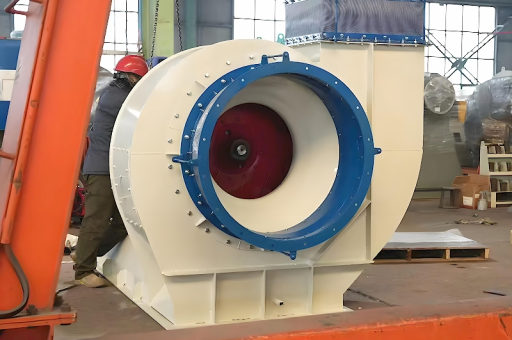
- The Core Challenge: The "Dirty-Hot" Trilemma
- The #1 Energy Waste: Fouling & Wear
- Control Strategy: The VFD is the Star, But Use It Correctly
- Aerodynamic Design: Efficiency at the "Sweet Spot"
- Drive System Efficiency: The Final 5%
- System-Level "Soft" Savings (Often Overlooked)
- Summary Action Plan for an Energy Audit
- Conclusion: The Most Cost-Effective Path
This is a highly specialized and challenging application. Moving dust-laden gas at high temperatures (often >250°C / 482°F) requires robust, heavy-duty equipment. The fan (often an industrial ID fan or induced draft fan) is frequently the single largest power consumer in the system, making energy efficiency a critical financial and operational goal.
However, the "high volume, high temperature, metallurgy dust" constraints create a tension between standard energy-saving methods and the need for reliability and safety.
Here is a structured breakdown of how to approach energy savings for this specific type of fan, from design selection to operational strategy.
The Core Challenge: The "Dirty-Hot" Trilemma
- High Temperature: Impellers must be made of specialized alloys (like Hastelloy or 310S stainless steel), requiring more rigid, heavier designs. Bearings and drive systems need external cooling.
- High Volume (Dust Load): The fan must overcome high system pressure drop from baghouses, ESPs, or scrubbers. The dust causes abrasive wear on impeller blades and housings, destroying aerodynamic efficiency over time.
- Metallurgy Dust (Sticky/Fine): Particles can be fine, sticky, and sometimes explosive (e.g., aluminum, zinc, carbon). This leads to fouling (buildup) on blades, causing severe imbalance and efficiency loss.
A standard "VFD + Premium Motor" approach is essential but insufficient on its own. You must manage the degradation of the fan.
The #1 Energy Waste: Fouling & Wear
The most significant energy reduction opportunity is not in the drive, but in keeping the fan clean and aerodynamically efficient.
- Issue: As dust builds up on the back of impeller blades, the blade profile changes from an efficient airfoil to an inefficient lump. The fan must spin faster (use more power) to move the same volume of gas.
- Energy Saving Strategy:
- In-Situ Cleaning: Install a water spray system or compressed air soot blowers (e.g., acoustic horns, air cannons) to clean the impeller while running. This can reduce power consumption by 5-15% continuously.
- Anti-Fouling Coatings: Apply high-temp, low-friction coatings (e.g., ceramic-filled Teflon or proprietary nano-ceramic coatings) to the impeller. This prevents adhesion of sticky dust.
- Optimized Blades: Use backward-curved, high-efficiency blades (airfoil or hollow) that shed dust better than radial blades.
Control Strategy: The VFD is the Star, But Use It Correctly
A Variable Frequency Drive (VFD) is mandatory for high-volume applications. But the control law is critical.
- Avoid "Damper Control": Throttling a fan inlet damper wastes huge amounts of energy (like driving with one foot on the brake). Use the VFD to control speed.
- The Fan Laws (Cubic Relation): Power is proportional to speed cubed. A 10% reduction in speed yields a 27% reduction in power.
- Caution: The system pressure drop must allow for this. If the process (e.g., furnace off-gas) requires a minimum volume, you cannot reduce speed below that point.
- Closed-Loop Control: Use a pressure transmitter after the filter (or a process draft gauge at the furnace) to set the fan speed. Don't run faster than necessary.
Aerodynamic Design: Efficiency at the "Sweet Spot"
High-temp fans are often over-sized for safety, leading to operation far from their "Best Efficiency Point" (BEP). This is a major energy trap.
- Fan Selection is Key:
- Backward-Inclined (BI) or Airfoil (AF): These are 15-25% more efficient than radial/radial-tip fans. However, they are more sensitive to abrasion and fouling.
- Radial-Tip (RT): More robust and less prone to wear, but lower efficiency (75-80% max).
- Strategy: For metallurgy dust, a heavy-duty, backward-inclined design with wear liners is the modern compromise for efficiency and longevity.
- Inlet Box Dampers: Ensure they are full-open when the fan is running at speed. A closed damper creates massive turbulence and energy loss.
- Inlet Cone & Diffuser: Ensure the inlet cone is perfectly aligned with the impeller eye. A misalignment of 1/4" can cause a 2-3% efficiency drop. A well-designed diffuser (outlet) can recover kinetic energy as static pressure, reducing required fan power.
Drive System Efficiency: The Final 5%
- Direct Drive vs. Belt Drive: For high-power (>200 HP), high-temp metallurgy fans, direct drive is almost always better. Belts slip, absorb energy (2-5% loss), and fail in hot environments.
- Coupling: Use a high-efficiency, low-maintenance coupling (e.g., grid coupling) or a lube-free disc coupling for long-term alignment.
- Motor: Premium Efficiency (IE3/IE4/NEMA Premium) motors are standard. For very high HP (>500 HP), a Synchronous Reluctance Motor (SynRM) can add another 2-5% efficiency over an Induction motor, but cost is higher.
- Harmonic Filters: For large VFDs, ensure a 5% or 12-pulse drive to minimize harmonic losses in the motor and upstream wiring.
System-Level "Soft" Savings (Often Overlooked)
- Leakage: Check for ductwork leaks after the fan. Leaking clean air back into the system wastes the fan's energy.
- Filter Condition (The "Filter-Fan" Balance): A dirty filter increases system resistance, forcing the fan to work harder.
- Strategy: Use a differential pressure transmitter across the filter. As the filter loads up, the VFD must increase speed to maintain volume. The energy saving is in changing filters at the optimal cost point (energy cost vs. filter cost).
- Temperature Impact on Density: Hot gases are less dense. This is a free energy saving. If you can pre-cool the gas (e.g., via a radiation cooler) before it reaches the fan, you reduce the mass flow and power required. But be careful not to cool it below the acid dew point.
Summary Action Plan for an Energy Audit
If you are auditing an existing system:
- Measure Actual Power: Use a power quality analyzer on the motor.
- Inspect the Impeller: How much buildup? Can it be cleaned in-situ? What is the current weight vs. clean weight?
- Check Operating Point: Plot the fan's actual flow (Q) vs. pressure (P) on the fan curve. Are you at the BEP? Are you running inefficiently against a damper?
- Assess Leakage: Check downstream ductwork for hot gas leaks.
- Evaluate Filter Condition: Log the delta-P over 30 days.
- Calculate the "Fouling Penalty": The power difference between a "clean" fan and a "dirty" fan is pure waste. This is often the highest ROI for retrofitting a cleaning system.
Conclusion: The Most Cost-Effective Path
- Immediate (Low/No Cost): Adjust the VFD setpoint to the minimum required process draft. Close any open bypass dampers. Clean the impeller.
- Short-Term (Medium Cost): Install an automatic impeller cleaning system. This will pay for itself in 6-12 months via reduced power and reduced vibration-related maintenance.
- Long-Term (High Cost, High Reward): Replace an old radial/radial-tip fan with a modern, high-efficiency backward-inclined fan (with proper coatings) and a more precise VFD control loop.
Final Note: For metallurgy dust (especially zinc, lead, or aluminum), safety is paramount. Dust explosions are a real risk. Never use a standard industrial fan. Ensure the fan is explosion-proof (ATEX or NFPA compliant) and designed with a rupture disc. Energy savings are worthless if the fan explodes.





