
This article's table of contents introduction:
- Table of Contents (Directory Guide)
- Introduction: The Intersection of Dust, Heat, and Mechanical Power
- Understanding the Core Components: Rotor Dynamics in Centrifugal Exhaust Fans
- The Electrical Motor: The Heartbeat of the Exhaust System
- Boiler Soot Blowers: Why They Depend on a Well-Designed Exhaust Fan
- Synergy of Systems: How Motor Efficiency Impacts Soot Blowing Performance
- Common Failures and Troubleshooting (FAQ Section)
- Conclusion: Optimizing Industrial Performance Through Component Integration
** The Critical Role of the Electrical Motor in Centrifugal Exhaust Fan Rotor Systems for Boiler Soot Blower Efficiency
Table of Contents (Directory Guide)
- Introduction: The Intersection of Dust, Heat, and Mechanical Power
- Understanding the Core Components: Rotor Dynamics in Centrifugal Exhaust Fans
- The Electrical Motor: The Heartbeat of the Exhaust System
- Boiler Soot Blowers: Why They Depend on a Well-Designed Exhaust Fan
- Synergy of Systems: How Motor Efficiency Impacts Soot Blowing Performance
- Common Failures and Troubleshooting (FAQ Section)
- Conclusion: Optimizing Industrial Performance Through Component Integration
Introduction: The Intersection of Dust, Heat, and Mechanical Power
In industrial power generation and heavy manufacturing, one of the most critical yet overlooked battles is fought against a silent enemy: soot. The accumulation of soot on boiler heat exchange surfaces reduces thermal efficiency, increases fuel consumption, and accelerates equipment wear. The solution lies in a sophisticated interplay of mechanical and electrical engineering, specifically involving the Electrical Motor, Centrifugal Exhaust Fan, Rotor, and Boiler Soot Blower.
This article dives deep into how these components work together to maintain clean boiler operations. We will explore the technical nuances of the centrifugal exhaust fan’s rotor design, the electrical motor’s power delivery, and the soot blower’s actuation. By the end, you will understand how optimizing one element—such as the motor’s torque curve—can drastically improve the entire system’s reliability and energy efficiency.
Understanding the Core Components: Rotor Dynamics in Centrifugal Exhaust Fans
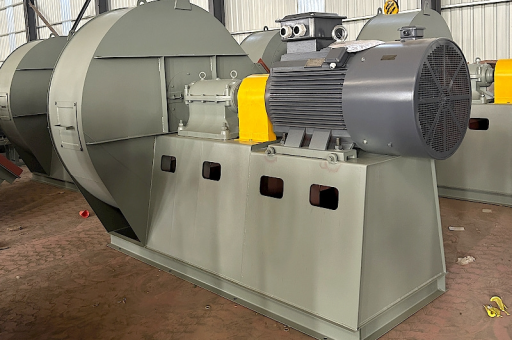
The Rotor: The Workhorse of Air Movement At the heart of any Centrifugal Exhaust Fan lies its Rotor (also known as the impeller). Unlike axial fans that move air parallel to the shaft, a centrifugal fan uses a rotating rotor to draw air into the center and expel it at a 90-degree angle. This design generates high static pressure, which is essential for overcoming the resistance of ductwork, filters, and the boiler’s internal pressure.
Key Rotor Design Parameters for Boiler Applications:
- Material Selection: Rotors in boiler soot blower systems must withstand high temperatures (often >300°C) and abrasive fly ash. Common materials include high-carbon steel or stainless steel with wear-resistant coatings.
- Blade Geometry: Backward-curved blades are preferred for high-efficiency, low-noise applications. Forward-curved blades offer higher volume but lower pressure—ideal when moving large volumes of cool air for combustion support.
- Balancing: A high-speed rotor (often 1500–3600 RPM) must be dynamically balanced to avoid vibration. Unbalance in the rotor not only reduces the life of the electrical motor bearings but also causes misalignment in the soot blower’s lance tube.
The Electrical Motor: The Heartbeat of the Exhaust System
Why the Motor Matters The Electrical Motor provides the mechanical torque required to spin the centrifugal fan rotor. In boiler soot blowing applications, the motor must deliver consistent power under fluctuating load conditions—especially when the soot blower is activated and the fan experiences a sudden drop in back pressure.
Motor Types Commonly Used:
- Induction Motors (Squirrel Cage): Most common due to their ruggedness. They are used in constant-speed applications where the fan runs continuously.
- Variable Frequency Drive (VFD) Motors: Increasingly popular. A VFD allows the motor speed to be adjusted, directly controlling the airflow. This is critical for modulating the exhaust during soot blowing cycles to avoid pulling flame into the ductwork.
Motor Sizing and Efficiency:
- The motor must be sized to handle both the fan’s running load and the starting inertia of the rotor. A common mistake is undersizing the motor for cost savings, leading to overheating during start-up.
- Efficiency is measured by the IE (International Efficiency) class. IE3 or IE4 motors are recommended for continuous boiler operation, offering 2–5% higher efficiency compared to IE2. Over a year, this translates to thousands of dollars in energy savings for a large industrial fan.
Boiler Soot Blowers: Why They Depend on a Well-Designed Exhaust Fan
The Role of the Soot Blower A Boiler Soot Blower is a device that ejects high-pressure steam, air, or water onto boiler tubes to dislodge soot deposits. However, blowing soot off the tubes is only half the battle. The dislodged particles must be evacuated from the boiler enclosure, or they will re-deposit on the tubes. This is where the centrifugal exhaust fan becomes indispensable.
The Exhaust Fan’s Critical Function:
- When the soot blower activates, a cloud of fine particulates is released. The Centrifugal Exhaust Fan must immediately increase its airflow to capture and transport these particles to the ash handling system.
- If the fan’s rotor is mismatched to the motor’s speed, or if the motor lacks the torque to ramp up quickly, the soot cloud can back up and settle on sensitive components like superheater tubes.
Integration Points:
- Interlocks: Modern systems use a PLC to interlock the soot blower with the exhaust fan motor. When the blower starts, the motor receives a signal to increase speed (if VFD-controlled) or to open an auxiliary damper (if constant-speed).
- Pressure Sensors: A differential pressure sensor across the fan monitors the static pressure loss due to soot loading on the blades. High differential pressure signals the need for a cleaning cycle or fan maintenance.
Synergy of Systems: How Motor Efficiency Impacts Soot Blowing Performance
Real-World Example: Consider a 500 MW coal-fired boiler. The exhaust fan system includes a 450 kW induction motor driving a 1.2-meter diameter centrifugal rotor. During soot blowing, the motor draws 20% more current to handle the transient load. If the motor is IE2-class, its efficiency drops from 94% to 91% at this higher load, wasting energy and generating heat.
Optimization Strategy:
- Upgrade to a VFD + IE4 Motor: This combination allows the motor to run at optimal efficiency across all speeds. During non-blowing periods, it can run at 70% speed, cutting energy use by 50% (since fan power is proportional to the cube of speed).
- Rotor Blade Cleaning: Regular cleaning of the fan rotor (using compressed air or manual wash) prevents material buildup, which would otherwise increase the motor’s load and reduce its lifespan.
- Bearing Monitoring: Shock pulse measurements on the motor and fan bearings can detect early rotor imbalance or misalignment, preventing catastrophic failure during a soot blowing cycle.
Common Failures and Troubleshooting (FAQ Section)
Q1: Why does my motor overheat during soot blowing?
- Answer: This is often due to an undersized motor or a fan rotor that is heavily fouled with soot. Check the rotor blades for buildup. Also, verify that the motor’s cooling fan is clean. If the problem persists, consider upgrading to a motor with a higher service factor (e.g., 1.15).
Q2: My centrifugal fan vibrates excessively when the soot blower is running. Why?
- Answer: This indicates a dynamic imbalance. The soot blower’s steam injection can cause condensation, which can wet the fly ash and stick to the rotor blades. This changes the rotor’s balance. Immediate action: inspect and clean the rotor. For permanent fix, install a blade wash system.
Q3: Can I use a standard HVAC fan motor for a boiler soot blower exhaust?
- Answer: No. Standard HVAC motors are not designed for high-temperature environments (ambient temperature near the boiler can exceed 70°C) or for continuous heavy loading. You need a motor with class H insulation (180°C) and sealed bearings.
Q4: How often should the electrical motor be replaced in this application?
- Answer: With proper maintenance (greasing, cleaning, vibration monitoring), a motor can last 15–20 years. However, if the fan rotor is not balanced, the motor bearings can fail within 2 years. Replace the motor only after confirming that the rotor and coupling are in good condition.
Q5: What is the optimal airflow speed for the exhaust fan during soot blowing?
- Answer: The ideal velocity depends on the particle size. For typical fly ash, a duct velocity of 15–20 m/s (3000–4000 FPM) is recommended. Too low, and particles settle; too high, and erosion of the ductwork and fan rotor accelerates.
Conclusion: Optimizing Industrial Performance Through Component Integration
The Electrical Motor, Centrifugal Exhaust Fan Rotor, and Boiler Soot Blower form a trinity of interdependent components. Operators and maintenance engineers who treat these as isolated units often face recurring issues with vibration, overheating, and poor boiler efficiency. However, when the system is viewed holistically—with proper motor sizing, rotor design for dirty environments, and intelligent control interlocks—the benefits are substantial: lower energy costs, extended equipment lifespan, and significantly better heat transfer in the boiler.
Final Recommendations:
- Invest in a VFD to match the motor output to the real-time demand of the soot blowing cycle.
- Inspect the rotor at least quarterly for soot buildup and dynamic balance.
- Monitor motor current continuously. A gradual increase indicates impending rotor fouling or bearing wear.
- Use a high-efficiency motor (IE4) and pair it with a properly sized centrifugal fan to handle the peak load of soot blowing without overheating.
By understanding and respecting the synergy between these components, industry professionals can ensure that their boiler systems run cleaner, cooler, and more efficiently for decades.
Note: For further reading on specific product specifications, consider consulting technical datasheets from major industrial fan and motor manufacturers. Always follow local safety regulations when working on high-voltage equipment and high-temperature boiler systems.





