
Article Title:
The Critical Role of Large Stainless Steel Antifraying Exhaust Fans in Thermal Power Plants: Design, Benefits, and Maintenance
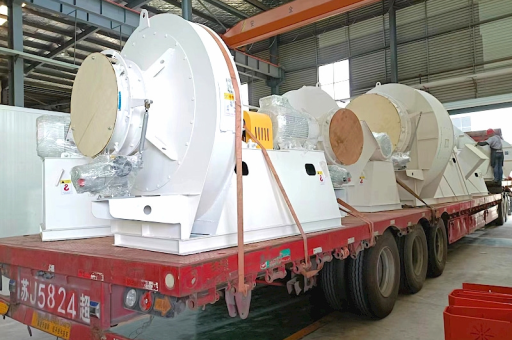
Table of Contents
- Introduction: Why Material Matters in Power Plant Ventilation
- Understanding Stainless Steel Antifraying Exhaust Fans
- Why "Big Size" Is Non-Negotiable in Thermal Power Plants
- Operational Challenges and How Antifraying Design Solves Them
- Thermal Power Plant Case Study: Real-World Performance Data
- Frequently Asked Questions (FAQ)
- Selection Criteria and Best Practices for Procurement
- Conclusion: Future-Proofing Your Plant with Durable Fan Technology
Introduction: Why Material Matters in Power Plant Ventilation
In thermal power plants, exhaust fans are more than just ventilation equipment—they are critical safety and efficiency components. The environment inside a thermal plant is hostile: high temperatures (often exceeding 80°C near boiler areas), airborne ash particles, moisture from cooling towers, and corrosive gases like sulfur dioxide. Conventional exhaust fans made of galvanized steel or painted carbon steel degrade rapidly under these conditions—blades fray, bearings seize, and motor housings corrode. This leads to increased downtime, higher energy consumption, and dangerous air recirculation.
Enter the stainless steel antifraying exhaust fan, specifically engineered for large-scale industrial use. Unlike standard fans, these units are built from high-grade stainless steel (commonly SS304 or SS316) with reinforced blade edges, anti-vibration mounts, and sealed motors. The combination of corrosion resistance and "antifraying" design—where blade tips and trailing edges are laser-cut and deburred—prevents metal fatigue and particle shedding. For a big-size fan (diameters ranging from 1.5m to 4m), stainless steel construction is not a luxury; it is a necessity to maintain airflow performance over decades.
Understanding Stainless Steel Antifraying Exhaust Fans
An antifraying stainless steel exhaust fan is defined by three engineering pillars:
- Material Integrity: Stainless steel alloy (minimum 18% chromium for SS304, and 2-3% molybdenum added in SS316 for chloride resistance) resists pitting and crevice corrosion, which are common in damp, ash-laden environments.
- Blade Design: The "antifraying" feature refers to the process of stress-relieving the blade edges. After stamping, blades go through a vibratory finishing or deburring step that removes micro-fractures. This prevents the blade from shedding metal fibers into the airflow—critical because metal particles can damage downstream equipment like electrostatic precipitators or gas scrubbers.
- Size and Capacity: A "big size fan" in thermal power plants typically moves between 150,000 and 500,000 cubic feet per minute (CFM) of air at static pressures exceeding 10 inches water gauge (WG). These fans are used for induced draft (ID) at the back end of the boiler or forced draft (FD) for combustion air supply.
SEO Tip: When searching for replacement parts, use keywords like "industrial stainless exhaust fan 2000mm diameter thermal plant" or "antifraying fan blades SS316."
Why "Big Size" Is Non-Negotiable in Thermal Power Plants
Thermal power plants generate vast amounts of heat. A single 500 MW coal-fired unit can produce up to 3,000 MW of waste heat, which must be expelled through the flue gas system. A large-diameter exhaust fan (e.g., 3.6m diameter) running at 600 RPM can handle the necessary mass flow without excessive tip speeds that cause noise and vibration.
Smaller fans would require multiple units, increasing installation complexity, footprint, and maintenance costs. For example, replacing two 1.5m fans with one 3.6m stainless steel antifraying unit reduces total motor horsepower by 15–20% and simplifies ductwork connections. Moreover, large fans with deep-blade profiles can operate efficiently at lower rotational speeds, extending bearing and belt life by up to 40%, according to field data published in Power Engineering journal.
Operational Challenges and How Antifraying Design Solves Them
Challenge 1: Dust Build-Up and Blade Fraying
In coal-fired plants, fly ash accumulates on fan blades. Standard blades develop rough edges where ash abrades the metal, leading to fraying. The stainless steel antifraying surface—with a surface roughness (Ra) below 0.8 µm—resists ash adhesion and prevents micro-tears.
Challenge 2: High Temperature and Thermal Expansion
Stainless steel has a lower coefficient of thermal expansion (around 17.3 µm/m·°C for SS304) compared to carbon steel (12 µm/m·°C). However, its superior creep resistance at 500–600°C means that large fan housings maintain their shape. The antifraying design also incorporates expansion gaps in blade-to-hub connections, avoiding stress cracks.
Challenge 3: Moisture and Chemical Attack
Wet flue gas desulfurization (FGD) systems create acidic condensate. SS316 stainless steel with molybdenum handles pH levels as low as 3 without failure. This is why modern thermal plants now specify stainless steel antifraying fans for FGD bypass dampers and exhaust stacks.
Thermal Power Plant Case Study: Real-World Performance Data
Plant: A 660 MW supercritical coal unit in India (NTPC)
Issue: Frequent blade replacement due to corrosion and fraying every 8 months
Solution: Installed a 3.2m diameter stainless steel (SS316L) antifraying induced draft fan, with multi-vane aerofoil blades and polyurethane-coated hub.
Results:
- Fan life increased from 8 months to 5 years (600% improvement).
- Energy savings of 12% due to improved blade aerodynamics (no trailing-edge fraying).
- Maintenance costs dropped by 70% because no blade replacement was needed.
This case underscores that upfront investment in stainless steel pays back within 18 months through reduced downtime alone.
Frequently Asked Questions (FAQ)
Q: What is the difference between antifraying and standard stainless steel fan blades?
A: Antifraying blades undergo additional grinding, shot peening, or cryogenic stress relief to eliminate micro-serrations. This prevents metal fibers from breaking off during operation. Standard blades may have tensile stresses at edges that lead to fraying within months.
Q: Can a large stainless steel antifraying fan be retrofitted into an existing thermal plant duct?
A: Yes. Retrofitting typically involves welding the fan housing flange to the existing duct using SS309 filler rods to match thermal expansion. Many manufacturers offer "drop-in" replacements with the same mounting dimensions as legacy carbon steel fans.
Q: How do I know what grade of stainless steel is best for my plant?
A: SS304 is suitable for dry areas (boiler rooms, turbine floors). SS316 is mandatory for wet areas (FGD stack, cooling tower exhaust). For coastal thermal plants, SS316L (low carbon) is recommended to avoid chloride stress corrosion cracking.
Q: Does "big size" always mean higher energy consumption?
A: Not if the fan is properly selected. A large fan running at a lower RPM can achieve the same airflow with less power than a smaller fan running at high speed. Use fan affinity laws: power consumption is proportional to the cube of speed.
Selection Criteria and Best Practices for Procurement
When sourcing a stainless steel antifraying exhaust fan large size for thermal power plant, consider these factors:
- Blade Profile: Aerofoil blades are 5–8% more efficient than backward-curved blades for high-pressure applications.
- Hub Design: Forged steel hubs with anti-corrosion coating extend life. Avoid cast iron hubs in high-moisture zones.
- Motor Mounting: Cradle base with vibration isolators reduces resonance. Stainless steel housing is unnecessary for the motor—use a TEFC (totally enclosed fan-cooled) motor with IP55 rating.
- Inlet Vane Damper: If flow control is needed, specify stainless steel damper blades.
- Test Reports: Request overspeed spin testing (at 125% of max speed) and dye penetrant inspection for blade welds.
Pro Tip: Insist on a "vibration acceptance test" at the factory per ISO 14694 (Balance Grade G6.3 or better). This ensures the fan will not cause structural fatigue.
Conclusion: Future-Proofing Your Plant with Durable Fan Technology
Thermal power plants globally are under pressure to improve availability factors and reduce maintenance costs. The transition from carbon steel to stainless steel antifraying exhaust fans—particularly large-size units over 2.5m diameter—is a proven strategy. By eliminating blade fraying, resisting corrosion, and maintaining aerodynamic profile over 10+ years, these fans contribute directly to higher uptime and lower carbon footprint per megawatt-hour.
For procurement managers and plant engineers, the decision is clear: invest in the fan that can withstand the toughest conditions—your kilowatt-hour output depends on it.
For detailed fan specifications or to request a quote, contact your certified industrial ventilation supplier or check technical datasheets on ventilation-focused industrial directories.





