
This article's table of contents introduction:
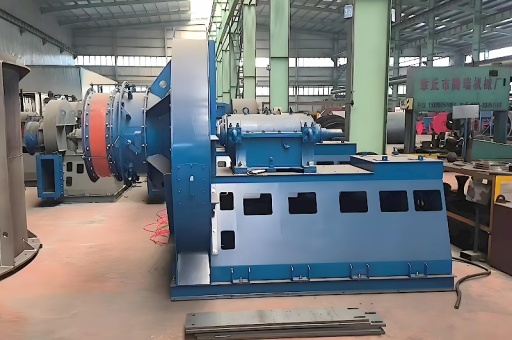
- "Alloy Steel" (Material & Construction)
- "Dust Collector" (Application)
- "Centrifugal" (Mechanical Principle)
- "Long Lifetime" (Engineering Focus)
- Critical)">"Explosionproof" (Safety Certification - Critical)
- Potential Conflicts in Your Description
- Summary & Sourcing Advice
It sounds like you are describing a highly specialized piece of industrial equipment. To give you the most accurate information, let's break down what those keywords mean and what you should look for when sourcing or specifying this fan.
Here is a technical breakdown of the specifications you mentioned:
"Alloy Steel" (Material & Construction)
- Why Alloy Steel? Standard carbon steel can be too heavy or prone to corrosion/sparking. Alloy steels (like 16MnCr5, 35CrMo, or specific grades for strength) offer a higher strength-to-weight ratio.
- Benefits for Dust Collectors:
- Lightweight: Allows for higher rotational speeds and larger impellers without excessive shaft stress.
- Wear Resistance: Better resistance to abrasion from fine dust particles (especially if the steel is hardened).
- Spark Resistance: Certain alloys are less likely to create friction sparks compared to standard steel, which is critical for explosion-proof applications.
"Dust Collector" (Application)
- Fan Type: This is almost always a Centrifugal Fan (not an axial fan). The specific wheel design is crucial.
- Wheel Design for Dust:
- Radial Blade: Simplest design, handles sticky or heavy dust well, but is less efficient.
- Backward Inclined (BI) or Airfoil (AF): More efficient, but prone to clogging with sticky dust. Often used with a "shaved" or "flat" design.
- Paddle Wheel (Radial Tip): The most common for heavy dust. It is rugged, self-cleaning, and handles high volumes of debris.
- Housing: Must have a specially designed clean-out door and a drain to prevent dust accumulation inside the housing (a major fire risk).
"Centrifugal" (Mechanical Principle)
- How it works: Air enters the center of the wheel (axially) and is thrown outward (radially) by centrifugal force. This creates high pressure, which is necessary to overcome the resistance of the ductwork, filters, and baghouse in a dust collection system.
- Key Spec: Look for Static Pressure (in.wg) and Airflow (CFM) .
"Long Lifetime" (Engineering Focus)
- Key Features for Longevity:
- Heavy-Duty Bearings: Oversized, sealed, and self-aligning pillow block bearings (often with oil/lube lines).
- Shaft Seal: A labyrinth or carbon ring seal to prevent dust from entering the bearing housing.
- Vibration Monitoring: Base-mounted with pads for vibration sensors.
- Impeller Balance: ISO 1940 G6.3 or better dynamic balance.
- Thickness: The impeller blades and housing should be thicker than standard (e.g., 10 gauge or thicker).
"Explosionproof" (Safety Certification - Critical)
This is the most important specification. Do not use a standard fan in an explosive environment.
- What it Means:
- Non-Sparking Construction: The impeller is often made of aluminum or bronze (softer materials) or the leading edges are coated with a non-ferrous material to prevent sparks if the impeller hits the housing.
- Housing Design: The housing must be strong enough to contain an internal explosion without rupture.
- Shaft Grounding: A carbon brush or grounding ring to prevent static electricity buildup on the rotating shaft.
- Motor: The motor must be UL/CSA certified for Class I (Gases/Vapors) or Class II (Dust) environments. You need a TEFC (Totally Enclosed Fan Cooled) or even a TENV (Totally Enclosed Non-Ventilated) motor.
- Certifications:
- USA/Canada: UL, CSA, ATEX (if for EU), or IECEx.
- Class/Division: Usually Class II, Division 1, Groups E, F, G for combustible dusts (metal dust, coal dust, grain dust).
Potential Conflicts in Your Description
- Alloy Steel vs. Explosionproof: Alloy steel (even non-sparking grades like 316 Stainless) can still create sparks when hitting another steel part. A true explosion-proof fan often uses a non-ferrous impeller (aluminum or bronze) inside an alloy steel housing. Verify the impeller material.
- Dust Collector vs. Explosionproof: If you are collecting combustible dust (like aluminum, magnesium, sugar, flour, or wood), the entire system (including the fan) must be designed to prevent ignition and contain explosions. This often includes explosion vents/panels on the housing.
Summary & Sourcing Advice
What you are looking for: A heavy-duty, radial-blade centrifugal fan made of corrosion-resistant alloy steel, with a non-sparking impeller, high-quality bearings, and a certified explosion-proof motor.
Questions to ask any supplier:
- Impeller Material: What is the impeller made of? (Aluminum, Bronze, Steel with coating?)
- Explosion Proof Certifications: Do you have a UL/CSA/ATEX label for Class II, Groups E, F, G?
- Bearing Life (L10): What is the calculated bearing life (e.g., 100,000 hours)?
- Static Pressure & CFM: What range are you targeting? (e.g., 10,000 CFM @ 20 in.wg)
- Temperature Range: Will it handle hot air from a process?
Example "Brands" to research (that meet your criteria):
- New York Blower (NYB)
- Cincinnati Fan
- Chicago Blower
- Greenheck
- Robinson Fans
Final Warning: If this is for a combustible metal dust (like aluminum or magnesium), the construction requirements are even more strict (e.g., no ferrous metals in the fan at all, spark-resistant construction). Consult a fire protection engineer or a fan manufacturer's application engineer before purchasing.





